
Laboratory Medicine ›› 2026, Vol. 41 ›› Issue (9): 840-845.DOI: 10.3969/j.issn.1673-8640.2026.09.003
Previous Articles Next Articles
ZHANG Limei1, LIU Hua2, ZHANG Lin1( ), YAN Xiuyun3, GUO Ruiqing1
Received:2024-07-10
Revised:2025-10-11
Online:2026-09-30
Published:2026-09-29
CLC Number:
ZHANG Limei, LIU Hua, ZHANG Lin, YAN Xiuyun, GUO Ruiqing. Predictive value of serum AT1-AA and sTWEAK for adverse pregnancy outcomes in patients with gestational diabetes mellitus[J]. Laboratory Medicine, 2026, 41(9): 840-845.
Add to citation manager EndNote|Ris|BibTeX
URL: https://www.shjyyx.com/EN/10.3969/j.issn.1673-8640.2026.09.003
| 组别 | 例数 | 年龄/岁 | 体重指标/(kg·m-2) | 孕次/次 | 孕周/周 | FPG/(mmol·L-1) | HbA1c/% | |
|---|---|---|---|---|---|---|---|---|
| 对照组 | 74 | 28.19±4.35 | 24.63±3.17 | 1.23±0.32 | 30.48±4.37 | 4.26±1.59 | 5.43±1.82 | |
| 良好妊娠组 | 70 | 29.37±4.59 | 24.89±3.28 | 1.24±0.37 | 30.51±4.34 | 6.27±1.85* | 6.47±2.19* | |
| 不良妊娠组 | 58 | 28.42±4.46 | 24.56±3.12 | 1.27±0.46 | 30.59±4.40 | 6.95±2.32*# | 7.21±2.26*# | |
| F值 | 1.378 | 0.197 | 0.188 | 0.011 | 36.469 | 12.216 | ||
| P值 | 0.254 | 0.821 | 0.829 | 0.989 | <0.001 | <0.001 | ||
| 组别 | FINS/(mmol·L-1) | HOMA-IR | TC/(mmol·L-1) | TG/(mmol·L-1) | HDL-C/(mmol·L-1) | LDL-C/(mmol·L-1) | AT1-AA/(ng·L-1) | sTWEAK/(ng·L-1) |
| 对照组 | 7.63±1.94 | 1.78±0.14 | 4.80±0.63 | 2.54±0.63 | 1.75±0.32 | 3.75±1.02 | 69.78±12.42 | 59.23±10.49 |
| 良好妊娠组 | 8.34±2.18* | 2.32±0.18* | 6.43±1.39* | 3.62±1.26* | 1.72±0.29 | 4.34±1.18* | 116.40±16.44* | 71.84±14.95* |
| 不良妊娠组 | 9.52±2.26*# | 2.94±0.23*# | 6.87±1.86* | 3.89±1.47* | 1.67±0.24 | 4.79±1.51* | 136.39±16.95*# | 89.67±16.41*# |
| F值 | 13.004 | 652.161 | 45.134 | 26.653 | 1.258 | 11.854 | 339.734 | 77.323 |
| P值 | <0.001 | <0.001 | <0.001 | <0.001 | 0.287 | <0.001 | <0.001 | <0.001 |
| 组别 | 例数 | 年龄/岁 | 体重指标/(kg·m-2) | 孕次/次 | 孕周/周 | FPG/(mmol·L-1) | HbA1c/% | |
|---|---|---|---|---|---|---|---|---|
| 对照组 | 74 | 28.19±4.35 | 24.63±3.17 | 1.23±0.32 | 30.48±4.37 | 4.26±1.59 | 5.43±1.82 | |
| 良好妊娠组 | 70 | 29.37±4.59 | 24.89±3.28 | 1.24±0.37 | 30.51±4.34 | 6.27±1.85* | 6.47±2.19* | |
| 不良妊娠组 | 58 | 28.42±4.46 | 24.56±3.12 | 1.27±0.46 | 30.59±4.40 | 6.95±2.32*# | 7.21±2.26*# | |
| F值 | 1.378 | 0.197 | 0.188 | 0.011 | 36.469 | 12.216 | ||
| P值 | 0.254 | 0.821 | 0.829 | 0.989 | <0.001 | <0.001 | ||
| 组别 | FINS/(mmol·L-1) | HOMA-IR | TC/(mmol·L-1) | TG/(mmol·L-1) | HDL-C/(mmol·L-1) | LDL-C/(mmol·L-1) | AT1-AA/(ng·L-1) | sTWEAK/(ng·L-1) |
| 对照组 | 7.63±1.94 | 1.78±0.14 | 4.80±0.63 | 2.54±0.63 | 1.75±0.32 | 3.75±1.02 | 69.78±12.42 | 59.23±10.49 |
| 良好妊娠组 | 8.34±2.18* | 2.32±0.18* | 6.43±1.39* | 3.62±1.26* | 1.72±0.29 | 4.34±1.18* | 116.40±16.44* | 71.84±14.95* |
| 不良妊娠组 | 9.52±2.26*# | 2.94±0.23*# | 6.87±1.86* | 3.89±1.47* | 1.67±0.24 | 4.79±1.51* | 136.39±16.95*# | 89.67±16.41*# |
| F值 | 13.004 | 652.161 | 45.134 | 26.653 | 1.258 | 11.854 | 339.734 | 77.323 |
| P值 | <0.001 | <0.001 | <0.001 | <0.001 | 0.287 | <0.001 | <0.001 | <0.001 |
| 因素 | β值 | 标准误 | Wald值 | P值 | OR①值(95%CI②) |
|---|---|---|---|---|---|
| FPG | 0.545 | 0.236 | 5.337 | 0.021 | 1.725(1.086~2.740) |
| FINS | 0.496 | 0.182 | 7.425 | 0.006 | 1.642(1.149~2.346) |
| HOMA-IR | 0.538 | 0.219 | 6.041 | 0.014 | 1.713(1.115~2.631) |
| AT1-AA | 0.510 | 0.205 | 6.185 | 0.013 | 1.665(1.114~2.488) |
| sTWEAK | 0.514 | 0.198 | 6.740 | 0.009 | 1.672(1.134~2.465) |
| 因素 | β值 | 标准误 | Wald值 | P值 | OR①值(95%CI②) |
|---|---|---|---|---|---|
| FPG | 0.545 | 0.236 | 5.337 | 0.021 | 1.725(1.086~2.740) |
| FINS | 0.496 | 0.182 | 7.425 | 0.006 | 1.642(1.149~2.346) |
| HOMA-IR | 0.538 | 0.219 | 6.041 | 0.014 | 1.713(1.115~2.631) |
| AT1-AA | 0.510 | 0.205 | 6.185 | 0.013 | 1.665(1.114~2.488) |
| sTWEAK | 0.514 | 0.198 | 6.740 | 0.009 | 1.672(1.134~2.465) |
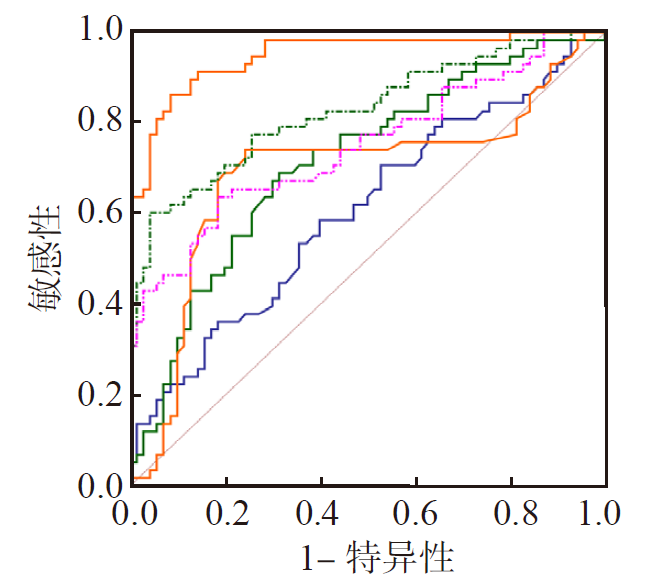
| 项目 | AUC(95%CI) | 最佳临界值 | 敏感性/% | 特异性/% | Youden指数 |
|---|---|---|---|---|---|
| FPG | 0.605(0.515~0.690) | 6.53 mmol·L-1 | 58.62 | 60.00 | 0.186 |
| FINS | 0.714(0.627~0.790) | 8.95 mmol·L-1 | 68.97 | 68.57 | 0.375 |
| HOMA-IR | 0.689(0.601~0.768) | 2.53 | 74.14 | 75.71 | 0.499 |
| AT1-AA | 0.831(0.754~0.891) | 123.27 ng·L-1 | 79.31 | 85.71 | 0.650 |
| sTWEAK | 0.834(0.758~0.894) | 84.01 pg·mL-1 | 72.41 | 87.14 | 0.596 |
| AT1-AA+sTWEAK | 0.949(0.895~0.980) | 0.53 | 86.21 | 91.43 | 0.776 |
| 项目 | AUC(95%CI) | 最佳临界值 | 敏感性/% | 特异性/% | Youden指数 |
|---|---|---|---|---|---|
| FPG | 0.605(0.515~0.690) | 6.53 mmol·L-1 | 58.62 | 60.00 | 0.186 |
| FINS | 0.714(0.627~0.790) | 8.95 mmol·L-1 | 68.97 | 68.57 | 0.375 |
| HOMA-IR | 0.689(0.601~0.768) | 2.53 | 74.14 | 75.71 | 0.499 |
| AT1-AA | 0.831(0.754~0.891) | 123.27 ng·L-1 | 79.31 | 85.71 | 0.650 |
| sTWEAK | 0.834(0.758~0.894) | 84.01 pg·mL-1 | 72.41 | 87.14 | 0.596 |
| AT1-AA+sTWEAK | 0.949(0.895~0.980) | 0.53 | 86.21 | 91.43 | 0.776 |
| [1] |
钱琳玉, 梁卫芳, 唐思晨. 妊娠糖尿病患者NLRP3、CTRP6和IL-1β检测的临床意义[J]. 检验医学, 2023, 38(10):936-940.
DOI |
| [2] | 郝玉洁, 张军. 妊娠期糖尿病发病机制的研究现状及进展[J]. 中国医药, 2023, 18(10):1587-1591. |
| [3] | 张芬, 王颖楠. 异紫花前胡内酯对妊娠糖尿病大鼠主动脉血管收缩及AT1 R、AT2 R、COX-1、COX-2表达的影响[J]. 中国药师, 2019, 22(4):649-655. |
| [4] |
Bian J, Lei J, Yin X, et al. Limited AT1 receptor internalization is a novel mechanism underlying sustained vasoconstriction induced by AT1 receptor autoantibody from preeclampsia[J]. J Am Heart Assoc, 2019, 8(6):e011179.
DOI URL |
| [5] |
Méndez-barbero N, Gutiérrez-muñoz C, Blázquez-serra R, et al. Tumor necrosis factor-like weak inducer of apoptosis(TWEAK)/fibroblast growth factor-inducible 14(Fn14)axis in cardiovascular diseases:progress and challenges[J]. Cells, 2020, 9(2):405.
DOI URL |
| [6] |
Ratajczak W, Atkinson S D, Kelly C. The TWEAK/Fn14/CD163 axis-implications for metabolic disease[J]. Rev Endocr Metab Disord, 2022, 23(3):449-462.
DOI |
| [7] | 郝伟, 万仁辉, 郑龙轶, 等. 2型糖尿病患者血清sTWEAK水平与动脉粥样硬化斑块的关系[J]. 海军军医大学学报, 2022, 43(5):506-510. |
| [8] | 黄毓丽, 施慧, 于瑞华. sTWEAK在子痫前期患者血清中的表达及其意义[J]. 中国实验诊断学, 2022, 26(12):1754-1757. |
| [9] | 中华医学会妇产科学分会产科学组, 中华医学会围产医学分会妊娠合并糖尿病协作组. 妊娠合并糖尿病诊治指南(2014)[J]. 中华妇产科杂志, 2014, 49(8):561-569. |
| [10] | 卜雅琴, 朱燕, 钱波. 孕妇血清维生素D水平与胰岛素抵抗、炎症反应的相关性[J]. 中国医药导报, 2023, 20(27):117-120. |
| [11] |
Wang J, Shan L, Zhao Y, et al. Role of agonistic autoantibodies to the angiotensin II type 1 receptor(AT1-AA) in pathogenesis of preeclampsia[J]. Glob Med Genet, 2025, 12(2):100041.
DOI URL |
| [12] |
Liu F, Yang G, Guo R, et al. Increased levels of angiotensin Ⅱ type 1 receptor autoantibodies in female infertility[J]. Syst Biol Reprod Med, 2021, 67(2):160-167.
DOI URL |
| [13] |
Wang Z, Wu Y, Zhang S, et al. The role of NO-cGMP pathway inhibition in vascular endothelial-dependent smooth muscle relaxation disorder of AT1-AA positive rats:protective effects of adiponectin[J]. Nitric Oxide, 2019, 87:10-22.
DOI URL |
| [14] |
Cunningham M W Jr, Vaka V R, McMaster K, et al. Renal natural killer cell activation and mitochondrial oxidative stress;new mechanisms in AT1-AA mediated hypertensive pregnancy[J]. Pregnancy Hypertens, 2019, 15:72-77.
DOI PMID |
| [15] |
Zhou C C, Irani R A, Zhang Y, et al. Angiotensin receptor agonistic autoantibody-mediated tumor necrosis factor-alpha induction contributes to increased soluble endoglin production in preeclampsia[J]. Circulation, 2010, 121(3):436-444.
DOI PMID |
| [16] | Wang J, Li D, Zhang Z, et al. Autoantibody against angiotensin Ⅱ type Ⅰ receptor induces pancreatic β-cell apoptosis via enhancing autophagy[J]. Acta Biochim Biophys Sin(Shanghai), 2021, 53(6):784-795. |
| [17] |
Mrak D, Zierfuss B, Höbaus C, et al. Evaluation of sCD163 and sTWEAK in patients with stable peripheral arterial disease and association with disease severity as well as long-term mortality[J]. Atherosclerosis, 2021, 317:41-46.
DOI PMID |
| [18] |
Dereke J, Nilsson J, Nilsson C, et al. Soluble CD163 and TWEAK in early pregnancy gestational diabetes and later glucose intolerance[J]. PLoS One, 2019, 14(5):e0216728.
DOI URL |
| [19] | 冯娟娟, 任鹤民. 二甲双胍联合西格列汀治疗对2型糖尿病患者骨代谢、颈动脉弹性的影响[J]. 内科, 2022, 17(3):277-281. |
| [1] | WANG Qiang, LU Loukaiyi, LUO Xufan, CHEN Yisheng. Correlation between MTHFR gene C677T polymorphism,Hcy,one-carbon metabolism related B vitamins and gestational diabetes mellitus [J]. Laboratory Medicine, 2026, 41(7): 670-675. |
| [2] | MA Shanshan, ZHANG Rong, YIN Ting, ZHENG Anshun, WANG Zhiwei, WANG Yongan, WANG Leilei. Genetic analysis and pregnancy outcomes of 19 fetuses with abnormal copy number in 22q11.2 region of chromosome [J]. Laboratory Medicine, 2026, 41(2): 106-111. |
| [3] | YAO Yanhong, ZHAI Chunli. Predictive role of serum amyloid A and homocysteine on pregnancy outcome in patients with gestational diabetes mellitus [J]. Laboratory Medicine, 2025, 40(8): 751-756. |
| [4] | WEI Yuexiao, YANG Lili, GUO Fengtong. Influence of serum HMGB1 and IL-6 levels on pregnancy outcomes of pregnant women with periodontal disease [J]. Laboratory Medicine, 2025, 40(10): 982-986. |
| [5] | ZHANG Jing. Synergistic role of vitamin D and blood glucose in pregnancy outcomes in patients with preeclampsia [J]. Laboratory Medicine, 2024, 39(8): 779-786. |
| [6] | ZHAO Yanan, XIAO Weili, CAO Qixin, YAN Yan, CUI Xiuge, ZHAO Jianping. Relation of drug resistance,serotypes and genotypes of Group B Streptococcus in perinatal pregnant females and pregnancy outcomes [J]. Laboratory Medicine, 2024, 39(4): 382-386. |
| [7] | LIU Mengzhu, GU Jinyun, ZHU Xia, CHEN Xia. Predictive value of glucose variability parameters before delivery for macrosomia in patients with gestational diabetes mellitus [J]. Laboratory Medicine, 2024, 39(3): 215-221. |
| [8] | ZHANG Caili, LUO Xiaohua, YANG Peifeng, LIU Pengli, REN Fang. Prognostic roles of serum FGF2 and FGFR1 in preeclampsia [J]. Laboratory Medicine, 2024, 39(10): 945-949. |
| [9] | CHEN Hui, CHEN Guanghui, LIANG Yingliang, WANG Wandang, YIN Zhijun. Screening hub genes and diagnostic analysis of gestational diabetes mellitus based on GEO database [J]. Laboratory Medicine, 2023, 38(3): 276-281. |
| [10] | KE Qiulei, HUANG Jing, CHEN Aizheng, SONG Yanfeng, SU Xiaofeng. Subgingival flora and the relations between periodontal health indexes and risk of periodontal disease in patients with GDM [J]. Laboratory Medicine, 2023, 38(2): 163-166. |
| [11] | QIAN Linyu, LIANG Weifang, TANG Sichen. Determination and clinical significance of NLRP3,CTRP6 and IL-1β in patients with gestational diabetes mellitus [J]. Laboratory Medicine, 2023, 38(10): 936-940. |
| [12] | WANG Lingling, REN Chunli. Correlation of MTHFR gene C677T polymorphism and blood lipid levels with GDM [J]. Laboratory Medicine, 2022, 37(6): 543-546. |
| [13] | ZHANG Xiaoqin, ZHOU Yulan, FU Zhumei, HAN Xuexue, ZHAN Jie. Relationship of mtDNA T16189C mutation and gestational diabetes mellitus [J]. Laboratory Medicine, 2022, 37(5): 413-416. |
| [14] | LE Jiangman, LI Tianyuan, TAN Meiyu, WANG Yajie, ZHOU Lida, SHU Jie, WU Jiaoxiang, SUN Hanxiao, XUAN Binbin, CAI Xushan, SHENG Huiming. Correlation of gestational diabetes mellitus with plasma TMAO [J]. Laboratory Medicine, 2021, 36(8): 795-799. |
| [15] | WANG Yu, ZHANG Wenwen, LIU Meiling, LIU Xiaojuan. Relationship between AFP,free-βHCG,uE3 and GDM in the second trimester of pregnancy [J]. Laboratory Medicine, 2021, 36(8): 828-832. |
| Viewed | ||||||
|
Full text |
|
|||||
|
Abstract |
|
|||||
