
Laboratory Medicine ›› 2026, Vol. 41 ›› Issue (9): 846-852.DOI: 10.3969/j.issn.1673-8640.2026.09.004
Previous Articles Next Articles
LIAN Entao1, HOU Ze2, ZHANG Yuxin3, WANG Xinyi2, YE Yinnan2, JIA Kegang2( )
)
Received:2026-02-02
Revised:2026-04-10
Online:2026-09-30
Published:2026-09-29
CLC Number:
LIAN Entao, HOU Ze, ZHANG Yuxin, WANG Xinyi, YE Yinnan, JIA Kegang. Roles of sST2,IL-6 and CRP in prognosis assessment of patients with end-stage heart failure who undergo left ventricular assist device implantation[J]. Laboratory Medicine, 2026, 41(9): 846-852.
Add to citation manager EndNote|Ris|BibTeX
URL: https://www.shjyyx.com/EN/10.3969/j.issn.1673-8640.2026.09.004
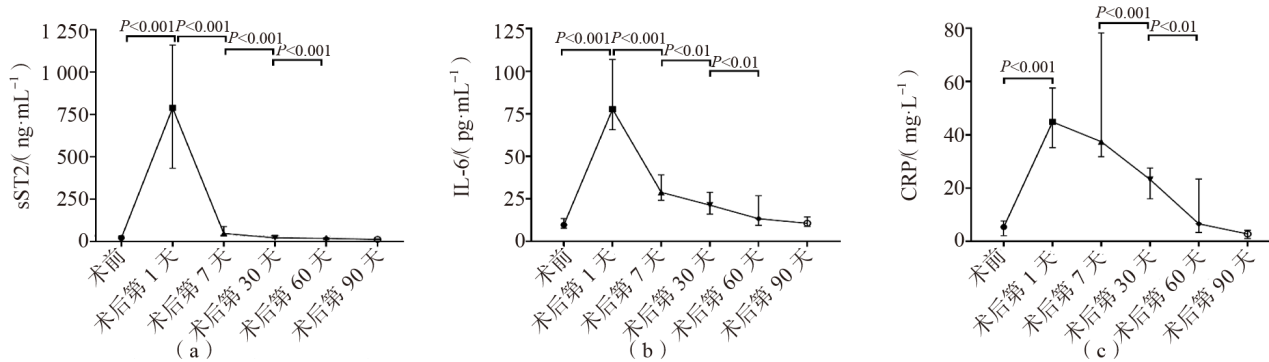
| 组别 | 例数 | sST2/(ng·mL-1) | |||||||||||
|---|---|---|---|---|---|---|---|---|---|---|---|---|---|
| 术前 | 术后第1天 | 术后第7天 | 术后第30天 | 术后第60天 | 术后第90天 | ||||||||
| 无MACE组 | 45 | 20.66 (16.76,56.59) | 689.70 (300.00,1 188.20) | 47.44 (28.94,131.36) | 21.23 (13.84,35.35) | 18.35 (10.30,27.10) | 12.49 (9.91,17.18) | ||||||
| MACE组 | 5 | 28.27 (19.74,116.57) | 1297.25 (626.55,2 321.50) | 97.07 (41.87,323.43) | 59.75 (40.40,192.96) | 21.31 (18.16,192.12) | 33.50 (22.43,300.00) | ||||||
| Z值 | -0.966 | -1.501 | -1.449 | -2.449 | -1.323 | -2.574 | |||||||
| P值 | 0.33 | 0.13 | 0.15 | 0.01 | 0.19 | 0.01 | |||||||
| 组别 | IL-6/(pg·mL-1) | ||||||||||||
| 术前 | 术后第1天 | 术后第7天 | 术后第30天 | 术后第60天 | 术后第90天 | ||||||||
| 无MACE组 | 10.21 (5.71,19.24) | 75.36 (58.04,145.50) | 28.72 (17.14,44.43) | 20.49 (14.78,37.88) | 12.60 (8.38,17.58) | 9.86 (6.28,15.21) | |||||||
| MACE组 | 9.15 (6.24,22.87) | 92.67 (44.88,110.30) | 40.66 (23.84,56.50) | 35.17 (16.85,65.24) | 28.85 (9.04,87.51) | 16.25 (10.44,214.20) | |||||||
| Z值 | -0.076 | -0.456 | -0.859 | -1.083 | -1.321 | -2.065 | |||||||
| P值 | 0.94 | 0.65 | 0.39 | 0.23 | 0.19 | 0.04 | |||||||
| 组别 | CRP/(mg·L-1) | ||||||||||||
| 术前 | 术后第1天 | 术后第7天 | 术后第30天 | 术后第60天 | 术后第90天 | ||||||||
| 无MACE组 | 5.50 (0.50,11.08) | 48.00 (33.50,67.05) | 37.40 (25.50,100.20) | 22.95 (10.88,40.73) | 4.40 (2.30,23.40) | 2.40 (0.50,4.55) | |||||||
| MACE组 | 2.20 (0.50,18.75) | 33.70 (28.25,40.55) | 65.20 (30.50,150.25) | 25.10 (15.60,45.30) | 13.20 (5.85,84.50) | 5.00 (3.10,137.20) | |||||||
| Z值 | -0.804 | -1.601 | -0.663 | -0.529 | -1.635 | -2.166 | |||||||
| P值 | 0.42 | 0.11 | 0.51 | 0.60 | 0.10 | 0.03 | |||||||
| 组别 | 例数 | sST2/(ng·mL-1) | |||||||||||
|---|---|---|---|---|---|---|---|---|---|---|---|---|---|
| 术前 | 术后第1天 | 术后第7天 | 术后第30天 | 术后第60天 | 术后第90天 | ||||||||
| 无MACE组 | 45 | 20.66 (16.76,56.59) | 689.70 (300.00,1 188.20) | 47.44 (28.94,131.36) | 21.23 (13.84,35.35) | 18.35 (10.30,27.10) | 12.49 (9.91,17.18) | ||||||
| MACE组 | 5 | 28.27 (19.74,116.57) | 1297.25 (626.55,2 321.50) | 97.07 (41.87,323.43) | 59.75 (40.40,192.96) | 21.31 (18.16,192.12) | 33.50 (22.43,300.00) | ||||||
| Z值 | -0.966 | -1.501 | -1.449 | -2.449 | -1.323 | -2.574 | |||||||
| P值 | 0.33 | 0.13 | 0.15 | 0.01 | 0.19 | 0.01 | |||||||
| 组别 | IL-6/(pg·mL-1) | ||||||||||||
| 术前 | 术后第1天 | 术后第7天 | 术后第30天 | 术后第60天 | 术后第90天 | ||||||||
| 无MACE组 | 10.21 (5.71,19.24) | 75.36 (58.04,145.50) | 28.72 (17.14,44.43) | 20.49 (14.78,37.88) | 12.60 (8.38,17.58) | 9.86 (6.28,15.21) | |||||||
| MACE组 | 9.15 (6.24,22.87) | 92.67 (44.88,110.30) | 40.66 (23.84,56.50) | 35.17 (16.85,65.24) | 28.85 (9.04,87.51) | 16.25 (10.44,214.20) | |||||||
| Z值 | -0.076 | -0.456 | -0.859 | -1.083 | -1.321 | -2.065 | |||||||
| P值 | 0.94 | 0.65 | 0.39 | 0.23 | 0.19 | 0.04 | |||||||
| 组别 | CRP/(mg·L-1) | ||||||||||||
| 术前 | 术后第1天 | 术后第7天 | 术后第30天 | 术后第60天 | 术后第90天 | ||||||||
| 无MACE组 | 5.50 (0.50,11.08) | 48.00 (33.50,67.05) | 37.40 (25.50,100.20) | 22.95 (10.88,40.73) | 4.40 (2.30,23.40) | 2.40 (0.50,4.55) | |||||||
| MACE组 | 2.20 (0.50,18.75) | 33.70 (28.25,40.55) | 65.20 (30.50,150.25) | 25.10 (15.60,45.30) | 13.20 (5.85,84.50) | 5.00 (3.10,137.20) | |||||||
| Z值 | -0.804 | -1.601 | -0.663 | -0.529 | -1.635 | -2.166 | |||||||
| P值 | 0.42 | 0.11 | 0.51 | 0.60 | 0.10 | 0.03 | |||||||
| 项目 | 术前 | 术后第1天 | 术后第7天 | |||||
|---|---|---|---|---|---|---|---|---|
| HR值(95%CI) | P值 | HR值(95%CI) | P值 | HR值(95%CI) | P值 | |||
| sST2 | 1.001(0.991~1.011) | 0.92 | 1.001(1.000~1.002) | 0.06 | 1.000(0.998~1.003) | 0.77 | ||
| IL-6 | 0.986(0.930~1.046) | 0.65 | 0.995(0.980~1.009) | 0.48 | 0.999(0.989~1.009) | 0.80 | ||
| CRP | 0.992(0.919~1.071) | 0.85 | 0.969(0.924~1.016) | 0.19 | 1.005(0.993~1.017) | 0.45 | ||
| 项目 | 术后第30天 | 术后第60天 | 术后第90天 | |||||
| HR值(95%CI) | P值 | HR值(95%CI) | P值 | HR值(95%CI) | P值 | |||
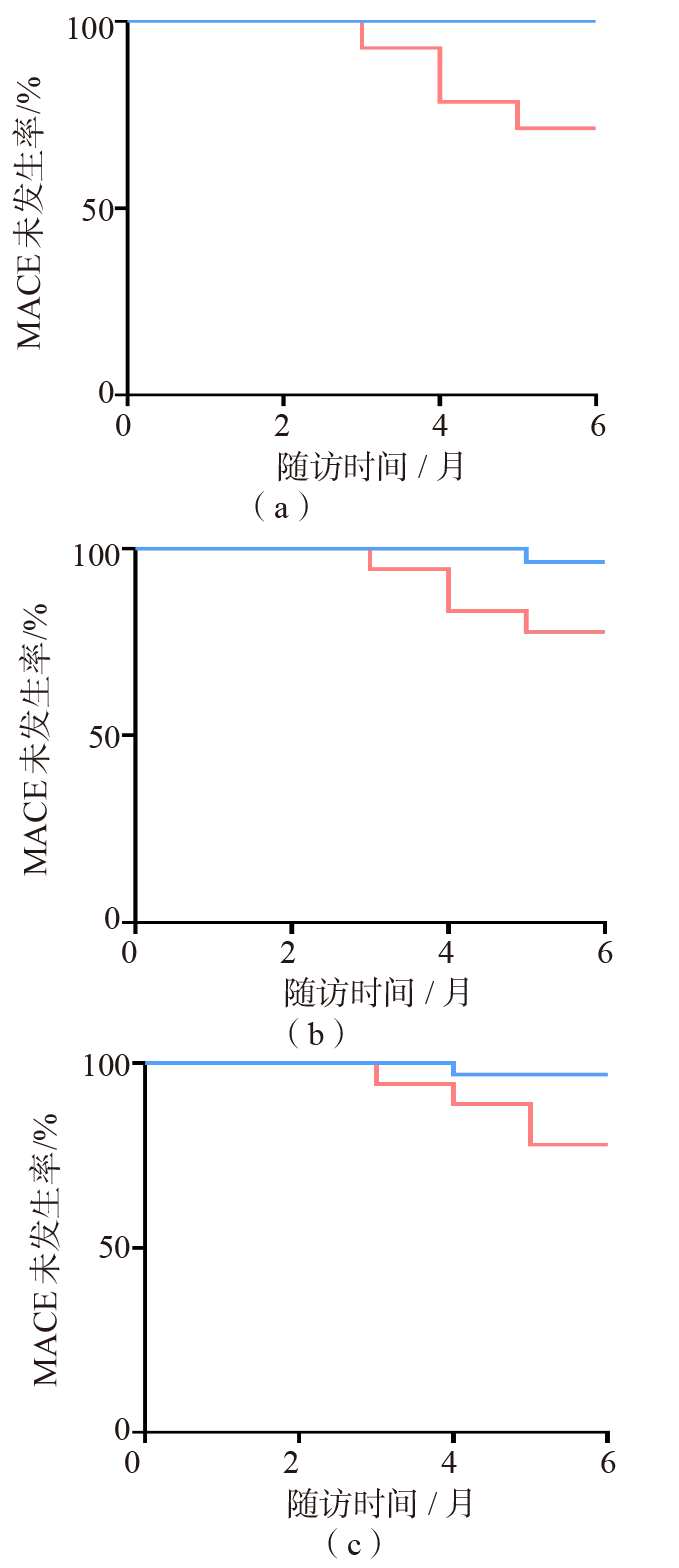
| sST2 | 1.024(1.008~1.041) | 0.01 | 1.027(0.999~1.055) | 0.06 | 1.051(0.985~1.122) | 0.13 | ||
| IL-6 | 1.008(0.988~1.030) | 0.43 | 1.016(0.995~1.037) | 0.14 | 1.022(1.004~1.041) | 0.02 | ||
| CRP | 1.000(0.966~1.036) | 0.99 | 1.044(1.005~1.083) | 0.03 | 1.030(1.014~1.046) | 0.01 | ||
| 项目 | 术前 | 术后第1天 | 术后第7天 | |||||
|---|---|---|---|---|---|---|---|---|
| HR值(95%CI) | P值 | HR值(95%CI) | P值 | HR值(95%CI) | P值 | |||
| sST2 | 1.001(0.991~1.011) | 0.92 | 1.001(1.000~1.002) | 0.06 | 1.000(0.998~1.003) | 0.77 | ||
| IL-6 | 0.986(0.930~1.046) | 0.65 | 0.995(0.980~1.009) | 0.48 | 0.999(0.989~1.009) | 0.80 | ||
| CRP | 0.992(0.919~1.071) | 0.85 | 0.969(0.924~1.016) | 0.19 | 1.005(0.993~1.017) | 0.45 | ||
| 项目 | 术后第30天 | 术后第60天 | 术后第90天 | |||||
| HR值(95%CI) | P值 | HR值(95%CI) | P值 | HR值(95%CI) | P值 | |||
| sST2 | 1.024(1.008~1.041) | 0.01 | 1.027(0.999~1.055) | 0.06 | 1.051(0.985~1.122) | 0.13 | ||
| IL-6 | 1.008(0.988~1.030) | 0.43 | 1.016(0.995~1.037) | 0.14 | 1.022(1.004~1.041) | 0.02 | ||
| CRP | 1.000(0.966~1.036) | 0.99 | 1.044(1.005~1.083) | 0.03 | 1.030(1.014~1.046) | 0.01 | ||
| 项目 | AUC(95%CI) | 最佳临界值 | 敏感性/% | 特异性/% | 约登指数 |
|---|---|---|---|---|---|
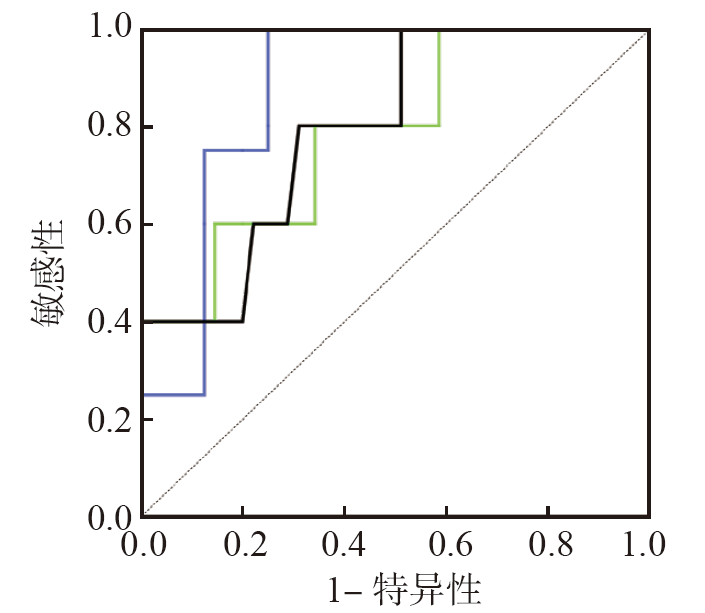
| 术后第30天sST2 | 0.875(0.751~0.995) | 34.39 ng·mL-1 | 100.00 | 75.00 | 0.75 |
| 术后第90天IL-6 | 0.785(0.575~0.996) | 11.50 pg·mL-1 | 80.00 | 65.90 | 0.46 |
| 术后第90天CRP | 0.796(0.609~0.982) | 4.05 mg·L-1 | 80.00 | 68.90 | 0.49 |
| 项目 | AUC(95%CI) | 最佳临界值 | 敏感性/% | 特异性/% | 约登指数 |
|---|---|---|---|---|---|
| 术后第30天sST2 | 0.875(0.751~0.995) | 34.39 ng·mL-1 | 100.00 | 75.00 | 0.75 |
| 术后第90天IL-6 | 0.785(0.575~0.996) | 11.50 pg·mL-1 | 80.00 | 65.90 | 0.46 |
| 术后第90天CRP | 0.796(0.609~0.982) | 4.05 mg·L-1 | 80.00 | 68.90 | 0.49 |
| [1] | 中华医学会心血管病学分会, 中国医师协会心血管内科医师分会, 中国医师协会心力衰竭专业委员会, 等. 中国心力衰竭诊断和治疗指南2024[J]. 中华心血管病杂志, 2024, 52(3):235-275. |
| [2] | Yang X, Zhao Z P, Shi Y, et al. The evolving burden of heart failure in China:a 34-year subnational analysis of trends and causes from the Global Burden of Disease Study 2023[J]. Mil Med Res, 2025, 12(1):65. |
| [3] |
Atfeh J, Guerre P, Sebbag L, et al. Economic burden and healthcare trajectories of patients awaiting heart transplantation in a French tertiary center[J]. Transpl Int, 2025, 38:13703.
DOI PMID |
| [4] |
Adji A, Shehab S, Jain P, et al. Arterial compliance and continuous-flow left ventricular assist device pump function[J]. ASAIO J, 2022, 68(7):925-931.
DOI PMID |
| [5] |
Chaudhry S P, DeVore A D, Vidula H, et al. Left ventricular assist devices:a primer for the general cardiologist[J]. J Am Heart Assoc, 2022, 11(24):e027251.
DOI URL |
| [6] |
Adamopoulos S, Bonios M, Ben Gal T, et al. Right heart failure with left ventricular assist devices:preoperative,perioperative and postoperative management strategies. A clinical consensus statement of the Heart Failure Association (HFA) of the ESC[J]. Eur J Heart Fail, 2024, 26(11):2304-2322.
DOI PMID |
| [7] |
Aimo A, Januzzi J L Jr, Bayes-genis A, et al. Clinical and prognostic significance of sST2 in heart failure:JACC review topic of the week[J]. J Am Coll Cardiol, 2019, 74(17):2193-2203.
DOI URL |
| [8] |
Yu X, Kennedy R H, Liu S J. JAK2/STAT3,not ERK1/2,mediates interleukin-6-induced activation of inducible nitric-oxide synthase and decrease in contractility of adult ventricular myocytes[J]. J Biol Chem, 2003, 278(18):16304-16309.
DOI URL |
| [9] |
Arroyo-espliguero R, Viana-llamas M C, Silva-obregón A, et al. The role of C-reactive protein in patient risk stratification and treatment[J]. Eur Cardiol, 2021, 16:e28.
DOI PMID |
| [10] |
Kirklin J K, Pagani F D, Goldstein D J, et al. American Association for Thoracic Surgery/International Society for Heart and Lung Transplantation guidelines on selected topics in mechanical circulatory support[J]. J Thorac Cardiovasc Surg, 2020, 159(3):865-896.
DOI PMID |
| [11] |
Datar Y, Clerc O F, Cuddy S A M, et al. Quantification of right ventricular amyloid burden with 18F-florbetapir positron emission tomography/computed tomography and its association with right ventricular dysfunction and outcomes in light-chain amyloidosis[J]. Eur Heart J Cardiovasc Imaging, 2024, 25(5):687-697.
DOI URL |
| [12] |
Sanada S, Hakuno D, Higgins L J, et al. IL-33 and ST2 comprise a critical biomechanically induced and cardioprotective signaling system[J]. J Clin Invest, 2007, 117(6):1538-1549.
DOI PMID |
| [13] |
Brunetti G, Barile B, Nicchia G P, et al. The ST2/IL-33 pathway in adult and paediatric heart disease and transplantation[J]. Biomedicines, 2023, 11(6):1676.
DOI URL |
| [14] |
Galeone A, Buccoliero C, Barile B, et al. Cellular and molecular mechanisms activated by a left ventricular assist device[J]. Int J Mol Sci, 2023, 25(1):288.
DOI URL |
| [15] | Yancy C W, Jessup M, Bozkurt B, et al. 2017 ACC/AHA/HFSA focused update of the 2013 ACCF/AHA guideline for the management of heart failure:a report of the American College of Cardiology/American Heart Association task force on clinical practice guidelines and the Heart Failure Society of America[J]. Circulation,2017, 136(6):e137-e161. |
| [16] |
Bayés-genís A, Núñez J, Lupón J. Soluble ST2 for prognosis and monitoring in heart failure:the new gold standard?[J]. J Am Coll Cardiol, 2017, 70(19):2389-2392.
DOI PMID |
| [17] |
Tseng C C S, Huibers M M H, Gaykema L H, et al. Soluble ST2 in end-stage heart failure,before and after support with a left ventricular assist device[J]. Eur J Clin Invest, 2018, 48(3):e12886.
DOI URL |
| [18] |
Opfermann P, Simader E, Felli A, et al. Early sST2 liberation after implantation of a left ventricular assist device in patients with advanced heart failure[J]. J Immunol Res, 2020, 2020:5826176.
DOI URL |
| [19] |
Numan L, Aarts E, Ramjankhan F, et al. Soluble suppression of tumorigenicity-2 predicts mortality and right heart failure in patients with a left ventricular assist device[J]. J Am Heart Assoc, 2024, 13(2):e029827.
DOI URL |
| [20] |
Roman-pepine D, Serban A M, Capras R D, et al. A comprehensive review:unraveling the role of inflammation in the etiology of heart failure[J]. Heart Fail Rev, 2025, 30(5):931-954.
DOI PMID |
| [21] |
Caruso R, Botta L, Verde A, et al. Relationship between pre-implant interleukin-6 levels,inflammatory response,and early outcome in patients supported by left ventricular assist device:a prospective study[J]. PLoS One, 2014, 9(3):e90802.
DOI URL |
| [22] |
Batra J, Truby L K, Defilippis E M, et al. C-reactive protein levels predict outcomes in continuous-flow left ventricular assist device patients:an INTERMACS analysis[J]. ASAIO J, 2021, 67(8):884-890.
DOI PMID |
| Viewed | ||||||
|
Full text |
|
|||||
|
Abstract |
|
|||||
