检验医学 ›› 2025, Vol. 40 ›› Issue (12): 1183-1189.DOI: 10.3969/j.issn.1673-8640.2025.12.008

• 论著 • 上一篇    下一篇

老年发热伴血小板减少综合征患者预后危险因素及其临床价值

李松1, 向旭2()   

  1. 1.湖北中医药大学检验学院,湖北 武汉 430065
    2.华中科技大学同济医学院附属同济医院检验科,湖北 武汉 430030
  • 收稿日期:2024-08-06 修回日期:2025-05-13 出版日期:2025-12-30 发布日期:2025-12-26
  • 通讯作者: 向 旭,E-mail:xiangxu_2006@163.com
  • 作者简介:李 松,男,1989年生,学士,主管技师,主要从事临床检验工作。

Risk factors for poor prognosis in elderly patients with severe fever and thrombocytopenia syndrome and their clinical significance

LI Song1, XIANG Xu2()   

  1. 1. School of Laboratory Medicine,Hubei University of Chinese Medicine,Wuhan 430065,Hubei,China
    2. Department of Clinical Laboratory,Tongji Hospital,Tongji Medical College,Huazhong University of Science and Technology,Wuhan 430030,Hubei,China
  • Received:2024-08-06 Revised:2025-05-13 Online:2025-12-30 Published:2025-12-26

摘要:

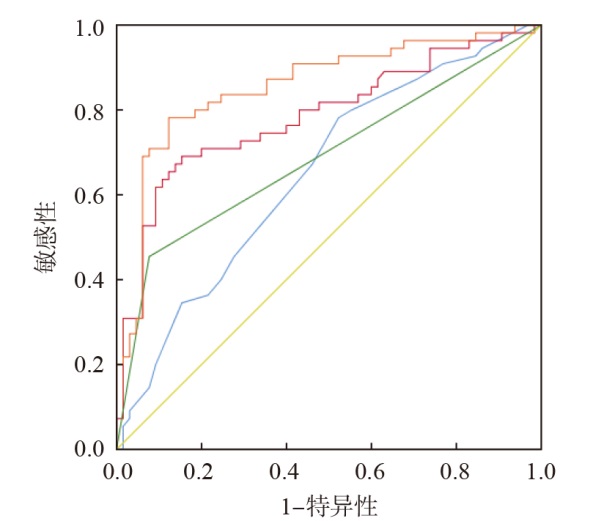
目的 分析老年发热伴血小板减少综合征(SFTS)患者预后的危险因素及其临床价值。 方法 选取2023年4月—2024年6月华中科技大学同济医学院附属同济医院老年SFTS患者120例,根据预后情况分为预后良好组(65例)和预后不良组(55例),根据年龄中位数(69岁)分为较低年龄(≤69岁)组(61例)和较高年龄(>69岁)组(59例)。收集所有患者入院时的临床资料和入院后1 d内的实验室检测结果。采用Logistic回归分析评估老年SFTS患者预后的影响因素。采用受试者工作特征(ROC)曲线评价各项指标判断SFTS患者预后不良的效能。 结果 预后不良组高龄、有意识障碍例数和血清铁蛋白(SF)、白细胞介素(IL)-1β、白细胞介素-2受体(IL-2R)、IL-6、IL-8、IL-10、肿瘤坏死因子-α(TNF-α)水平高于预后良好组(P<0.05),住院天数和血小板(PLT)计数均低于预后良好组(P<0.05),2个组之间其他临床资料和实验室检测结果差异均无统计学意义(P>0.05)。较高年龄组白细胞(WBC)计数、中性粒细胞绝对值(NEUT#)和死亡例数均高于较低年龄组(P<0.05),2个组之间其他实验室指标差异均无统计学意义(P>0.05)。高龄、合并意识障碍和IL-2R水平升高是老年SFTS患者预后不良的独立危险因素[比值比(OR)值分别为1.107、7.308、1.001,95%可信区间(CI)分别为1.017~1.204、2.022~26.413、1.000~1.002,P<0.05]。年龄、IL-2R、意识障碍单项和联合判断老年SFTS患者预后不良的曲线下面积(AUC)分别为0.650、0.785、0.689和0.857。 结论 预后不良的老年SFTS患者细胞因子水平显著升高。年龄>69岁、 IL-2R水平较高(>1 465 U·mL-1)和合并意识障碍可作为老年SFTS患者预后不良的预警指标,且3项指标联合预测效能更好。

关键词: 细胞因子, 发热伴血小板减少综合征, 老年, 预后评估

Abstract:

Objective To investigate the risk factors and clinical role of prognosis in elderly patients with severe fever with thrombocytopenia syndrome(SFTS). Methods A total of 120 elderly SFTS patients at Tongji Hospital Affiliated to Tongji Medical College of Huazhong University of Science and Technology from April 2023 to June 2024 were enrolled. The patients were classified into good prognosis group(65 cases) and poor prognosis group(55 cases) based on their prognosis. They were classified into low age (≤69 years old)group(61 cases) and high age (>69 years old)group(59 cases) according to the median of age (69 years old)as well. The clinical data at admission and laboratory determination results within 1 d after admission were collected. Logistic regression analysis was used to evaluate the influencing factors of prognosis in elderly SFTS patients. Receiver operating characteristic(ROC) curve was used to evaluate the efficacy of various indicators in predicting poor prognosis of SFTS patients. Results The advanced age,the number of consciousness disorder and the levels of serum ferritin(SF),interleukin(IL)-1β,interleukin-2 receptor(IL-2R),IL-6,IL-8,IL-10 and tumor necrosis factor-alpha(TNF-α) in poor prognosis group were higher than those in good prognosis group(P<0.05),while the length of hospital stay and platelet(PLT) count were lower in poor prognosis group(P<0.05). There was no statistical significance in the other clinical data and laboratory determination results between the 2 groups(P>0.05). The white blood cell(WBC)count,the absolute value of neutrophils(NEUT#) and death number in high age group were higher than those in low age group(P<0.05),while there was no statistical significance in the other indicators between the 2 groups(P>0.05). Advanced age,combined consciousness disorder and elevated IL-2R level were independent risk factors for poor prognosis in elderly SFTS patients [odds ratios(OR) were 1.107,7.308 and 1.001,95% confidence intervals(CI) were 1.017-1.204,2.022-26.413 and 1.000-1.002,respectively,P<0.05]. The areas under curves(AUC) of the single determinations of age,IL-2R and consciousness disorder and the combined determination for predicting poor prognosis of elderly SFTS patients were 0.650,0.785,0.689 and 0.857,respectively. Conclusions Elderly SFTS patients with poor prognosis have elevated cytokines in their bodies. Age>68,high IL-2R(>1 465 U·mL-1) and consciousness disorder are related to the poor prognosis of elderly SFTS patients. Evaluating the prognosis of elderly SFTS patients by combining age,IL-2R and consciousness disorder is more effective.

Key words: Cytokine, Severe fever with thrombocytopenia syndrome, Elderly, Prognosis assessment

中图分类号: