
Laboratory Medicine ›› 2026, Vol. 41 ›› Issue (7): 685-690.DOI: 10.3969/j.issn.1673-8640.2026.07.011
Previous Articles Next Articles
PENG Rong1, LI Mu1, GONG Qian1, WANG Fang1, DENG Yanyan1, WANG Xiaotong2, TAN Meiyu3, LIN Jianmin1( )
)
Received:2025-08-02
Revised:2025-12-18
Online:2026-07-30
Published:2026-07-23
CLC Number:
PENG Rong, LI Mu, GONG Qian, WANG Fang, DENG Yanyan, WANG Xiaotong, TAN Meiyu, LIN Jianmin. Establishment of a predictive model for initially treated tuberculosis with negative pathogen results based on multi-center laboratory data[J]. Laboratory Medicine, 2026, 41(7): 685-690.
Add to citation manager EndNote|Ris|BibTeX
URL: https://www.shjyyx.com/EN/10.3969/j.issn.1673-8640.2026.07.011
| 自变量 | 单位 | 赋值 |
|---|---|---|
| 性别 | 男=1;女=0 | |
| 年龄 | 岁 | 实际值 |
| WBC计数 | ×109L-1 | 实测值 |
| NEUT% | % | 实测值 |
| LYMPH% | % | 实测值 |
| NLR | 实测值 | |
| PLR | 实测值 | |
| PCR | 实测值 | |
| Hb | g·L-1 | 实测值 |
| PLT | ×109L-1 | 实测值 |
| SLL | 实测值 | |
| CRP | mg·L-1 | 实测值 |
| SAA | mg·L-1 | 实测值 |
| T-SPOT | 阳性=1;阴性=0 | |
| TB-Ab | 阳性=1;阴性=0 | |
| Glu | mmol·L-1 | 实测值 |
| HBA1c | % | 实测值 |
| ESR | mm·h-1 | 实测值 |
| 自变量 | 单位 | 赋值 |
|---|---|---|
| 性别 | 男=1;女=0 | |
| 年龄 | 岁 | 实际值 |
| WBC计数 | ×109L-1 | 实测值 |
| NEUT% | % | 实测值 |
| LYMPH% | % | 实测值 |
| NLR | 实测值 | |
| PLR | 实测值 | |
| PCR | 实测值 | |
| Hb | g·L-1 | 实测值 |
| PLT | ×109L-1 | 实测值 |
| SLL | 实测值 | |
| CRP | mg·L-1 | 实测值 |
| SAA | mg·L-1 | 实测值 |
| T-SPOT | 阳性=1;阴性=0 | |
| TB-Ab | 阳性=1;阴性=0 | |
| Glu | mmol·L-1 | 实测值 |
| HBA1c | % | 实测值 |
| ESR | mm·h-1 | 实测值 |
| 组别 | 例数 | 性别 | 年龄/岁 | WBC计数/(×109L-1) | NEUT%/% | LYMPH%/% | NLR | ||||
|---|---|---|---|---|---|---|---|---|---|---|---|
| 男/例 | 女/例 | ||||||||||
| 对照组 | 198 | 114 | 84 | 66.05±14.12 | 7.89±3.76 | 71.23±12.81 | 19.56±10.49 | 4.00(2.28,7.41) | |||
| 疾病组 | 66 | 40 | 26 | 53.58±19.35 | 6.96±5.25 | 64.59±11.71 | 25.00±10.68 | 2.78(1.68,4.09) | |||
| 统计值 | 0.187 | -4.825 | -1.572 | -3.725 | 3.636 | -3.520 | |||||
| P值 | 0.665 | <0.001 | 0.117 | <0.001 | <0.001 | 0.001 | |||||
| 组别 | PLR | PCR | Hb/(g·L-1) | PLT计数/(×109L-1) | SII | ||||||
| 对照组 | 12.27(8.57,21.99) | 15.39(4.29,50.45) | 123.58±19.68 | 244.23±95.06 | 840.09(542.08,1 753.03) | ||||||
| 疾病组 | 8.75(6.21,15.30) | 37.20(17.35,45.80) | 137.32±17.65 | 233.11±86.78 | 538.10(348.67,980.96) | ||||||
| 统计值 | -1.901 | -2.497 | 5.034 | -0.841 | -3.048 | ||||||
| P值 | 0.058 | 0.013 | <0.001 | 0.401 | 0.003 | ||||||
| 组别 | CRP/(mg·L-1) | SAA/(mg·L-1) | T-SPOT阳性/例 | TB-Ab阳性/例 | Glu/(mmol·L-1) | HBA1c/% | ESR/(mm·h-1) | ||||
| 对照组 | 14.90(5.00,53.92) | 27.90(8.16,200.00) | 27 | 30 | 7.17±3.68 | 6.58±1.45 | 54.08±31.51 | ||||
| 疾病组 | 5.00(5.00,9.30) | 42.16(13.17,200.00) | 62 | 4 | 6.26±2.12 | 6.33±0.91 | 23.21±19.99 | ||||
| 统计值 | -4.024 | -3.549 | 142.840 | 2.000 | -2.473 | -1.667 | -9.279 | ||||
| P值 | <0.001 | <0.001 | <0.001 | 0.156 | 0.014 | 0.097 | <0.001 | ||||
| 组别 | 例数 | 性别 | 年龄/岁 | WBC计数/(×109L-1) | NEUT%/% | LYMPH%/% | NLR | ||||
|---|---|---|---|---|---|---|---|---|---|---|---|
| 男/例 | 女/例 | ||||||||||
| 对照组 | 198 | 114 | 84 | 66.05±14.12 | 7.89±3.76 | 71.23±12.81 | 19.56±10.49 | 4.00(2.28,7.41) | |||
| 疾病组 | 66 | 40 | 26 | 53.58±19.35 | 6.96±5.25 | 64.59±11.71 | 25.00±10.68 | 2.78(1.68,4.09) | |||
| 统计值 | 0.187 | -4.825 | -1.572 | -3.725 | 3.636 | -3.520 | |||||
| P值 | 0.665 | <0.001 | 0.117 | <0.001 | <0.001 | 0.001 | |||||
| 组别 | PLR | PCR | Hb/(g·L-1) | PLT计数/(×109L-1) | SII | ||||||
| 对照组 | 12.27(8.57,21.99) | 15.39(4.29,50.45) | 123.58±19.68 | 244.23±95.06 | 840.09(542.08,1 753.03) | ||||||
| 疾病组 | 8.75(6.21,15.30) | 37.20(17.35,45.80) | 137.32±17.65 | 233.11±86.78 | 538.10(348.67,980.96) | ||||||
| 统计值 | -1.901 | -2.497 | 5.034 | -0.841 | -3.048 | ||||||
| P值 | 0.058 | 0.013 | <0.001 | 0.401 | 0.003 | ||||||
| 组别 | CRP/(mg·L-1) | SAA/(mg·L-1) | T-SPOT阳性/例 | TB-Ab阳性/例 | Glu/(mmol·L-1) | HBA1c/% | ESR/(mm·h-1) | ||||
| 对照组 | 14.90(5.00,53.92) | 27.90(8.16,200.00) | 27 | 30 | 7.17±3.68 | 6.58±1.45 | 54.08±31.51 | ||||
| 疾病组 | 5.00(5.00,9.30) | 42.16(13.17,200.00) | 62 | 4 | 6.26±2.12 | 6.33±0.91 | 23.21±19.99 | ||||
| 统计值 | -4.024 | -3.549 | 142.840 | 2.000 | -2.473 | -1.667 | -9.279 | ||||
| P值 | <0.001 | <0.001 | <0.001 | 0.156 | 0.014 | 0.097 | <0.001 | ||||
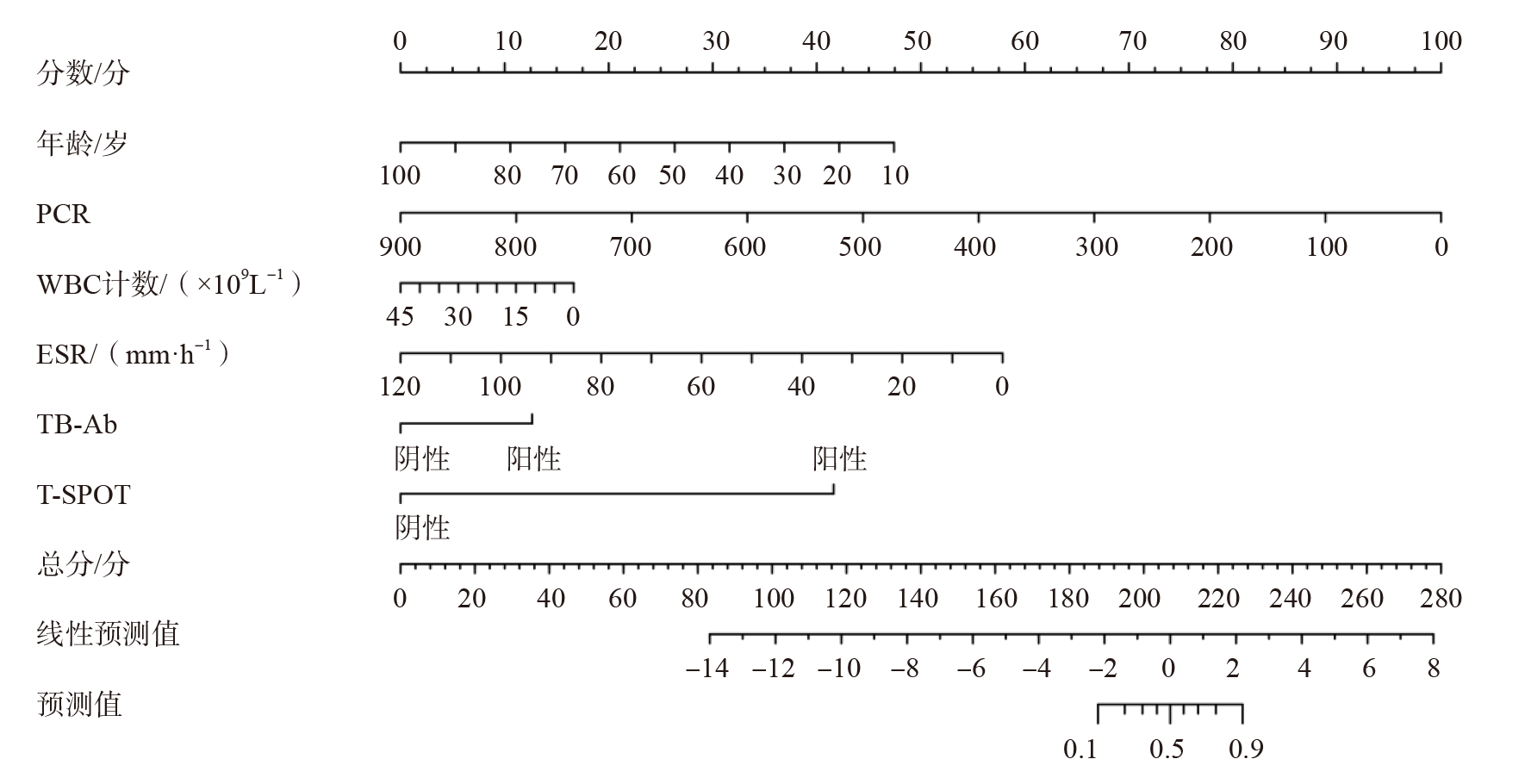
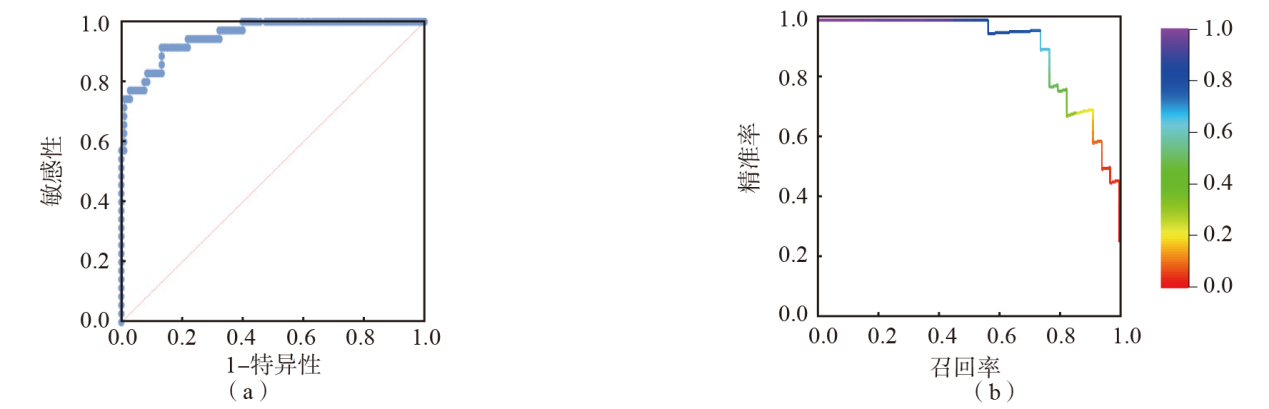
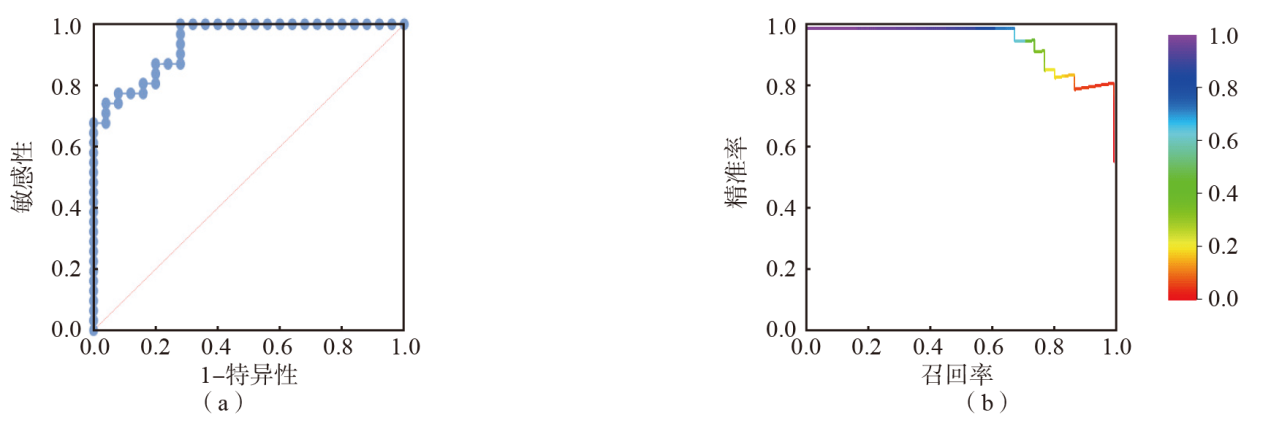
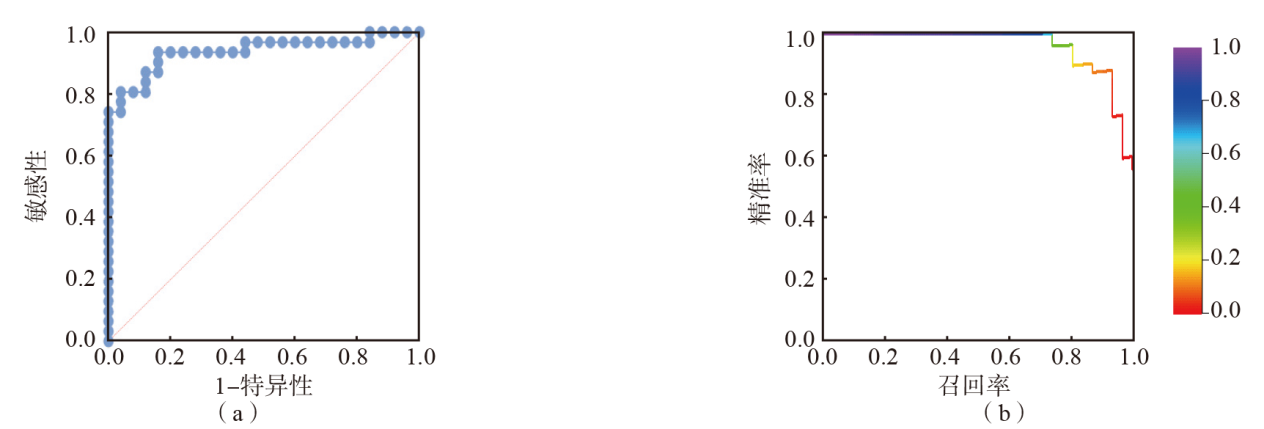
| 中心名称 | AUC | Z值 | P值 | AUC差值 | |
|---|---|---|---|---|---|
| 自建模型 | T-SPOT | ||||
| 青浦中心 | 0.954 6 | 0.895 2 | 2.366 4 | 0.017 96 | 0.059 4 |
| 松江中心 | 0.940 6 | 0.767 1 | 4.782 5 | <0.000 01 | 0.173 5 |
| 同仁中心 | 0.938 1 | 0.839 4 | 2.614 8 | 0.008 928 | 0.098 7 |
| 中心名称 | AUC | Z值 | P值 | AUC差值 | |
|---|---|---|---|---|---|
| 自建模型 | T-SPOT | ||||
| 青浦中心 | 0.954 6 | 0.895 2 | 2.366 4 | 0.017 96 | 0.059 4 |
| 松江中心 | 0.940 6 | 0.767 1 | 4.782 5 | <0.000 01 | 0.173 5 |
| 同仁中心 | 0.938 1 | 0.839 4 | 2.614 8 | 0.008 928 | 0.098 7 |
| [1] | 赖启南, 李雯. Gene Xpert MTB/RIF技术在结核病诊断中的应用[J]. 实用临床医学, 2024, 25(4):11-13. |
| [2] | 彭远远, 包训迪, 徐东芳. 支气管肺泡灌洗液应用涂片抗酸染色T-SPOT TB与GeneXpert MTB/RIF联合检测对菌阴肺结核的诊断价值[J]. 分子诊断与治疗杂志, 2023, 15(6):913-917. |
| [3] | WS 288—2017肺结核诊断[J]. 结核与肺部疾病杂志, 2024, 5(4):376-378. |
| [4] | 陈明亭, 周林, 周新华. 病原学阴性肺结核诊断治疗及质量控制[M]. 北京: 人民卫生出版社, 2020. |
| [5] | 胡鑫洋, 高静韬. 世界卫生组织《2024年全球结核病报告》解读[J]. 结核与肺部疾病杂志, 2024, 5(6):500-504. |
| [6] | 杨春龙, 周林, 陈明亭. 《病原学检测阴性肺结核诊断流程(T/CHATA 008—2020)》解读[J]. 中国防痨杂志, 2021, 43(11):1116-1119. |
| [7] | 翟春涛, 刘玉珍, 王永斌, 等. 病原学阴性初治肺结核临床特征分析及预测模型构建[J]. 国际呼吸杂志, 2024, 44(9):1046-1053. |
| [8] | 刘燕飞, 李涛, 夏愔愔, 等. 2018—2020年结核病定点医院肺外结核和结核性胸膜炎患者次均住院费用及影响因素分析[J]. 中国防痨杂志, 2024, 46(5):509-518. |
| [9] |
Wang Y, Hu P, Tang S, et al. Establishment and evaluation of a diagnostic model for severe pulmonary tuberculosis[J]. Diagn Microbiol Infect Dis, 2025, 113(2):116946.
DOI URL |
| [10] | 蔡玉郭, 郑永利, 何敏, 等. 基于LASSO回归的膝关节结核早期诊断模型的构建及验证[J]. 中国防痨杂志, 2023, 45(3):297-304. |
| [11] |
Li Y, Lu F, Yin Y. Applying logistic LASSO regression for the diagnosis of atypical Crohn's disease[J]. Sci Rep, 2022, 12(1):11340.
DOI PMID |
| [12] | 张文萍, 黄华, 陶建峰, 等. CRP和PCT及血常规对成人不同类型感染的诊断价值[J]. 热带医学杂志, 2023, 23(9):1310-1313. |
| [13] |
Huang C, Zhuo J, Liu C, et al. Development and validation of a diagnostic model to differentiate spinal tuberculosis from pyogenic spondylitis by combining multiple machine learning algorithms[J]. Biomol Biomed, 2024, 24(2):401-410.
DOI URL |
| [14] | 曲染秋. 对脊柱结核患者采取高敏C反应蛋白和血沉检测的意义研究[J]. 中国实用医药, 2021, 16(1):98-100. |
| [15] | 宗新锋. 结核患者结核抗体、血沉以及C-反应蛋白检测的临床分析[J]. 中国卫生标准管理, 2018, 9(8):113-115. |
| [16] | 刘璐, 王希, 张维慧. 中性粒细胞与淋巴细胞比值在肺结核与细菌性社区获得性肺炎鉴别诊断中临床价值[J]. 中国老年学杂志, 2023, 43(3):545-547. |
| [17] |
Hu X, Zhang G, Zhang H, et al. A predictive model for early clinical diagnosis of spinal tuberculosis based on conventional laboratory indices:a multicenter real-world study[J]. Front Cell Infect Microbiol, 2023, 13:1150632.
DOI URL |
| [18] |
Han C, Fang Y, Dong L, et al. A clinical prediction model for rapidly differentiating pulmonary tuberculosis from community acquired pneumonia in children[J]. Ital J Pediatr, 2025, 51(1):271.
DOI PMID |
| [19] | 严建新, 黄林瑶, 江天. C-反应蛋白/白蛋白比值、单核细胞/淋巴细胞比值在肺结核患者中的应用价值[J]. 中国卫生检验杂志, 2022, 32(16):2016-2019. |
| [20] | 石红雨, 聂凡, 夏章, 等. 基于机器学习筛选结核病特异性外周血标志物以区分肺结核和肺癌[J/OL]. 中国热带医学, 2026. |
| [21] | 杨宜英, 黄艳君, 谭耀驹, 等. T-SPOT.TB在菌阳和菌阴结核病诊断中的应用价值[J]. 热带医学杂志, 2016, 16(4):411-414. |
| [22] | 肖洁, 温志华, 刘圣泽, 等. 结核感染T细胞检测在菌阴性肺结核诊断中的应用价值[J]. 系统医学, 2023, 8(22):31-33. |
| [23] |
Jiang B, Ding H, Zhou L, et al. Evaluation of interferon-gamma release assay(T-SPOT.TBTM) for diagnosis of tuberculosis infection in rheumatic disease patients[J]. Int J Rheum Dis, 2016, 19(1):38-42.
DOI PMID |
| Viewed | ||||||
|
Full text |
|
|||||
|
Abstract |
|
|||||
