
Laboratory Medicine ›› 2025, Vol. 40 ›› Issue (12): 1146-1152.DOI: 10.3969/j.issn.1673-8640.2025.12.002
Previous Articles Next Articles
GAO Zikang1, CHEN Jing2
Received:2024-09-05
Revised:2025-04-17
Online:2025-12-30
Published:2025-12-26
CLC Number:
GAO Zikang, CHEN Jing. Construction of a nomogram prediction model for the prognosis of patients with depressive disorder based on the characteristics of peripheral blood lymphocyte subsets[J]. Laboratory Medicine, 2025, 40(12): 1146-1152.
Add to citation manager EndNote|Ris|BibTeX
URL: https://www.shjyyx.com/EN/10.3969/j.issn.1673-8640.2025.12.002
| 组别 | 例数 | 性别 | 年龄/岁 | BMI/ (kg·m-2) | 受教育程度 | |||||||||||
|---|---|---|---|---|---|---|---|---|---|---|---|---|---|---|---|---|
| 男/ [例(%)] | 女/ [例(%)] | 小学/ [例(%)] | 初中/ [例(%)] | 高中/ [例(%)] | 大学及以上/[例(%)] | |||||||||||
| 预后不良组 | 77 | 24(31.2) | 53(68.8) | 35.47±5.07 | 22.16±0.78 | 3(3.9) | 13(16.9) | 25(32.5) | 36(46.8) | |||||||
| 预后良好组 | 89 | 55(61.8) | 34(38.2) | 36.46±5.09 | 22.31±0.82 | 5(5.6) | 15(16.9) | 30(33.7) | 39(43.8) | |||||||
| 统计值 | 15.528 | 1.257 | 1.205 | 0.352 | ||||||||||||
| P值 | <0.001 | 0.211 | 0.230 | 0.950 | ||||||||||||
| 组别 | 独生子女/ [例(%)] | 婚姻状况 | 抑郁障碍家族史/[例(%)] | |||||||||||||
| 已婚/[例(%)] | 未婚/[例(%)] | 离异/[例(%)] | 丧偶/[例(%)] | |||||||||||||
| 预后不良组 | 27(35.1) | 28(36.4) | 31(40.3) | 10(13.0) | 8(10.4) | 19(24.7) | ||||||||||
| 预后良好组 | 36(40.4) | 30(33.7) | 35(39.3) | 14(15.7) | 10(11.3) | 20(22.5) | ||||||||||
| 统计值 | 0.508 | 0.335 | 0.112 | |||||||||||||
| P值 | 0.476 | 0.953 | 0.738 | |||||||||||||
| 组别 | CD3+%/% | CD4+%/% | CD8+%/% | CD4/CD8比值 | DHEAS/(ng·mL-1) | |||||||||||
| 预后不良组 | 54.15±4.92 | 26.13±3.33 | 33.55±3.32 | 0.87±0.16 | 288.52±40.12 | |||||||||||
| 预后良好组 | 60.62±5.02 | 30.52±3.39 | 26.79±3.02 | 1.15±0.19 | 350.25±46.72 | |||||||||||
| 统计值 | 8.367 | 8.398 | 7.650 | 10.454 | 9.058 | |||||||||||
| P值 | <0.001 | <0.001 | <0.001 | <0.001 | <0.001 | |||||||||||
| 组别 | 例数 | 性别 | 年龄/岁 | BMI/ (kg·m-2) | 受教育程度 | |||||||||||
|---|---|---|---|---|---|---|---|---|---|---|---|---|---|---|---|---|
| 男/ [例(%)] | 女/ [例(%)] | 小学/ [例(%)] | 初中/ [例(%)] | 高中/ [例(%)] | 大学及以上/[例(%)] | |||||||||||
| 预后不良组 | 77 | 24(31.2) | 53(68.8) | 35.47±5.07 | 22.16±0.78 | 3(3.9) | 13(16.9) | 25(32.5) | 36(46.8) | |||||||
| 预后良好组 | 89 | 55(61.8) | 34(38.2) | 36.46±5.09 | 22.31±0.82 | 5(5.6) | 15(16.9) | 30(33.7) | 39(43.8) | |||||||
| 统计值 | 15.528 | 1.257 | 1.205 | 0.352 | ||||||||||||
| P值 | <0.001 | 0.211 | 0.230 | 0.950 | ||||||||||||
| 组别 | 独生子女/ [例(%)] | 婚姻状况 | 抑郁障碍家族史/[例(%)] | |||||||||||||
| 已婚/[例(%)] | 未婚/[例(%)] | 离异/[例(%)] | 丧偶/[例(%)] | |||||||||||||
| 预后不良组 | 27(35.1) | 28(36.4) | 31(40.3) | 10(13.0) | 8(10.4) | 19(24.7) | ||||||||||
| 预后良好组 | 36(40.4) | 30(33.7) | 35(39.3) | 14(15.7) | 10(11.3) | 20(22.5) | ||||||||||
| 统计值 | 0.508 | 0.335 | 0.112 | |||||||||||||
| P值 | 0.476 | 0.953 | 0.738 | |||||||||||||
| 组别 | CD3+%/% | CD4+%/% | CD8+%/% | CD4/CD8比值 | DHEAS/(ng·mL-1) | |||||||||||
| 预后不良组 | 54.15±4.92 | 26.13±3.33 | 33.55±3.32 | 0.87±0.16 | 288.52±40.12 | |||||||||||
| 预后良好组 | 60.62±5.02 | 30.52±3.39 | 26.79±3.02 | 1.15±0.19 | 350.25±46.72 | |||||||||||
| 统计值 | 8.367 | 8.398 | 7.650 | 10.454 | 9.058 | |||||||||||
| P值 | <0.001 | <0.001 | <0.001 | <0.001 | <0.001 | |||||||||||
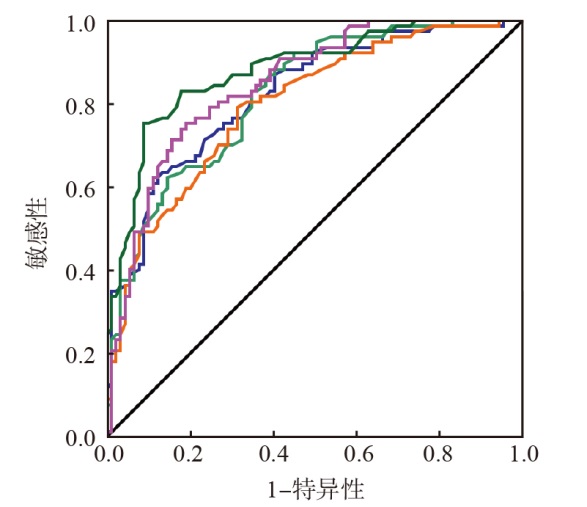
| 项目 | AUC(95%CI①) | 最佳临界值 | 敏感性/% | 特异性/% | Youden指数 |
|---|---|---|---|---|---|
| CD3+% | 0.824(0.757~0.878) | 55.4% | 63.64 | 86.52 | 0.502 |
| CD4+% | 0.822(0.755~0.877) | 29.0% | 83.12 | 65.17 | 0.483 |
| CD8+% | 0.798(0.728~0.856) | 27.7% | 79.22 | 68.54 | 0.478 |
| CD4/CD8比值 | 0.880(0.821~0.925) | 0.95 | 75.32 | 91.01 | 0.663 |
| DHEAS | 0.848(0.784~0.899) | 316.2 ng·mL-1 | 75.32 | 80.90 | 0.562 |
| 项目 | AUC(95%CI①) | 最佳临界值 | 敏感性/% | 特异性/% | Youden指数 |
|---|---|---|---|---|---|
| CD3+% | 0.824(0.757~0.878) | 55.4% | 63.64 | 86.52 | 0.502 |
| CD4+% | 0.822(0.755~0.877) | 29.0% | 83.12 | 65.17 | 0.483 |
| CD8+% | 0.798(0.728~0.856) | 27.7% | 79.22 | 68.54 | 0.478 |
| CD4/CD8比值 | 0.880(0.821~0.925) | 0.95 | 75.32 | 91.01 | 0.663 |
| DHEAS | 0.848(0.784~0.899) | 316.2 ng·mL-1 | 75.32 | 80.90 | 0.562 |
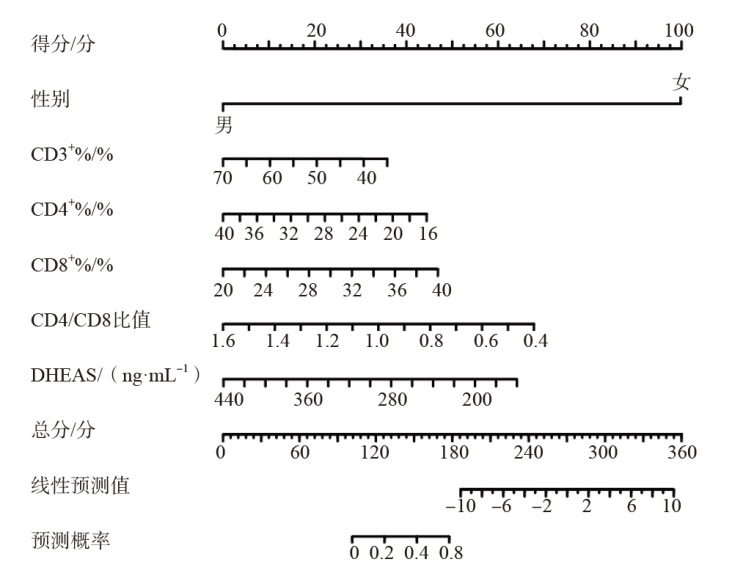
| 项目 | β值 | 标准误 | Wald值 | P值 | OR①值(95%CI) |
|---|---|---|---|---|---|
| 性别 | 1.689 | 0.646 | 6.841 | 0.009 | 5.414(1.527~19.193) |
| CD3+% | 0.557 | 0.196 | 8.076 | 0.003 | 1.746(1.246~2.861) |
| CD4+% | 0.688 | 0.238 | 8.356 | 0.002 | 1.989(1.116~2.736) |
| CD8+% | 0.731 | 0.244 | 8.975 | <0.001 | 2.078(1.526~8.217) |
| CD4/CD8比值 | 1.107 | 0.388 | 8.140 | 0.003 | 3.025(2.369~4.028) |
| DHEAS | 1.050 | 0.359 | 8.554 | <0.001 | 2.857(2.589~3.121) |
| 项目 | β值 | 标准误 | Wald值 | P值 | OR①值(95%CI) |
|---|---|---|---|---|---|
| 性别 | 1.689 | 0.646 | 6.841 | 0.009 | 5.414(1.527~19.193) |
| CD3+% | 0.557 | 0.196 | 8.076 | 0.003 | 1.746(1.246~2.861) |
| CD4+% | 0.688 | 0.238 | 8.356 | 0.002 | 1.989(1.116~2.736) |
| CD8+% | 0.731 | 0.244 | 8.975 | <0.001 | 2.078(1.526~8.217) |
| CD4/CD8比值 | 1.107 | 0.388 | 8.140 | 0.003 | 3.025(2.369~4.028) |
| DHEAS | 1.050 | 0.359 | 8.554 | <0.001 | 2.857(2.589~3.121) |
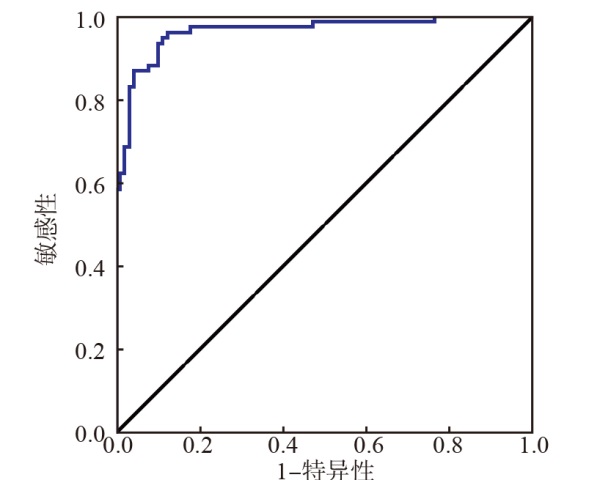
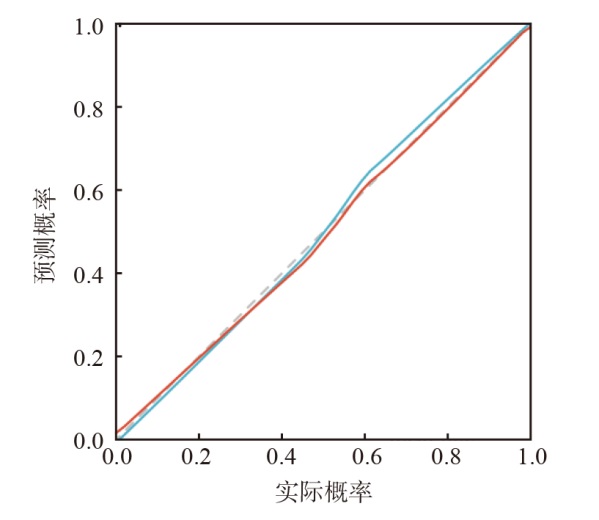
| 项目 | 例数 | 性别 | 年龄/岁 | BMI/(kg·m-2) | 受教育程度 | ||||||||||||
|---|---|---|---|---|---|---|---|---|---|---|---|---|---|---|---|---|---|
| 男/ [例(%)] | 女/ [例(%)] | 小学/ [例(%)] | 初中/ [例(%)] | 高中/ [例(%)] | 大学及以上/[例(%)] | ||||||||||||
| 建模集 | 166 | 79(47.6) | 87(52.4) | 36.00±5.09 | 22.24±0.80 | 8(4.8) | 28(16.9) | 55(33.1) | 75(45.2) | ||||||||
| 验证集 | 72 | 35(48.6) | 37(51.4) | 36.11±5.10 | 22.33±0.78 | 5(6.9) | 15(20.8) | 22(30.6) | 30(41.7) | ||||||||
| 统计值 | 0.021 | 0.155 | 0.781 | 1.096 | |||||||||||||
| P值 | 0.885 | 0.877 | 0.436 | 0.778 | |||||||||||||
| 项目 | 独生子女/ [例(%)] | 婚姻状况 | 抑郁障碍家族史/[例(%)] | ||||||||||||||
| 已婚/[例(%)] | 未婚/[例(%)] | 离异/[例(%)] | 丧偶/[例(%)] | ||||||||||||||
| 建模集 | 63(38.0) | 58(34.9) | 66(39.8) | 24(14.5) | 18(10.8) | 39(23.5) | |||||||||||
| 验证集 | 26(36.1) | 33(45.8) | 28(38.9) | 7(9.7) | 4(5.6) | 16(22.2) | |||||||||||
| 统计值 | 0.073 | 3.952 | 0.046 | ||||||||||||||
| P值 | 0.787 | 0.267 | 0.831 | ||||||||||||||
| 项目 | CD3+%/% | CD4+%/% | CD8+%/% | CD4/CD8比值 | DHEAS/(ng·mL-1) | ||||||||||||
| 建模集 | 57.62±5.92 | 28.48±4.00 | 28.53±3.67 | 1.02±0.23 | 321.61±53.47 | ||||||||||||
| 验证集 | 57.96±6.31 | 28.72±4.27 | 29.25±4.65 | 1.02±0.26 | 323.72±53.36 | ||||||||||||
| 统计值 | 0.402 | 0.413 | 1.270 | 0.167 | 0.279 | ||||||||||||
| P值 | 0.688 | 0.680 | 0.205 | 0.867 | 0.781 | ||||||||||||
| 项目 | 例数 | 性别 | 年龄/岁 | BMI/(kg·m-2) | 受教育程度 | ||||||||||||
|---|---|---|---|---|---|---|---|---|---|---|---|---|---|---|---|---|---|
| 男/ [例(%)] | 女/ [例(%)] | 小学/ [例(%)] | 初中/ [例(%)] | 高中/ [例(%)] | 大学及以上/[例(%)] | ||||||||||||
| 建模集 | 166 | 79(47.6) | 87(52.4) | 36.00±5.09 | 22.24±0.80 | 8(4.8) | 28(16.9) | 55(33.1) | 75(45.2) | ||||||||
| 验证集 | 72 | 35(48.6) | 37(51.4) | 36.11±5.10 | 22.33±0.78 | 5(6.9) | 15(20.8) | 22(30.6) | 30(41.7) | ||||||||
| 统计值 | 0.021 | 0.155 | 0.781 | 1.096 | |||||||||||||
| P值 | 0.885 | 0.877 | 0.436 | 0.778 | |||||||||||||
| 项目 | 独生子女/ [例(%)] | 婚姻状况 | 抑郁障碍家族史/[例(%)] | ||||||||||||||
| 已婚/[例(%)] | 未婚/[例(%)] | 离异/[例(%)] | 丧偶/[例(%)] | ||||||||||||||
| 建模集 | 63(38.0) | 58(34.9) | 66(39.8) | 24(14.5) | 18(10.8) | 39(23.5) | |||||||||||
| 验证集 | 26(36.1) | 33(45.8) | 28(38.9) | 7(9.7) | 4(5.6) | 16(22.2) | |||||||||||
| 统计值 | 0.073 | 3.952 | 0.046 | ||||||||||||||
| P值 | 0.787 | 0.267 | 0.831 | ||||||||||||||
| 项目 | CD3+%/% | CD4+%/% | CD8+%/% | CD4/CD8比值 | DHEAS/(ng·mL-1) | ||||||||||||
| 建模集 | 57.62±5.92 | 28.48±4.00 | 28.53±3.67 | 1.02±0.23 | 321.61±53.47 | ||||||||||||
| 验证集 | 57.96±6.31 | 28.72±4.27 | 29.25±4.65 | 1.02±0.26 | 323.72±53.36 | ||||||||||||
| 统计值 | 0.402 | 0.413 | 1.270 | 0.167 | 0.279 | ||||||||||||
| P值 | 0.688 | 0.680 | 0.205 | 0.867 | 0.781 | ||||||||||||
| [1] |
CHEN C, BEAUNOYER E, GUITTON M J, et al. Physical activity as a clinical tool against depression:opportunities and challenges[J]. J Integr Neurosci, 2022, 21(5):132.
DOI URL |
| [2] |
SHOREY S, NG E D, WONG C H J. Global prevalence of depression and elevated depressive symptoms among adolescents:a systematic review and meta-analysis[J]. Br J Clin Psychol, 2022, 61(2):287-305.
DOI URL |
| [3] |
GARCÍA-GARRO P A, AIBAR-ALMAZÁN A, RIVAS-CAMPO Y, et al. The association of cardiometabolic disease with psychological factors in Colombian people during the COVID-19 pandemic:a cross-sectional study[J]. J Clin Med, 2021, 10(21):4959.
DOI URL |
| [4] |
王明鑫, 李素霞, 宋涛. 抑郁障碍与心血管疾病共病机制的研究进展[J]. 中国全科医学, 2021, 24(11):1426-1430.
DOI |
| [5] | OKADA N, OSHIMA K, MARUKO A, et al. Intron retention as an excellent marker for diagnosing depression and for discovering new potential pathways for drug intervention[J]. Front Psychiatry, 2024,15:1450708. |
| [6] | 杨琬芳, 王青, 杨智超, 等. 炎症驱动抑郁障碍发生发展的机制研究进展[J]. 江苏大学学报(医学版), 2023, 33(5):449-454. |
| [7] | 葛继晖, 张明, 冯树涛, 等. 急性脑梗死后抑郁与外周血T淋巴细胞分化群的相关性研究[J]. 中国实用神经疾病杂志, 2017, 20(10):46-49. |
| [8] | 史莉瑾, 张雪莹, 郭双喜, 等. T淋巴细胞亚群水平对急性脑梗死后抑郁的预测价值[J]. 中国实用神经疾病杂志, 2020, 23(18):1609-1614. |
| [9] | 中华医学会精神病学分会. 中国精神障碍分类与诊断标准第三版(精神障碍分类)[J]. 中华精神科杂志, 2001, 34(3):184-188. |
| [10] | 金洪洲, 徐天朝, 杨冀, 等. 抑郁障碍患者外周血自然杀伤细胞活性及活化性受体表达研究[J]. 临床军医杂志, 2022, 50(12):1245-1248. |
| [11] | 林涌超, 刘恒. 舍曲林治疗对于抑郁障碍患者T淋巴细胞亚群分化的调控[J]. 中外医学研究, 2018, 16(11):1-3. |
| [12] |
GAO W, DENG Z, CAI X, et al. Gender differences in prevalence and clinical correlates of anxiety in first-episode and drug-naïve patients with major depressive disorder comorbid with metabolic syndrome[J]. BMC Psychiatry, 2024, 24(1):156.
DOI PMID |
| [13] | LAFTA M S, MWINYI J, AFFATATO O, et al. Exploring sex differences:insights into gene expression,neuroanatomy,neurochemistry,cognition,and pathology[J]. Front Neurosci, 2024,18:1340108 |
| [14] |
TAKAHASHI T, ELLINGSON M K, WONG P, et al. Sex differences in immune responses that underlie COVID-19 disease outcomes[J]. Nature, 2020, 588(7837):315-320.
DOI |
| [15] | AGUILERA A, VILLANUEVA-MOYA L, EXPÓSITO F. Mapping gender role stress scales utilities:a scoping review approach[J]. Front Psychol, 2024,15:1436337. |
| [16] | 高丽娟, 黄飞兰, 吴小霞, 等. 青少年抑郁障碍患者预后的预测模型[J]. 临床精神医学杂志, 2022, 32(3):190-193. |
| [17] | 孙璐, 张梅梅. 抑郁障碍患者外周血中调节性T细胞比例与细胞因子表达[J]. 系统医学, 2018, 3(16):17-20. |
| [18] | 汤艳清, 谢光荣, 李艳苓, 等. 抑郁障碍患者血中T细胞亚群数量及相关因素的研究[J]. 中国临床心理学杂志, 2004, 12(3):279-280. |
| [19] | FAGNIART M, REYNAERT C, JACQUES D, et al. Depression,gender and cellular immunity:influence of gender and severity of depression on the cellular immunity[J]. Psychiatr Danub, 2016, 28(Suppl-1):179-182. |
| [20] | 黄晓幸. 免疫炎症反应在抑郁障碍中作用的研究进展[J]. 微循环学杂志, 2020, 30(4):78-81. |
| [21] | 李光, 张玲, 贺毅, 等. 抑郁障碍患者外周血记忆性T细胞亚群分析[J]. 北京医学, 2022, 44(6):475-479. |
| [22] | 钱敏才. 伴混合特征的重性抑郁障碍是单相障碍还是双相障碍?[J]. 浙江医学, 2021, 43(5):462-466. |
| [23] |
JEON Y W, HAN S I, PARK E J. The relation between immunologic variables and symptom factors in patients with major depressive disorder[J]. Ann Gen Psychiatry, 2018, 17:32.
DOI |
| [24] | 冯志强, 徐阳, 唐月. 艾司西酞普兰治疗老年抑郁障碍患者的效果[J]. 中国民康医学, 2021, 33(3):57-59. |
| [25] | 阳璐, 陈俊, 方贻儒. 抑郁障碍复发预测研究进展[J]. 精神医学杂志, 2019, 32(2):151-156. |
| [26] |
GORSKA-CIEBIADA M, SARYUSZ-WOLSKA M, BORKOWSKA A, et al. Serum levels of inflammatory markers in depressed elderly patients with diabetes and mild cognitive impairment[J]. PLoS One, 2015, 10(3):e0120433.
DOI URL |
| [27] |
YEUNG H W, SHEN X, STOLICYN A, et al. Spectral clustering based on structural magnetic resonance imaging and its relationship with major depressive disorder and cognitive ability[J]. Eur J Neurosci, 2021, 54(6):6281-6303.
DOI PMID |
| Viewed | ||||||
|
Full text |
|
|||||
|
Abstract |
|
|||||
