
Laboratory Medicine ›› 2026, Vol. 41 ›› Issue (7): 625-630.DOI: 10.3969/j.issn.1673-8640.2026.07.002
Previous Articles Next Articles
GUO Meifeng1, NI Leilei2, ZHANG Xinyuan1, WANG Guiqin3, LI Jihan1( )
)
Received:2024-12-16
Revised:2025-10-11
Online:2026-07-30
Published:2026-07-23
CLC Number:
GUO Meifeng, NI Leilei, ZHANG Xinyuan, WANG Guiqin, LI Jihan. Influence of serum levels of YKL-40,NGAL and SOCS1 in patients with multidrug-resistant tuberculosis after treatment on the conversion of sputum bacteria to negative state[J]. Laboratory Medicine, 2026, 41(7): 625-630.
Add to citation manager EndNote|Ris|BibTeX
URL: https://www.shjyyx.com/EN/10.3969/j.issn.1673-8640.2026.07.002
| 项目 | 例数 | YKL-40/(pg·mL-1) | NGAL/(ng·mL-1) | SOCS1/(μg·L-1) |
|---|---|---|---|---|
| 治疗前 | 149 | 85.48±9.05 | 41.08±5.02 | 135.47±18.61 |
| 治疗后 | 149 | 72.62±8.13 | 32.82±4.95 | 181.77±22.43 |
| t值 | 33.259 | 14.302 | 49.323 | |
| P值 | <0.001 | <0.001 | <0.001 |
| 项目 | 例数 | YKL-40/(pg·mL-1) | NGAL/(ng·mL-1) | SOCS1/(μg·L-1) |
|---|---|---|---|---|
| 治疗前 | 149 | 85.48±9.05 | 41.08±5.02 | 135.47±18.61 |
| 治疗后 | 149 | 72.62±8.13 | 32.82±4.95 | 181.77±22.43 |
| t值 | 33.259 | 14.302 | 49.323 | |
| P值 | <0.001 | <0.001 | <0.001 |
| 组别 | 例数 | 治疗前 | 治疗后 | |||||
|---|---|---|---|---|---|---|---|---|
| YKL-40/(pg·mL-1) | NGAL/(ng·mL-1) | SOCS1/(μg·L-1) | YKL-40/(pg·mL-1) | NGAL/(ng·mL-1) | SOCS1/(μg·L-1) | |||
| 非痰菌阴转组 | 63 | 87.12±10.05 | 41.95±5.13 | 136.95±21.43 | 77.35±6.48 | 37.02±5.14 | 165.89±17.59 | |
| 痰菌阴转组 | 86 | 84.27±9.41 | 40.45±4.72 | 134.38±19.88 | 69.16±6.31 | 29.74±4.68 | 193.41±24.52 | |
| t值 | 1.774 | 1.847 | 0.754 | 7.738 | 8.997 | 7.589 | ||
| P值 | 0.078 | 0.067 | 0.452 | <0.001 | <0.001 | <0.001 | ||
| 组别 | 例数 | 治疗前 | 治疗后 | |||||
|---|---|---|---|---|---|---|---|---|
| YKL-40/(pg·mL-1) | NGAL/(ng·mL-1) | SOCS1/(μg·L-1) | YKL-40/(pg·mL-1) | NGAL/(ng·mL-1) | SOCS1/(μg·L-1) | |||
| 非痰菌阴转组 | 63 | 87.12±10.05 | 41.95±5.13 | 136.95±21.43 | 77.35±6.48 | 37.02±5.14 | 165.89±17.59 | |
| 痰菌阴转组 | 86 | 84.27±9.41 | 40.45±4.72 | 134.38±19.88 | 69.16±6.31 | 29.74±4.68 | 193.41±24.52 | |
| t值 | 1.774 | 1.847 | 0.754 | 7.738 | 8.997 | 7.589 | ||
| P值 | 0.078 | 0.067 | 0.452 | <0.001 | <0.001 | <0.001 | ||
| 组别 | 例数 | 年龄/岁 | 性别 | BMI/(kg·m-2) | 病程/年 | 耐药药物数量 | 高血压史/[例(%)] | ||
|---|---|---|---|---|---|---|---|---|---|
| 男/[例(%)] | 女/[例(%)] | <3种/[例(%)] | ≥3种/[例(%)] | ||||||
| 痰菌阴转组 | 86 | 57.52±4.60 | 44(51.16) | 42(48.84) | 23.64±1.49 | 5.61±1.15 | 53(61.63) | 33(38.97) | 21(24.42) |
| 非痰菌阴转组 | 63 | 57.94±4.98 | 37(58.73) | 26(41.27) | 23.85±1.52 | 5.77±1.13 | 26(41.27) | 37(58.73) | 16(25.40) |
| 统计值 | 0.532 | 0.839 | 0.843 | 0.845 | 6.050 | 0.019 | |||
| P值 | 0.596 | 0.360 | 0.401 | 0.399 | 0.014 | 0.891 | |||
| 组别 | 糖尿病史/[例(%)] | 肺外结核/[例(%)] | 吸烟史/[例(%)] | 饮酒史/[例(%)] | 肺结核空洞/[例(%)] | 治疗类型 | |||
| 初治/[例(%)] | 复治/[例(%)] | ||||||||
| 痰菌阴转组 | 12(13.95) | 25(29.07) | 24(27.91) | 26(30.23) | 16(18.60) | 66(76.74) | 20(23.26) | ||
| 非痰菌阴转组 | 18(28.57) | 23(36.51) | 22(34.92) | 20(31.75) | 19(30.16) | 35(55.56) | 28(44.44) | ||
| 统计值 | 4.832 | 0.921 | 0.838 | 0.039 | 2.701 | 7.476 | |||
| P值 | 0.028 | 0.337 | 0.360 | 0.843 | 0.100 | 0.006 | |||
| 组别 | 例数 | 年龄/岁 | 性别 | BMI/(kg·m-2) | 病程/年 | 耐药药物数量 | 高血压史/[例(%)] | ||
|---|---|---|---|---|---|---|---|---|---|
| 男/[例(%)] | 女/[例(%)] | <3种/[例(%)] | ≥3种/[例(%)] | ||||||
| 痰菌阴转组 | 86 | 57.52±4.60 | 44(51.16) | 42(48.84) | 23.64±1.49 | 5.61±1.15 | 53(61.63) | 33(38.97) | 21(24.42) |
| 非痰菌阴转组 | 63 | 57.94±4.98 | 37(58.73) | 26(41.27) | 23.85±1.52 | 5.77±1.13 | 26(41.27) | 37(58.73) | 16(25.40) |
| 统计值 | 0.532 | 0.839 | 0.843 | 0.845 | 6.050 | 0.019 | |||
| P值 | 0.596 | 0.360 | 0.401 | 0.399 | 0.014 | 0.891 | |||
| 组别 | 糖尿病史/[例(%)] | 肺外结核/[例(%)] | 吸烟史/[例(%)] | 饮酒史/[例(%)] | 肺结核空洞/[例(%)] | 治疗类型 | |||
| 初治/[例(%)] | 复治/[例(%)] | ||||||||
| 痰菌阴转组 | 12(13.95) | 25(29.07) | 24(27.91) | 26(30.23) | 16(18.60) | 66(76.74) | 20(23.26) | ||
| 非痰菌阴转组 | 18(28.57) | 23(36.51) | 22(34.92) | 20(31.75) | 19(30.16) | 35(55.56) | 28(44.44) | ||
| 统计值 | 4.832 | 0.921 | 0.838 | 0.039 | 2.701 | 7.476 | |||
| P值 | 0.028 | 0.337 | 0.360 | 0.843 | 0.100 | 0.006 | |||
| 指标 | β值 | 标准误 | Wald值 | P值 | OR①值(95%CI②) |
|---|---|---|---|---|---|
| 耐药药物数量 | 0.845 | 0.509 | 2.756 | 0.097 | 2.328(0.858~6.313) |
| 糖尿病史 | 0.380 | 0.220 | 2.980 | 0.084 | 1.462(0.950~2.250) |
| 治疗类型 | 0.663 | 0.373 | 3.161 | 0.075 | 1.941(0.934~4.032) |
| YKL-40 | 1.056 | 0.492 | 4.604 | 0.032 | 2.874(1.096~7.539) |
| NGAL | 0.729 | 0.335 | 4.735 | 0.030 | 2.073(1.075~3.997) |
| SOCS1 | -1.537 | 0.614 | 6.267 | 0.012 | 0.215(0.065~0.716) |
| 指标 | β值 | 标准误 | Wald值 | P值 | OR①值(95%CI②) |
|---|---|---|---|---|---|
| 耐药药物数量 | 0.845 | 0.509 | 2.756 | 0.097 | 2.328(0.858~6.313) |
| 糖尿病史 | 0.380 | 0.220 | 2.980 | 0.084 | 1.462(0.950~2.250) |
| 治疗类型 | 0.663 | 0.373 | 3.161 | 0.075 | 1.941(0.934~4.032) |
| YKL-40 | 1.056 | 0.492 | 4.604 | 0.032 | 2.874(1.096~7.539) |
| NGAL | 0.729 | 0.335 | 4.735 | 0.030 | 2.073(1.075~3.997) |
| SOCS1 | -1.537 | 0.614 | 6.267 | 0.012 | 0.215(0.065~0.716) |
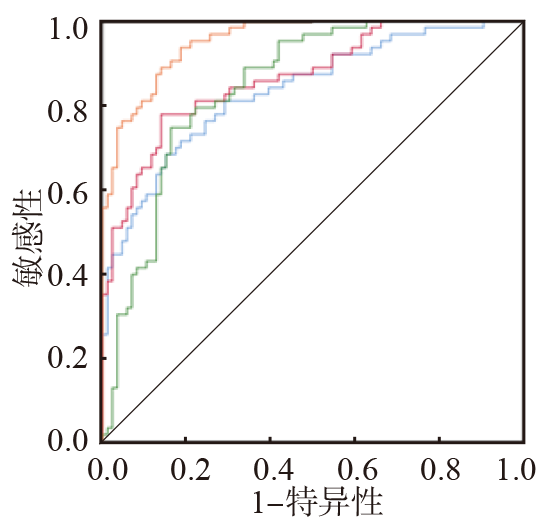
| 项目 | AUC(95%CI) | 最佳临界值 | 敏感性/% | 特异性/% | Youden指数 |
|---|---|---|---|---|---|
| YKL-40 | 0.834(0.768~0.900) | 75.167 pg·mL-1 | 68.25 | 84.88 | 0.531 |
| NGAL | 0.866(0.808~0.925) | 33.102 ng·mL-1 | 77.78 | 86.05 | 0.638 |
| SOCS1 | 0.845(0.783~0.907) | 172.344 μg·L-1 | 74.60 | 83.72 | 0.583 |
| 联合检测 | 0.954(0.926~0.982) | 0.389 | 93.65 | 81.40 | 0.751 |
| 项目 | AUC(95%CI) | 最佳临界值 | 敏感性/% | 特异性/% | Youden指数 |
|---|---|---|---|---|---|
| YKL-40 | 0.834(0.768~0.900) | 75.167 pg·mL-1 | 68.25 | 84.88 | 0.531 |
| NGAL | 0.866(0.808~0.925) | 33.102 ng·mL-1 | 77.78 | 86.05 | 0.638 |
| SOCS1 | 0.845(0.783~0.907) | 172.344 μg·L-1 | 74.60 | 83.72 | 0.583 |
| 联合检测 | 0.954(0.926~0.982) | 0.389 | 93.65 | 81.40 | 0.751 |
| [1] |
Nyasulu P S, Doumbia C O, Ngah V, et al. Multidrug-resistant tuberculosis:latest opinions on epidemiology,rapid diagnosis and management[J]. Curr Opin Pulm Med, 2024, 30(3):217-228.
DOI PMID |
| [2] | 莫东军, 卓玛, 马英莲, 等. 两种抗生素治疗方案对耐多药肺结核患者的疗效[J]. 郑州大学学报(医学版), 2019, 54(6):913-916. |
| [3] | Blazevic N, Rogic D, Pelajic S, et al. YKL-40 as a biomarker in various inflammatory diseases:a review[J]. Biochem Med(Zagreb), 2024, 34(1):10502. |
| [4] |
Romejko K, Markowska M, Niemczyk S. The review of current knowledge on neutrophil gelatinase-associated lipocalin(NGAL)[J]. Int J Mol Sci, 2023, 24(13):10470.
DOI URL |
| [5] | 牟安攀, 金辉. 肺结核患者血清中miR-431、miR-194-5p、SOCS1的表达及诊断效能[J]. 浙江医学, 2022, 44(20):2173-2177. |
| [6] | 中华医学会, 中华医学会杂志社, 中华医学会全科医学分会, 等. 肺结核基层诊疗指南(2018年)[J]. 中华全科医师杂志, 2019, 18(8):709-717. |
| [7] | 耐药结核病化学治疗指南(2019年简版)[J]. 中国防痨杂志, 2019, 41(10):1025-1073. |
| [8] | 初乃惠, 聂文娟. 耐药肺结核全口服化学治疗方案中国专家共识(2021年版)[J]. 中国防痨杂志, 2021, 43(9):859-866. |
| [9] |
Lange C, Barry C E 3rd, Horsburgh C R Jr. Treatments of multidrug-resistant tuberculosis: light at the end of the tunnel[J]. Am J Respir Crit Care Med, 2022, 205(10):1142-1144.
DOI URL |
| [10] | 阮云洲, 苏伟, 张慧, 等. 我国利福平耐药结核病防治的历史沿革及展望[J]. 中国防痨杂志, 2024, 46(10):1166-1170. |
| [11] |
刘健, 徐辉, 杨勇琼, 等. 耐药肺结核患者血清miR-129-3p、miR-144-3p检测的临床价值[J]. 检验医学, 2024, 39(11):1113-1117.
DOI |
| [12] | 谢磊, 梁雅雪, 熊延军, 等. 耐多药肺结核患者3个月末痰菌阴转影响因素分析[J]. 实用医学杂志, 2022, 38(6):701-706. |
| [13] | Specjalski K, Romantowski J, Niedoszytko M. YKL-40 as a possible marker of neutrophilic asthma[J]. Front Med(Lausanne), 2023, 10:1115938. |
| [14] | Tong X, Ma Y, Liu T, et al. Can YKL-40 be used as a biomarker for interstitial lung disease? A systematic review and meta-analysis[J]. Medicine(Baltimore), 2021, 100(17):e25631. |
| [15] | 许柏华, 叶嘉欣, 黄献, 等. 呼吸道合胞病毒肺炎患儿外周血YKL-40与T淋巴细胞亚群的关系[J]. 中国病原生物学杂志, 2024, 19(8):875-879. |
| [16] | 缪治永, 冉晶晶, 牟大超, 等. YKL-40促进Ⅱ型肺泡上皮细胞A549炎症因子的表达[J]. 四川大学学报(医学版), 2023,54(5):954-958. |
| [17] | 谢蓉, 傅蓉. 尿常规、尿液NGAL、MMP-9在老年下尿路感染患者中的临床意义[J]. 中国老年学杂志, 2023, 43(10):2447-2450. |
| [18] |
Yuan L, Jin X. Predictive value of serum NGAL and β2 microglobulin in blood and urine amongst patients with acute pancreatitis and acute kidney injury[J]. Arch Esp Urol, 2023, 76(5):335-340.
DOI |
| [19] | 钟倩, 崔雪曼, 李帅, 等. 尿毒症维持性血液透析患者血清HMGB1、NGAL、 miR-15a、miR-34b水平与导管相关性感染的关联性[J]. 中华医院感染学杂志, 2024, 34(8):1163-1167. |
| [20] | 周云, 罗翠竹, 彭代娇. 革兰阴性菌感染重症肺炎患者miRNA-155与NGAL和PCT及LA对预后的影响[J]. 中华医院感染学杂志, 2021, 31(19):2978-2982. |
| [21] | 施姮, 舒芳芳. 连翘苷调控细胞因子信号转导抑制因子1对肺炎链球菌诱导的肺泡上皮细胞凋亡和氧化应激的影响[J]. 中国临床药理学杂志, 2023, 39(8):1142-1146. |
| [22] | 赵娟, 刘薇, 张珣, 等. 肺结核患者血清IP-10、SOCS1及CA125表达意义及其与引发支气管狭窄的相关性分析[J]. 临床和实验医学杂志, 2024, 23(5):465-469. |
| [23] |
Prêle C M, Iosifidis T, Mcanulty R J, et al. Reduced SOCS1 expression in lung fibroblasts from patients with IPF is not mediated by promoter methylation or mir155[J]. Biomedicines, 2021, 9(5):498.
DOI URL |
| [24] |
Mizuno S, Soma S, Inada H, et al. SOCS1 antagonist-expressing recombinant bacillus calmette-guérin enhances antituberculosis protection in a mouse model[J]. J Immunol, 2019, 203(1):188-197.
DOI PMID |
| Viewed | ||||||
|
Full text |
|
|||||
|
Abstract |
|
|||||
