
检验医学 ›› 2026, Vol. 41 ›› Issue (10): 947-954.DOI: 10.3969/j.issn.1673-8640.2026.10.003
孙圣林1, 林雅榕2, 孙林2, 顾梅秀2( ), 王蓓丽2, 郭玮2
收稿日期:2025-06-25
修回日期:2025-12-21
出版日期:2026-10-30
发布日期:2026-10-20
通讯作者:
顾梅秀,E-mail:gu.meixiu@zs-hospital.sh.cn。
作者简介:孙圣林,男,2000年生,学士,检验技师,主要从事临床检验工作;孙圣林和林雅榕对本研究具有同等贡献,并列为第一作者。
基金资助:
SUN Shenglin1, LIN Yarong2, SUN Lin2, GU Meixiu2(), WANG Beili2, GUO Wei2
Received:2025-06-25
Revised:2025-12-21
Online:2026-10-30
Published:2026-10-20
摘要:
目的 分析术前外周血单核细胞/淋巴细胞比值(MLR)在风湿性心脏病(RHD)患者手术后不良预后中的临床意义。方法 选取 2021年7月—2023年4月复旦大学附属中山医院行瓣膜置换术/成形术的RHD患者110例,收集其实验室检测结果、超声心动图检查结果和相关临床资料。根据MLR判断RHD患者术后不良预后的最佳临界值(0.3),将110例RHD患者分为MLR≥0.3组(46例)和MLR<0.3组(64例),采用Kaplan-Meier生存曲线分析2组患者预后情况。采用Cox回归分析评估RHD患者术后预后不良的影响因素。采用受试者工作特征(ROC)曲线评估MLR联合超声心动图评估RHD患者不良预后的效能。结果 Kaplan-Meier生存曲线显示,MLR≥0.3组术后复发率高于MLR<0.3组(Log-rank χ2=4.475,P=0.034)。MLR(P=0.049)、三尖瓣反流(P=0.018)、心包积液(P=0.007)与RHD患者术后预后不良有关;MLR≥0.3(P=0.048)、存在心包积液(P=0.020)是RHD患者术后预后不良的独立危险因素 [风险比(HR)分别为2.395、5.075,95%可信区间(CI)分别为1.007~5.692、1.296~19.868]。MLR联合三尖瓣反流判断RHD患者术后不良预后的曲线下面积(AUC)为0.699,敏感性为65.2%,特异性为69.0%。结论 MLR≥0.3是RHD患者术后预后不良的独立危险因素,联合超声心动图指标有助于临床筛选高危患者。
中图分类号:
孙圣林, 林雅榕, 孙林, 顾梅秀, 王蓓丽, 郭玮. 术前单核细胞/淋巴细胞比值与风湿性心脏病患者术后不良预后的关系[J]. 检验医学, 2026, 41(10): 947-954.
SUN Shenglin, LIN Yarong, SUN Lin, GU Meixiu, WANG Beili, GUO Wei. Relationship between preoperative monocyte/lymphocyte ratio and postoperative poor prognosis in patients with rheumatic heart disease[J]. Laboratory Medicine, 2026, 41(10): 947-954.
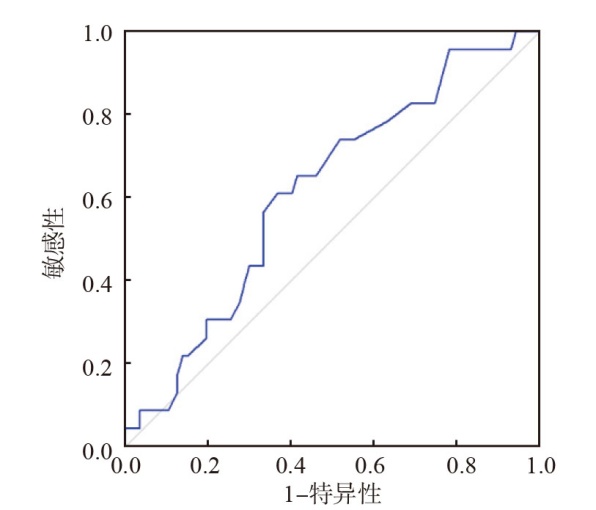
图1 MLR判断RHD患者术后预后不良的ROC曲线
| 组别 | 例数 | 性别 | 年龄 | 血小板计数/(×109L-1) | ||||
|---|---|---|---|---|---|---|---|---|
| 男/[例(%)] | 女/[例(%)] | ≥60岁/[例(%)] | <60岁/[例(%)] | |||||
| MLR<0.3组 | 64 | 19(29.69) | 45(70.31) | 28(43.75) | 36(56.25) | 162.00(134.50,226.00) | ||
| MLR≥0.3组 | 46 | 17(36.96) | 29(63.04) | 27(58.70) | 19(41.30) | 170.78(121.71,219.85) | ||
| 统计值 | 1.100 | 4.504 | -0.230 | |||||
| P值 | 0.294 | 0.034 | 0.818 | |||||
| 组别 | 白细胞计数/(×109L-1) | 总胆红素/(μmol·L-1) | 白蛋白/(g·L-1) | ALT/(U·L-1) | ||||
| MLR<0.3组 | 6.08(4.42,7.74) | 12.85(9.30,16.38) | 41.00(39.00,43.00) | 20.00(14.25,31.50) | ||||
| MLR≥0.3组 | 5.63(3.94,7.32) | 13.95(9.52,19.50) | 40.50(37.75,43.00) | 16.50(10.00,24.00) | ||||
| 统计值 | 1.382 | -0.842 | -0.611 | -1.962 | ||||
| P值 | 0.170 | 0.400 | 0.541 | 0.051 | ||||
| 组别 | Cr/(μmol·L-1) | 估算肾小球滤过率/[mL·(min·1.73m2)-1] | 抗链球菌溶血素O/(IU·mL-1) | CRP/(mg·L-1) | ||||
| MLR<0.3组 | 76.50(70.25,86.75) | 79.00(68.00,93.00) | 48.50(22.75,79.75) | 1.30(0.60,3.80) | ||||
| MLR≥0.3组 | 76.50(65.75,86.25) | 78.24(60.73,95.75) | 46.00(25.00,78.00) | 1.80(1.10,5.95) | ||||
| 统计值 | -0.352 | -0.246 | -0.156 | -2.121 | ||||
| P值 | 0.725 | 0.806 | 0.876 | 0.034 | ||||
| 组别 | cTnT/(ng·mL-1) | BNP/(pg·mL-1) | 手术类型 | |||||
| 二尖瓣置换术/[例(%)] | 三尖瓣成形术/ [例(%)] | 主动脉瓣置换术/[例(%)] | ||||||
| MLR<0.3组 | 0.011(0.007,0.015) | 1 160.00(625.50,1 855.50) | 61(95.31) | 41(64.06) | 30(46.88) | |||
| MLR≥0.3组 | 0.013(0.009,0.021) | 1 161.00(533.50,1 795.25) | 42(91.30) | 31(67.39) | 17(36.96) | |||
| 统计值 | -2.011 | -0.261 | 1.044 | |||||
| P值 | 0.044 | 0.794 | 0.593 | |||||
表1 不同MLR水平RHD患者临床基线特征比较
| 组别 | 例数 | 性别 | 年龄 | 血小板计数/(×109L-1) | ||||
|---|---|---|---|---|---|---|---|---|
| 男/[例(%)] | 女/[例(%)] | ≥60岁/[例(%)] | <60岁/[例(%)] | |||||
| MLR<0.3组 | 64 | 19(29.69) | 45(70.31) | 28(43.75) | 36(56.25) | 162.00(134.50,226.00) | ||
| MLR≥0.3组 | 46 | 17(36.96) | 29(63.04) | 27(58.70) | 19(41.30) | 170.78(121.71,219.85) | ||
| 统计值 | 1.100 | 4.504 | -0.230 | |||||
| P值 | 0.294 | 0.034 | 0.818 | |||||
| 组别 | 白细胞计数/(×109L-1) | 总胆红素/(μmol·L-1) | 白蛋白/(g·L-1) | ALT/(U·L-1) | ||||
| MLR<0.3组 | 6.08(4.42,7.74) | 12.85(9.30,16.38) | 41.00(39.00,43.00) | 20.00(14.25,31.50) | ||||
| MLR≥0.3组 | 5.63(3.94,7.32) | 13.95(9.52,19.50) | 40.50(37.75,43.00) | 16.50(10.00,24.00) | ||||
| 统计值 | 1.382 | -0.842 | -0.611 | -1.962 | ||||
| P值 | 0.170 | 0.400 | 0.541 | 0.051 | ||||
| 组别 | Cr/(μmol·L-1) | 估算肾小球滤过率/[mL·(min·1.73m2)-1] | 抗链球菌溶血素O/(IU·mL-1) | CRP/(mg·L-1) | ||||
| MLR<0.3组 | 76.50(70.25,86.75) | 79.00(68.00,93.00) | 48.50(22.75,79.75) | 1.30(0.60,3.80) | ||||
| MLR≥0.3组 | 76.50(65.75,86.25) | 78.24(60.73,95.75) | 46.00(25.00,78.00) | 1.80(1.10,5.95) | ||||
| 统计值 | -0.352 | -0.246 | -0.156 | -2.121 | ||||
| P值 | 0.725 | 0.806 | 0.876 | 0.034 | ||||
| 组别 | cTnT/(ng·mL-1) | BNP/(pg·mL-1) | 手术类型 | |||||
| 二尖瓣置换术/[例(%)] | 三尖瓣成形术/ [例(%)] | 主动脉瓣置换术/[例(%)] | ||||||
| MLR<0.3组 | 0.011(0.007,0.015) | 1 160.00(625.50,1 855.50) | 61(95.31) | 41(64.06) | 30(46.88) | |||
| MLR≥0.3组 | 0.013(0.009,0.021) | 1 161.00(533.50,1 795.25) | 42(91.30) | 31(67.39) | 17(36.96) | |||
| 统计值 | -2.011 | -0.261 | 1.044 | |||||
| P值 | 0.044 | 0.794 | 0.593 | |||||
| 组别 | 例数 | 二尖瓣狭窄 | 二尖瓣反流 | ||||||
|---|---|---|---|---|---|---|---|---|---|
| 无/[例(%)] | 轻度/[例(%)] | 中度/[例(%)] | 重度/[例(%)] | 无/[例(%)] | 轻度/[例(%)] | 中度/[例(%)] | 重度/[例(%)] | ||
| MLR<0.3组 | 64 | 11(17.19) | 11(17.19) | 29(45.31) | 13(20.31) | 10(15.63) | 16(25.00) | 20(31.25) | 18(28.12) |
| MLR≥0.3组 | 46 | 4(8.70) | 8(17.39) | 15(32.61) | 19(41.30) | 8(17.39) | 12(26.09) | 15(32.61) | 11(23.91) |
| χ2值 | 11.532 | 0.42 | |||||||
| P值 | 0.009 | 0.936 | |||||||
| 组别 | 主动脉瓣钙化 | 主动脉瓣狭窄 | |||||||
| 有/[例(%)] | 无/[例(%)] | 无/[例(%)] | 轻度/[例(%)] | 中度/[例(%)] | 重度/[例(%)] | ||||
| MLR<0.3组 | 12(18.75) | 52(81.25) | 44(68.75) | 8(12.50) | 4(6.25) | 8(12.50) | |||
| MLR≥0.3组 | 7(15.22) | 39(84.78) | 30(65.21) | 7(15.22) | 5(10.87) | 4(8.70) | |||
| χ2值 | 0.567 | 2.455 | |||||||
| P值 | 0.451 | 0.483 | |||||||
| 组别 | 主动脉瓣反流 | 三尖瓣反流 | |||||||
| 无/[例(%)] | 轻度/[例(%)] | 中度/[例(%)] | 重度/[例(%)] | 无/[例(%)] | 轻度/[例(%)] | 中度/[例(%)] | 重度/[例(%)] | ||
| MLR<0.3组 | 24(37.50) | 14(21.88) | 18(28.12) | 8(12.50) | 27(42.19) | 7(10.94) | 22(34.37) | 8(12.50) | |
| MLR≥0.3组 | 15(32.61) | 8(17.39) | 16(34.78) | 7(15.22) | 16(34.78) | 8(17.39) | 17(36.96) | 5(10.87) | |
| χ2值 | 1.909 | 2.216 | |||||||
| P值 | 0.592 | 0.529 | |||||||
| 组别 | 心包积液 | 肺动脉高压 | 附壁血栓 | ||||||
| 有/[例(%)] | 无/[例(%)] | 有/[例(%)] | 无/[例(%)] | 有/[例(%)] | 无/[例(%)] | ||||
| MLR<0.3 | 6(9.34) | 58(90.62) | 8(12.50) | 56(87.50) | 4(6.25) | 60(93.75) | |||
| MLR≥0.3 | 4(8.70) | 42(91.30) | 7(15.22) | 39(84.78) | 7(15.22) | 39(84.78) | |||
| χ2值 | 0 | 0.19 | 4.31 | ||||||
| P值 | 1 | 0.663 | 0.038 | ||||||
表2 不同MLR水平RHD患者超声心动图比较
| 组别 | 例数 | 二尖瓣狭窄 | 二尖瓣反流 | ||||||
|---|---|---|---|---|---|---|---|---|---|
| 无/[例(%)] | 轻度/[例(%)] | 中度/[例(%)] | 重度/[例(%)] | 无/[例(%)] | 轻度/[例(%)] | 中度/[例(%)] | 重度/[例(%)] | ||
| MLR<0.3组 | 64 | 11(17.19) | 11(17.19) | 29(45.31) | 13(20.31) | 10(15.63) | 16(25.00) | 20(31.25) | 18(28.12) |
| MLR≥0.3组 | 46 | 4(8.70) | 8(17.39) | 15(32.61) | 19(41.30) | 8(17.39) | 12(26.09) | 15(32.61) | 11(23.91) |
| χ2值 | 11.532 | 0.42 | |||||||
| P值 | 0.009 | 0.936 | |||||||
| 组别 | 主动脉瓣钙化 | 主动脉瓣狭窄 | |||||||
| 有/[例(%)] | 无/[例(%)] | 无/[例(%)] | 轻度/[例(%)] | 中度/[例(%)] | 重度/[例(%)] | ||||
| MLR<0.3组 | 12(18.75) | 52(81.25) | 44(68.75) | 8(12.50) | 4(6.25) | 8(12.50) | |||
| MLR≥0.3组 | 7(15.22) | 39(84.78) | 30(65.21) | 7(15.22) | 5(10.87) | 4(8.70) | |||
| χ2值 | 0.567 | 2.455 | |||||||
| P值 | 0.451 | 0.483 | |||||||
| 组别 | 主动脉瓣反流 | 三尖瓣反流 | |||||||
| 无/[例(%)] | 轻度/[例(%)] | 中度/[例(%)] | 重度/[例(%)] | 无/[例(%)] | 轻度/[例(%)] | 中度/[例(%)] | 重度/[例(%)] | ||
| MLR<0.3组 | 24(37.50) | 14(21.88) | 18(28.12) | 8(12.50) | 27(42.19) | 7(10.94) | 22(34.37) | 8(12.50) | |
| MLR≥0.3组 | 15(32.61) | 8(17.39) | 16(34.78) | 7(15.22) | 16(34.78) | 8(17.39) | 17(36.96) | 5(10.87) | |
| χ2值 | 1.909 | 2.216 | |||||||
| P值 | 0.592 | 0.529 | |||||||
| 组别 | 心包积液 | 肺动脉高压 | 附壁血栓 | ||||||
| 有/[例(%)] | 无/[例(%)] | 有/[例(%)] | 无/[例(%)] | 有/[例(%)] | 无/[例(%)] | ||||
| MLR<0.3 | 6(9.34) | 58(90.62) | 8(12.50) | 56(87.50) | 4(6.25) | 60(93.75) | |||
| MLR≥0.3 | 4(8.70) | 42(91.30) | 7(15.22) | 39(84.78) | 7(15.22) | 39(84.78) | |||
| χ2值 | 0 | 0.19 | 4.31 | ||||||
| P值 | 1 | 0.663 | 0.038 | ||||||
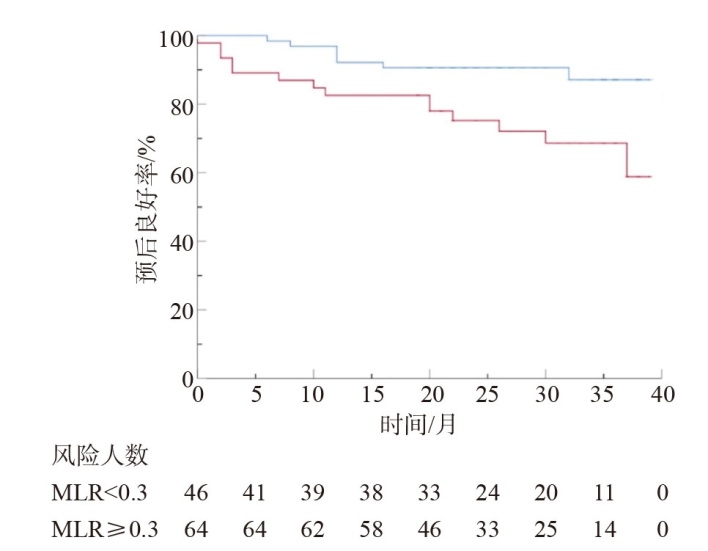
图2 不同MLR水平RHD患者Kaplan-Meier生存曲线 注: MLR<0.3; MLR≥0.3。
| 因素 | β值 | 标准误 | Wald值 | P值 | HR值(95%CI) |
|---|---|---|---|---|---|
| 年龄(≥60岁和<60 岁) | 0.341 | 0.444 | 0.588 | 0.443 | 1.406(0.589~3.356) |
| 性别(男和女) | -0.199 | 0.484 | 0.169 | 0.681 | 0.820(0.318~2.116) |
| 重症监护病房住院时间(≥37 h 和 <37 h) | -0.090 | 0.417 | 0.047 | 0.828 | 0.914(0.403~2.070) |
| 红细胞计数(≥3.80×10¹²·L-1和<3.80×10¹²·L-1) | 0.415 | 0.619 | 0.450 | 0.503 | 1.515(0.450~5.098) |
| 血红蛋白(≥115 g·L-1和<115 g·L-1) | -0.072 | 0.622 | 0.013 | 0.908 | 0.931(0.276~3.145) |
| 血小板计数(≥125×109·L-1和<125×109·L-1) | 0.083 | 0.620 | 0.018 | 0.894 | 1.086(0.322~3.664) |
| MLR(≥0.3和<0.3) | -0.841 | 0.428 | 3.872 | 0.049 | 0.431(0.187~0.997) |
| 总胆红素(≥20.4 μmol·L-1和<20.4 μmol·L-1) | -0.109 | 0.550 | 0.039 | 0.843 | 0.897(0.305~2.637) |
| 白蛋白(≥35 g·L-1和<35 g·L-1) | -1.354 | 0.748 | 3.276 | 0.070 | 0.258(0.060~1.119) |
| ALT(≥40 U·L-1和<40 U·L-1) | 0.319 | 0.620 | 0.265 | 0.606 | 1.376(0.409~4.635) |
| Cr(≥115 μmol·L-1和<115 μmol·L-1) | 0.649 | 0.625 | 1.076 | 0.300 | 1.913(0.562~6.514) |
| 抗链球菌溶血素O(≥200 IU·mL-1和<200 IU·mL-1) | -0.883 | 0.620 | 2.030 | 0.154 | 0.413(0.123~1.394) |
| CRP(≥3.0 mg·L-1和<3.0 mg·L-1) | 0.253 | 0.421 | 0.361 | 0.548 | 1.288(0.564~2.942) |
| cTnT(≥0.014 ng·mL-1和<0.014 ng·mL-1) | 0.223 | 0.421 | 0.282 | 0.595 | 1.250(0.548~2.853) |
| BNP(≥300 pg·mL-1和<300 pg·mL-1) | 0.127 | 0.620 | 0.042 | 0.838 | 1.135(0.337~3.830) |
| 二尖瓣狭窄(无/轻度和中/重度) | 0.382 | 0.247 | 2.386 | 0.122 | 1.465(0.902~2.377) |
| 主动脉瓣狭窄(无/轻度和中/重度) | 0.206 | 0.209 | 0.968 | 0.325 | 1.228(0.816~1.850) |
| 二尖瓣反流(无/轻度和中/重度) | -0.049 | 0.228 | 0.046 | 0.831 | 0.952(0.609~1.489) |
| 主动脉瓣反流(无/轻度和中/重度) | 0.414 | 0.215 | 3.706 | 0.054 | 1.513(0.993~2.306) |
| 三尖瓣反流(无/轻度和中/重度) | 0.486 | 0.206 | 5.573 | 0.018 | 1.625(1.086~2.433) |
| 心包积液(有和无) | 1.729 | 0.636 | 7.385 | 0.007 | 5.635(1.619~19.611) |
| 肺动脉高压(有和无) | -0.457 | 0.741 | 0.380 | 0.538 | 0.633(0.148~2.706) |
| 附壁血栓(有和无) | -0.006 | 0.742 | 0.000 | 0.993 | 0.994(0.232~4.254) |
| 二尖瓣置换术(有和无) | 0.462 | 1.023 | 0.204 | 0.651 | 1.587(0.214~11.778) |
| 三尖瓣成形术(有和无) | 0.230 | 0.454 | 0.256 | 0.613 | 1.258(0.517~3.063) |
| 主动脉瓣置换术(有和无) | -0.196 | 0.427 | 0.211 | 0.646 | 0.822(0.356~1.899) |
表3 RHD患者术后预后不良单因素Cox回归分析
| 因素 | β值 | 标准误 | Wald值 | P值 | HR值(95%CI) |
|---|---|---|---|---|---|
| 年龄(≥60岁和<60 岁) | 0.341 | 0.444 | 0.588 | 0.443 | 1.406(0.589~3.356) |
| 性别(男和女) | -0.199 | 0.484 | 0.169 | 0.681 | 0.820(0.318~2.116) |
| 重症监护病房住院时间(≥37 h 和 <37 h) | -0.090 | 0.417 | 0.047 | 0.828 | 0.914(0.403~2.070) |
| 红细胞计数(≥3.80×10¹²·L-1和<3.80×10¹²·L-1) | 0.415 | 0.619 | 0.450 | 0.503 | 1.515(0.450~5.098) |
| 血红蛋白(≥115 g·L-1和<115 g·L-1) | -0.072 | 0.622 | 0.013 | 0.908 | 0.931(0.276~3.145) |
| 血小板计数(≥125×109·L-1和<125×109·L-1) | 0.083 | 0.620 | 0.018 | 0.894 | 1.086(0.322~3.664) |
| MLR(≥0.3和<0.3) | -0.841 | 0.428 | 3.872 | 0.049 | 0.431(0.187~0.997) |
| 总胆红素(≥20.4 μmol·L-1和<20.4 μmol·L-1) | -0.109 | 0.550 | 0.039 | 0.843 | 0.897(0.305~2.637) |
| 白蛋白(≥35 g·L-1和<35 g·L-1) | -1.354 | 0.748 | 3.276 | 0.070 | 0.258(0.060~1.119) |
| ALT(≥40 U·L-1和<40 U·L-1) | 0.319 | 0.620 | 0.265 | 0.606 | 1.376(0.409~4.635) |
| Cr(≥115 μmol·L-1和<115 μmol·L-1) | 0.649 | 0.625 | 1.076 | 0.300 | 1.913(0.562~6.514) |
| 抗链球菌溶血素O(≥200 IU·mL-1和<200 IU·mL-1) | -0.883 | 0.620 | 2.030 | 0.154 | 0.413(0.123~1.394) |
| CRP(≥3.0 mg·L-1和<3.0 mg·L-1) | 0.253 | 0.421 | 0.361 | 0.548 | 1.288(0.564~2.942) |
| cTnT(≥0.014 ng·mL-1和<0.014 ng·mL-1) | 0.223 | 0.421 | 0.282 | 0.595 | 1.250(0.548~2.853) |
| BNP(≥300 pg·mL-1和<300 pg·mL-1) | 0.127 | 0.620 | 0.042 | 0.838 | 1.135(0.337~3.830) |
| 二尖瓣狭窄(无/轻度和中/重度) | 0.382 | 0.247 | 2.386 | 0.122 | 1.465(0.902~2.377) |
| 主动脉瓣狭窄(无/轻度和中/重度) | 0.206 | 0.209 | 0.968 | 0.325 | 1.228(0.816~1.850) |
| 二尖瓣反流(无/轻度和中/重度) | -0.049 | 0.228 | 0.046 | 0.831 | 0.952(0.609~1.489) |
| 主动脉瓣反流(无/轻度和中/重度) | 0.414 | 0.215 | 3.706 | 0.054 | 1.513(0.993~2.306) |
| 三尖瓣反流(无/轻度和中/重度) | 0.486 | 0.206 | 5.573 | 0.018 | 1.625(1.086~2.433) |
| 心包积液(有和无) | 1.729 | 0.636 | 7.385 | 0.007 | 5.635(1.619~19.611) |
| 肺动脉高压(有和无) | -0.457 | 0.741 | 0.380 | 0.538 | 0.633(0.148~2.706) |
| 附壁血栓(有和无) | -0.006 | 0.742 | 0.000 | 0.993 | 0.994(0.232~4.254) |
| 二尖瓣置换术(有和无) | 0.462 | 1.023 | 0.204 | 0.651 | 1.587(0.214~11.778) |
| 三尖瓣成形术(有和无) | 0.230 | 0.454 | 0.256 | 0.613 | 1.258(0.517~3.063) |
| 主动脉瓣置换术(有和无) | -0.196 | 0.427 | 0.211 | 0.646 | 0.822(0.356~1.899) |
| 因素 | B值 | 标准误 | Wald值 | P值 | HR值(95%CI) |
|---|---|---|---|---|---|
| 年龄(≥60岁和<60岁) | 0.340 | 0.435 | 0.612 | 0.434 | 1.405(0.599~3.294) |
| 性别(男和女) | 0.244 | 0.492 | 0.246 | 0.620 | 1.276(0.487~3.345) |
| MLR(≥0.3和<0.3) | 0.873 | 0.442 | 3.908 | 0.048 | 2.395(1.007~5.692) |
| 三尖瓣反流(无/轻度和中/重度) | 0.367 | 0.204 | 3.225 | 0.073 | 1.443(0.967~2.154) |
| 心包积液(有和无) | 1.624 | 0.696 | 5.442 | 0.020 | 5.075(1.296~19.868) |
表4 RHD患者术后预后不良多因素Cox回归分析
| 因素 | B值 | 标准误 | Wald值 | P值 | HR值(95%CI) |
|---|---|---|---|---|---|
| 年龄(≥60岁和<60岁) | 0.340 | 0.435 | 0.612 | 0.434 | 1.405(0.599~3.294) |
| 性别(男和女) | 0.244 | 0.492 | 0.246 | 0.620 | 1.276(0.487~3.345) |
| MLR(≥0.3和<0.3) | 0.873 | 0.442 | 3.908 | 0.048 | 2.395(1.007~5.692) |
| 三尖瓣反流(无/轻度和中/重度) | 0.367 | 0.204 | 3.225 | 0.073 | 1.443(0.967~2.154) |
| 心包积液(有和无) | 1.624 | 0.696 | 5.442 | 0.020 | 5.075(1.296~19.868) |
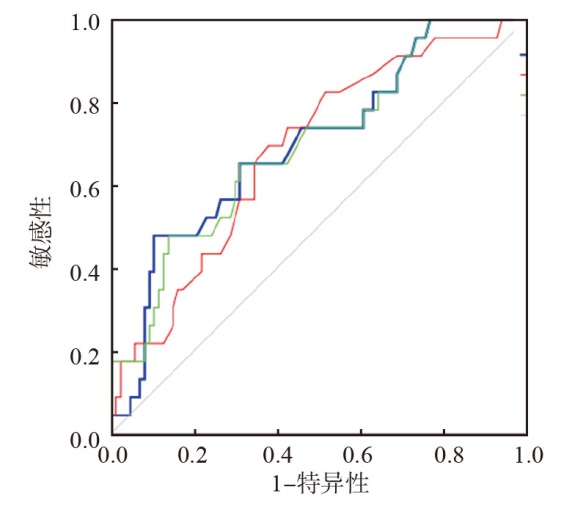
图3 MLR、超声心动图联合判断RHD患者术后预后的ROC曲线 注: MLR+三尖瓣反流; MLR+心包积液; MLR+三尖瓣反流+心包积液; 参考线。
| [1] | Yadav M, Shah N A, Bhandari K, et al. Socio-economic determinants influencing adherence to secondary prophylaxis in patients with rheumatic heart disease:a systematic review[J]. Ann Med Surg(Lond), 2024, 86(7):4092-4097. |
| [2] | 姬楠楠, 杨晓静, 谢勇. 单核细胞/高密度脂蛋白比值与心血管疾病的研究进展[J]. 心血管病学进展, 2019, 40(7):1019-1023. |
| [3] |
Leal M T B C, Passos L S A, Guarçoni F V, et al. Rheumatic heart disease in the modern era:recent developments and current challenges[J]. Rev Soc Bras Med Trop, 2019, 52:e20180041.
DOI URL |
| [4] |
Lee H J, Cho I, Kim D Y, et al. Shifts in clinical characteristics,treatment,and outcome for rheumatic mitral stenosis:insights from a 20-year multicentre registry study in Korea[J]. J Korean Med Sci, 2024, 39(17):e152.
DOI URL |
| [5] |
He V Y, Condon J R, Ralph A P, et al. Long-term outcomes from acute rheumatic fever and rheumatic heart disease:a data-linkage and survival analysis approach[J]. Circulation, 2016, 134(3):222-232.
DOI URL |
| [6] | Kumar R K, Antunes M J, Beaton A, et al. Contemporary diagnosis and management of rheumatic heart disease:implications for closing the gap:a scientific statement from the American Heart Association[J]. Circulation, 2020, 142(20):e337-e357. |
| [7] |
Arneth B. Current knowledge about nonclassical monocytes in patients with multiple sclerosis,a systematic review[J]. Int J Mol Sci, 2024, 25(13):7372.
DOI URL |
| [8] |
Liu J, Sun R, Cai K, et al. A nomogram combining neutrophil to lymphocyte ratio(NLR) and prognostic nutritional index(PNI) to predict distant metastasis in gastric cancer[J]. Sci Rep, 2024, 14(1):15391.
DOI |
| [9] |
Zengin A, Karaca M, Aruaslan E, et al. Performance of neutrophil to lymphocyte ratio for the prediction of long-term morbidity and mortality in coronary slow flow phenomenon patients presented with non-ST segment elevation acute coronary syndrome[J]. J Cardiovasc Thorac Res, 2021, 13(2):125-130.
DOI PMID |
| [10] |
Gewitz M H, Baltimore R S, Tani L Y, et al. Revision of the Jones Criteria for the diagnosis of acute rheumatic fever in the era of Doppler echocardiography:a scientific statement from the American Heart Association[J]. Circulation, 2015, 131(20):1806-1818.
DOI URL |
| [11] |
Pandian N G, Kim J K, Arias-godinez J A, et al. Recommendations for the use of echocardiography in the evaluation of rheumatic heart disease:a report from the American Society of Echocardiography[J]. J Am Soc Echocardiogr, 2023, 36(1):3-28.
DOI URL |
| [12] |
Akins C W, Miller D C, Turina M I, et al. Guidelines for reporting mortality and morbidity after cardiac valve interventions[J]. J Thorac Cardiovasc Surg, 2008, 135(4):732-738.
DOI PMID |
| [13] | 郑勇, 汤昔康, 黄震, 等. 风湿性心脏病患者瓣膜置换术后感染的危险因素分析[J]. 中华医院感染学杂志, 2016, 26(13):3011-3013. |
| [14] | 张世权, 徐高俊, 王保才, 等. 二尖瓣成形对比二尖瓣置换治疗风湿性二尖瓣病变的近期临床疗效分析[J]. 临床心血管病杂志, 2022, 38(11):904-908. |
| [15] | 刘洪序, 刘光祖, 陈阳, 等. 经导管二尖瓣置换术与二次手术二尖瓣置换术疗效对比的荟萃分析[J]. 中国心血管杂志, 2024, 29(1):65-72. |
| [16] |
Johannsen R A, Kaltenborn Z P, Shroff G R. Saving time saves lives! A time focused evaluation of a single-view echocardiographic screening protocol for subclinical rheumatic heart disease[J]. Int J Cardiol, 2022, 351:111-114.
DOI URL |
| [17] | BAJWA S F, MOHAMMED R H. Type Ⅱ hypersensitivity reaction[M]. StatPearls: Treasure Island(FL) ineligible companies, 2024. |
| [18] |
Gomes N F A, Pascoal-xavier M A, Passos L S A, et al. Histopathological characterization of mitral valvular lesions from patients with rheumatic heart disease[J]. Arq Bras Cardiol, 2021, 116(3):404-412.
DOI PMID |
| [19] |
Ordikhani F, Pothula V, Sanchez-tarjuelo R, et al. Macrophages in organ transplantation[J]. Front Immunol, 2020, 11:582939.
DOI URL |
| [20] |
Von Haehling S, Schefold J C, Jankowska E, et al. Leukocyte redistribution:effects of beta blockers in patients with chronic heart failure[J]. PLoS One, 2009, 4(7):e6411.
DOI URL |
| [21] |
Wei X B, Chen W J, Duan C Y, et al. Joint effects of uric acid and lymphocyte count on adverse outcomes in elderly patients with rheumatic heart disease undergoing valve replacement surgery[J]. J Thorac Cardiovasc Surg, 2019, 158(2):420-427.e1.
DOI URL |
| [22] |
Vakhshoori M, Nemati S, Sabouhi S, et al. Prognostic impact of monocyte-to-lymphocyte ratio in coronary heart disease:a systematic review and meta-analysis[J]. J Int Med Res, 2023, 51(10):3000605231204469.
DOI URL |
| [23] |
Li X, Chen Y, Yuan Q, et al. Neutrophil-to-lymphocyte ratio,monocyte-to-lymphocyte ratio,platelet-to-lymphocyte ratio associated with 28-day all-cause mortality in septic patients with coronary artery disease:a retrospective analysis of MIMIC-Ⅳ database[J]. BMC Infect Dis, 2024, 24(1):749.
DOI |
| [24] |
Zhai G, Liu Y, Wang J, et al. Association of monocyte-lymphocyte ratio with in-hospital mortality in cardiac intensive care unit patients[J]. Int Immunopharmacol, 2021, 96:107736.
DOI URL |
| [25] | Chen H, Li M, Liu L, et al. Monocyte/lymphocyte ratio is related to the severity of coronary artery disease and clinical outcome in patients with non-ST-elevation myocardial infarction[J]. Medicine(Baltimore), 2019, 98(26):e16267. |
| [26] | 李彤, 蔡振杰, 刘维永, 等. 生物瓣心瓣膜置换术后远期疗效[J]. 中国胸心血管外科临床杂志, 2006, 13(3):197-198. |
| [1] | 赵芳, 姜国荣, 史淑月, 肖剑, 马少林, 李润浦. 血清PDK1和SFRP4在非小细胞肺癌患者预后评估中的价值[J]. 检验医学, 2026, 41(9): 860-866. |
| [2] | 王利娴, 郭娜, 宋然, 陈利蜜, 王晓静. 血清PARK7、sTLT-1在重症肺炎合并呼吸衰竭患者短期预后评估中的价值[J]. 检验医学, 2026, 41(8): 729-736. |
| [3] | 陈云, 胡立杰, 王婷婷, 叶盛前. 血清PRDX1、TSG-6水平与难治性肺炎支原体肺炎患儿病情及预后的关系[J]. 检验医学, 2026, 41(8): 737-743. |
| [4] | 和一鸣, 王立康, 刘文庆, 张丽娜. 长链非编码RNA在胶质瘤发生发展中的研究进展[J]. 检验医学, 2026, 41(8): 818-823. |
| [5] | 翁文浩. 结直肠癌实验室诊断技术迭代:从早筛优化到MRD精准监测[J]. 检验医学, 2026, 41(4): 309-317. |
| [6] | 曹传扬, 强光辉, 于宽勇. 结直肠癌患者术后化疗期FZD6 mRNA表达动态变化及对预后的预测价值[J]. 检验医学, 2026, 41(4): 337-345. |
| [7] | 陈学飞, 黄娟, 任圣洁, 闵向阳, 徐子真. 跨膜蛋白205对结直肠癌患者预后作用的研究[J]. 检验医学, 2026, 41(4): 346-354. |
| [8] | 王源, 陈丹, 黄娜. 基于MIMIC-Ⅳ数据库数据分析红细胞分布宽度/血小板计数比值预测ARDS患者短期预后的价值[J]. 检验医学, 2026, 41(4): 362-368. |
| [9] | 王向辉, 李小芹, 薛福敏. 血清TNF-α、hs-CRP、IL-22在儿童克罗恩病疾病活动度和预后评估中的作用[J]. 检验医学, 2026, 41(4): 386-390. |
| [10] | 何红梅, 张兴隆, 张静, 石亚楠. 血清MASP-2、sB7-H1水平与中晚期肝细胞肝癌患者临床特征和预后的关系[J]. 检验医学, 2026, 41(3): 251-257. |
| [11] | 盖慧荣, 周师慧, 李伟, 李新. p53、p300、miR-944表达在非小细胞肺癌患者预后评估中的价值[J]. 检验医学, 2026, 41(2): 169-176. |
| [12] | 游星兰, 丁卉, 麻丹青, 陈晶, 董泽嵩, 胡晓蕾. 真菌血流感染病原学特征和预后危险因素[J]. 检验医学, 2026, 41(1): 58-62. |
| [13] | 袁昳玮, 王艺文, 费张莉, 黄湾. 基于炎症指标构建抗MDA5抗体阳性皮肌炎合并间质性肺炎患者预后不良风险评估模型[J]. 检验医学, 2025, 40(9): 841-847. |
| [14] | 傅爱. 肺结核患者血清miR-125b、miR-423表达与疾病活动性、预后的关系[J]. 检验医学, 2025, 40(9): 862-866. |
| [15] | 刘昊, 付淼, 刘蓬, 田文, 王莎, 尹晓梅, 王东海. WDR5和miR-455-5p表达在宫颈癌诊断和预后评估中的价值[J]. 检验医学, 2025, 40(9): 867-874. |
| 阅读次数 | ||||||
|
全文 |
|
|||||
|
摘要 |
|
|||||

