
Laboratory Medicine ›› 2026, Vol. 41 ›› Issue (5): 476-482.DOI: 10.3969/j.issn.1673-8640.2026.05.010
Previous Articles Next Articles
GUO Changcheng, YANG Kun, ZHAO Xiaoqin, JIA Liping, LI Yan
Received:2024-11-28
Revised:2025-09-24
Online:2026-05-30
Published:2026-05-29
CLC Number:
GUO Changcheng, YANG Kun, ZHAO Xiaoqin, JIA Liping, LI Yan. Construction of risk prediction model of secondary bloodstream infection of ICU patients based on machine learning algorithm[J]. Laboratory Medicine, 2026, 41(5): 476-482.
Add to citation manager EndNote|Ris|BibTeX
URL: https://www.shjyyx.com/EN/10.3969/j.issn.1673-8640.2026.05.010
| 菌株类型 | 菌株数/株 | 构成比/% |
|---|---|---|
| 肺炎克雷伯菌 | 399 | 57.00 |
| 大肠埃希菌 | 127 | 18.14 |
| 阴沟肠杆菌 | 102 | 14.57 |
| 黏质沙雷菌 | 18 | 2.57 |
| 产气克雷伯菌 | 15 | 2.14 |
| 摩氏摩根菌摩根亚种 | 15 | 2.14 |
| 产酸克雷伯菌 | 11 | 1.57 |
| 奇异变形杆菌 | 6 | 0.86 |
| 雷氏普罗威登斯菌 | 2 | 0.29 |
| (柯/克)克氏柠檬酸杆菌 | 1 | 0.14 |
| 非脱羧勒克氏菌 | 1 | 0.14 |
| 其他 | 3 | 0.44 |
| 菌株类型 | 菌株数/株 | 构成比/% |
|---|---|---|
| 肺炎克雷伯菌 | 399 | 57.00 |
| 大肠埃希菌 | 127 | 18.14 |
| 阴沟肠杆菌 | 102 | 14.57 |
| 黏质沙雷菌 | 18 | 2.57 |
| 产气克雷伯菌 | 15 | 2.14 |
| 摩氏摩根菌摩根亚种 | 15 | 2.14 |
| 产酸克雷伯菌 | 11 | 1.57 |
| 奇异变形杆菌 | 6 | 0.86 |
| 雷氏普罗威登斯菌 | 2 | 0.29 |
| (柯/克)克氏柠檬酸杆菌 | 1 | 0.14 |
| 非脱羧勒克氏菌 | 1 | 0.14 |
| 其他 | 3 | 0.44 |
 |
| |
| 相关因素 | β值 | P值 | 95%CI① | VIF | |
|---|---|---|---|---|---|
| 下限 | 上限 | ||||
| ICU停留时间 | 26.097 | <0.001 | 0.062 | 0.072 | 1.051 |
| 菌株携带mcr-9 | 3.903 | <0.001 | 0.098 | 0.296 | 1.016 |
| 年龄 | 3.226 | 0.001 | 0.001 | 0.004 | 1.021 |
| 发生腹腔内感染 | 3.006 | 0.003 | 0.033 | 0.156 | 1.010 |
| 血培养PBS | 2.603 | 0.009 | 0.004 | 0.032 | 1.023 |
| 中性粒细胞缺乏 | 2.320 | 0.021 | 0.015 | 0.184 | 1.020 |
| 相关因素 | β值 | P值 | 95%CI① | VIF | |
|---|---|---|---|---|---|
| 下限 | 上限 | ||||
| ICU停留时间 | 26.097 | <0.001 | 0.062 | 0.072 | 1.051 |
| 菌株携带mcr-9 | 3.903 | <0.001 | 0.098 | 0.296 | 1.016 |
| 年龄 | 3.226 | 0.001 | 0.001 | 0.004 | 1.021 |
| 发生腹腔内感染 | 3.006 | 0.003 | 0.033 | 0.156 | 1.010 |
| 血培养PBS | 2.603 | 0.009 | 0.004 | 0.032 | 1.023 |
| 中性粒细胞缺乏 | 2.320 | 0.021 | 0.015 | 0.184 | 1.020 |
| 相关因素 | β值 | 标准误 | Wald值 | P值 | OR①值(95%CI) |
|---|---|---|---|---|---|
| 年龄 | 0.049 | 0.023 | 4.414 | 0.036 | 1.050(1.003~1.098) |
| 发生腹腔内感染 | 1.513 | 0.785 | 3.711 | 0.054 | 4.539(0.974~21.156) |
| ICU停留时间 | 1.924 | 0.325 | 35.091 | <0.001 | 6.851(3.624~12.950) |
| 中性粒细胞缺乏 | 1.432 | 1.002 | 2.042 | 0.153 | 4.186(0.587~29.833) |
| 血培养PBS | 0.453 | 0.220 | 4.232 | 0.040 | 1.573(1.022~2.422) |
| 菌株携带mcr-9 | 2.249 | 0.955 | 5.540 | 0.019 | 9.476(1.457~61.640) |
| 相关因素 | β值 | 标准误 | Wald值 | P值 | OR①值(95%CI) |
|---|---|---|---|---|---|
| 年龄 | 0.049 | 0.023 | 4.414 | 0.036 | 1.050(1.003~1.098) |
| 发生腹腔内感染 | 1.513 | 0.785 | 3.711 | 0.054 | 4.539(0.974~21.156) |
| ICU停留时间 | 1.924 | 0.325 | 35.091 | <0.001 | 6.851(3.624~12.950) |
| 中性粒细胞缺乏 | 1.432 | 1.002 | 2.042 | 0.153 | 4.186(0.587~29.833) |
| 血培养PBS | 0.453 | 0.220 | 4.232 | 0.040 | 1.573(1.022~2.422) |
| 菌株携带mcr-9 | 2.249 | 0.955 | 5.540 | 0.019 | 9.476(1.457~61.640) |
| 项目 | 重要性 | 正态化自变量重要性/% |
|---|---|---|
| ICU停留时间 | 0.472 | 100.0 |
| 菌株携带mcr-9 | 0.141 | 25.9 |
| 发生腹腔内感染 | 0.134 | 16.6 |
| 年龄 | 0.126 | 11.4 |
| 中性粒细胞缺乏 | 0.065 | 6.3 |
| 血培养PBS | 0.062 | 5.2 |
| 项目 | 重要性 | 正态化自变量重要性/% |
|---|---|---|
| ICU停留时间 | 0.472 | 100.0 |
| 菌株携带mcr-9 | 0.141 | 25.9 |
| 发生腹腔内感染 | 0.134 | 16.6 |
| 年龄 | 0.126 | 11.4 |
| 中性粒细胞缺乏 | 0.065 | 6.3 |
| 血培养PBS | 0.062 | 5.2 |
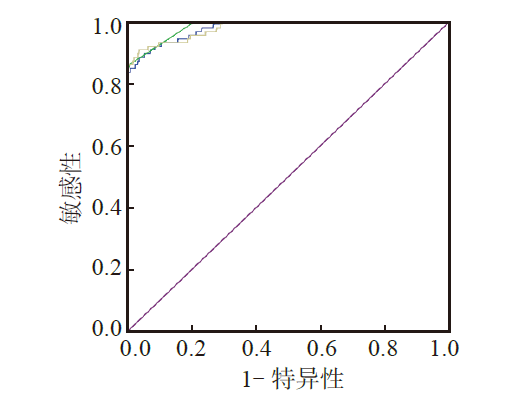
| 模型 | AUC(95%CI) | 敏感性/% | 特异性/% | P值 |
|---|---|---|---|---|
| Logistic回归模型 | 0.978(0.965~0.992) | 88.2 | 95.8 | <0.001 |
| CRT模型 | 0.984(0.973~0.994) | 85.9 | 98.9 | <0.001 |
| BPNN模型 | 0.978(0.964~0.993) | 90.6 | 95.8 | <0.001 |
| 模型 | AUC(95%CI) | 敏感性/% | 特异性/% | P值 |
|---|---|---|---|---|
| Logistic回归模型 | 0.978(0.965~0.992) | 88.2 | 95.8 | <0.001 |
| CRT模型 | 0.984(0.973~0.994) | 85.9 | 98.9 | <0.001 |
| BPNN模型 | 0.978(0.964~0.993) | 90.6 | 95.8 | <0.001 |
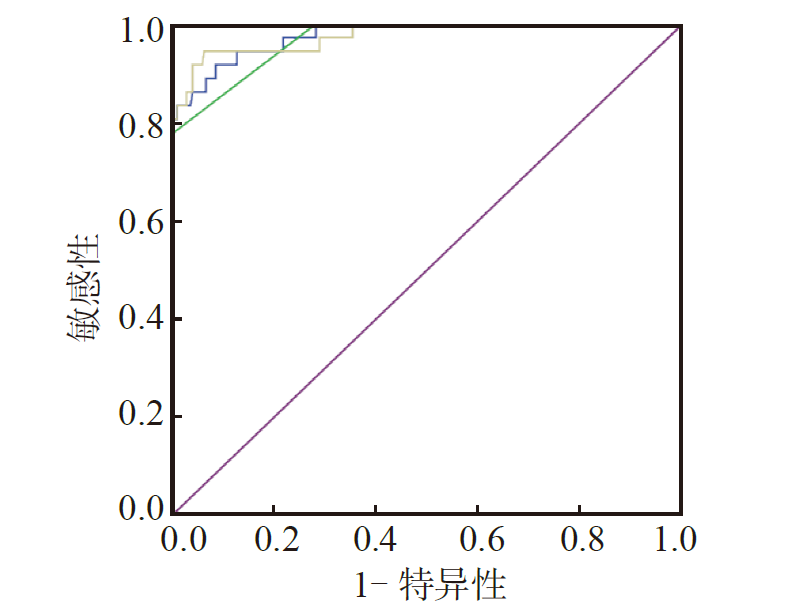
| 模型 | AUC(95%CI) | 敏感性/% | 特异性/% | P值 |
|---|---|---|---|---|
| Logistic回归模型 | 0.977(0.957~0.998) | 91.7 | 91.7 | <0.001 |
| CRT模型 | 0.969(0.945~0.993) | 77.8 | 100.0 | <0.001 |
| BPNN模型 | 0.978(0.953~1.000) | 94.4 | 93.9 | <0.001 |
| 模型 | AUC(95%CI) | 敏感性/% | 特异性/% | P值 |
|---|---|---|---|---|
| Logistic回归模型 | 0.977(0.957~0.998) | 91.7 | 91.7 | <0.001 |
| CRT模型 | 0.969(0.945~0.993) | 77.8 | 100.0 | <0.001 |
| BPNN模型 | 0.978(0.953~1.000) | 94.4 | 93.9 | <0.001 |
| [1] |
LUTGRING J D. Carbapenem-resistant Enterobacteriaceae: an emerging bacterial threat[J]. Semin Diagn Pathol, 2019, 36(3):182-186.
DOI URL |
| [2] | 袁余, 周丹, 廖全凤, 等. 某院临床样本中耐碳青霉烯肠杆菌目菌株的流行病学分析[J]. 四川大学学报(医学版), 2023, 54(3):602-607. |
| [3] |
LING Z, YIN W, SHEN Z, et al. Epidemiology of mobile colistin resistance genes mcr-1 to mcr-9[J]. J Antimicrob Chemother, 2020, 75(11):3087-3095.
DOI URL |
| [4] | SUAY-GARCÍA B, PÉREZ-GRACIA M T. Present and future of carbapenem-resistant Enterobacteriaceae(CRE)infections[J]. Antibiotics(Basel), 2019, 8(3):122. |
| [5] |
PAUL M, CARRARA E, RETAMAR P, et al. European society of clinical microbiology and infectious diseases(ESCMID)guidelines for the treatment of infections caused by multidrug-resistant gram-negative bacilli(endorsed by European society of intensive care medicine)[J]. Clin Microbiol Infect, 2022, 28(4):521-547.
DOI URL |
| [6] |
DURANTE-MANGONI E, ANDINI R, ZAMPINO R. Management of carbapenem-resistant Enterobacteriaceae infections[J]. Clin Microbiol Infect, 2019, 25(8):943-950.
DOI URL |
| [7] | 王家良, 康德英.临床流行病学——临床科研设计、 测量与评价[M]. 上海: 上海科学技术出版社, 2021. |
| [8] | HUANG J, ZHAO J, YI M, et al. Emergence of tigecycline and carbapenem-resistant Citrobacter freundii co-carrying tmexCD1-toprJ1,blaKPC-2,and blaNDM-1 from a sepsis patient[J]. Infect Drug Resist, 2023,16:5855-5868. |
| [9] | 张奥, 千晨静, 韦若文, 等. 血液病患者造血干细胞移植后血流感染及耐碳青霉烯类革兰阴性杆菌定植的重点菌群监测和临床分析[J]. 中华血液学杂志, 2024, 45(2):134-140. |
| [10] | 方会慧, 许元宝, 孙旭群, 等. 替加环素治疗血液系统恶性肿瘤并发感染的疗效及其影响因素[J]. 中国感染控制杂志, 2021, 20(6):505-511. |
| [11] |
LI Q, ZHANG X, DING Y, et al. Association of length of hospital stay,total body surface area burned,and carbapenem-resistant Klebsiella pneumoniae infection in burn patients:a retrospective study[J]. Burns, 2024, 50(8):2007-2012.
DOI URL |
| [12] | 王雨豪, 邵蔚, 圣玉良, 等. 碳青霉烯类耐药肠杆菌科细菌血流感染危险因素及其列线图模型的建立[J]. 中华医院感染学杂志, 2023, 33(15):2251-2255. |
| [13] | WU W, WANG J, ZHANG P, et al. Emergence of carbapenem-resistant Enterobacter hormaechei ST93 plasmids co-harbouring blaNDM-1,blaKPC-2,and mcr-9 in bloodstream infection[J]. J Glob Antimicrob Resist, 2023,34:67-73. |
| [14] | LIN M, YANG Y, YANG Y, et al. Co-occurrence of mcr-9 and blaNDM-1 in Enterobacter cloacae isolated from a patient with bloodstream infection[J]. Infect Drug Resist, 2020,13:1397-1402. |
| [15] | WANG M, JIN L, WANG R, et al. KpnK48 clone driving hypervirulent carbapenem-resistant Escherichia coli epidemics:insights into its evolutionary trajectory similar to Klebsiella pneumoniae[J]. Drug Resist Updat, 2025,81:101243. |
| [16] | 朱昱蓉, 刘荣华. 肺炎克雷伯菌、类肺炎克雷伯菌和变栖克雷伯菌的研究进展[J]. 中国感染控制杂志, 2023, 22(8):983-989. |
| [17] | 薛野, 邹超世, 李泰阶, 等. 老年患者耐碳青霉烯类鲍曼不动杆菌血流感染的危险因素和病死率:一项为期十年的回顾性研究[J]. 中国感染控制杂志, 2024, 23(2):155-161. |
| [18] | 任亚璐, 吴逸宁, 邱善敏, 等. 血液肿瘤患者肛拭子耐碳青霉烯类肠杆菌目主动筛查情况及继发血流感染的影响因素[J]. 中国现代医学杂志, 2023, 33(21):16-21. |
| [19] | 胥萍瑶, 倪苏娇, 张开炯, 等. 恶性肿瘤患者ESKAPE病原菌血流感染临床特征和危险因素分析[J]. 四川大学学报(医学版), 2020, 51(4):567-572. |
| [20] | 孔令慧, 于杰, 张会君, 等. 基于Logistic回归和决策树的老年脑卒中病人肌少症风险预测模型的构建[J]. 护理研究, 2024, 38(10):1703-1710. |
| [21] |
WEN Z, NIE X, CHEN L, et al. A decision tree model to help treatment decision-making for unruptured intracranial aneurysms:a multi-center,long-term follow-up study in a large Chinese cohort[J]. Transl Stroke Res, 2025, 16(4):1062-1074.
DOI |
| [22] | 贾辰, 王璐, 李海峰. ICU住院患者耐碳青霉烯类肺炎克雷伯菌感染危险因素及其BP神经网络模型的预测价值[J]. 中华医院感染学杂志, 2024, 34(12):1778-1783. |
| [1] | GUAN Chao, HUANG Ying, SONG Yunxiao, ZHOU Ying. Application of a machine learning model based on routine inflammatory markers to distinguish the severity of community-acquired pneumonia [J]. Laboratory Medicine, 2025, 40(7): 680-686. |
| [2] | WANG Xumei, XU Dongqing, GAO Limei, ZHANG Lihua, JIANG Wenli, WANG Weiwei, MA Juan, SHEN Lisong. Construction of a machine learning-based model for predicting the risk of neuroblastoma bone metastasis [J]. Laboratory Medicine, 2025, 40(6): 534-539. |
| [3] | MENG Huimin, YANG Junli, HAN Yongyan. Relationship between differential expression of gut microbiota structure and prognosis in patients with septic shock [J]. Laboratory Medicine, 2025, 40(5): 455-459. |
| [4] | LING Xiaoting, PAN Liqiu, HUANG Yunhua, WEI Yuanyuan, DENG Xiaohui, YE Lihua, LIN Faquan, HUANG Yifang. Establishment of machine learning discriminatory formulas for thalassemia and iron deficiency anemia based on red blood cell morphology and parameters [J]. Laboratory Medicine, 2025, 40(4): 365-371. |
| [5] | CHANG Nan, WEI Yali, LU Qifeng, LI Tian, HOU Tingting, LI Yuan, ZHU Mengyu, SHEN Yajuan. A machine learning early warning model for acute promyelocytic leukemia based on blood cell analyzer parameters [J]. Laboratory Medicine, 2025, 40(12): 1190-1196. |
| [6] | LI Mingchao, SHEN Tong, ZHOU Binghe, DOU Xin, HU Liang, CHANG Dong, ZHANG Ze. Evaluation of prognosis prediction effects in acute ischemic stroke patients based on machine learning algorithms [J]. Laboratory Medicine, 2025, 40(10): 1004-1009. |
| [7] | CAI Min, ZHANG Hui. Research progress for CRE infection in intensive care unit patients [J]. Laboratory Medicine, 2024, 39(9): 913-918. |
| [8] | HUANG Linling, XU Meirong, SHEN Xiaowen, GU LingLi, SHEN Hongmei. Changes and significance of autophagy in peripheral blood lymphocytes of patients with carbapenem-resistant Enterobacteriaceae-bloodstream infection [J]. Laboratory Medicine, 2024, 39(8): 759-763. |
| [9] | HUANG Ying, ZHOU Ying, SONG Yunxiao, MAO Junjie, GUAN Chao, ZHAO Jinyan, NI Peiqing. Pulmonary tuberculosis diagnosis model for blood routine test based on machine learning algorithms [J]. Laboratory Medicine, 2024, 39(7): 668-672. |
| [10] | SHEN Zhan, BIAN Xiaobo, HUANG Ying, WANG Siyang, SHEN Tingting, ZHANG Xian, SONG Yunxiao, XIE Lianhong. Stroke recurrence prediction model based on machine learning algorithms using routine blood test [J]. Laboratory Medicine, 2024, 39(12): 1190-1195. |
| [11] | QIN Zehui, CHEN Qiuyu, LIANG Fengrui, SONG Yuqi, YE Liping, LIU Xiangtian, TIAN Xinghan. Construction of prognostic decision tree model of Staphylococcus aureus bloodstream infection in intensive care unit based on MIMIC-Ⅳ database data [J]. Laboratory Medicine, 2024, 39(10): 999-1004. |
| [12] | REN Yanfei, ZHANG Min, YANG Tao, LI Rongkai, LIANG Xin. Analysis of pathogenic epidemiology of patients with lower respiratory tract infection in respiratory intensive care unit [J]. Laboratory Medicine, 2023, 38(2): 157-162. |
| [13] | DUAN Yong, WANG Yong, ZHANG Yumin, ZENG Haitao, LIU Qing. Predictive value of red blood cell distribution width for in-hospital mortality in ICU patients with heart failure:a retrospective study based on the MIMIC-Ⅲ database [J]. Laboratory Medicine, 2023, 38(10): 951-956. |
| [14] | XU Qi, PAN Fen, SUN Yan, SHI Yingying, YU Fangyuan, ZHANG Hong. Methodology evaluation of screening techniques for CRE colonized in intestinal tract [J]. Laboratory Medicine, 2022, 37(8): 761-765. |
| [15] | SUN Ying, LI Yi, YAN Wenjuan, JING Nan, MA Bing. Analysis of drug resistance of rare CRE and clinical application of carbapenem screening test in Henan [J]. Laboratory Medicine, 2022, 37(2): 146-149. |
| Viewed | ||||||
|
Full text |
|
|||||
|
Abstract |
|
|||||
