
Laboratory Medicine ›› 2026, Vol. 41 ›› Issue (2): 169-176.DOI: 10.3969/j.issn.1673-8640.2026.02.011
Previous Articles Next Articles
GAI Huirong1, ZHOU Shihui2, LI Wei1, LI Xin3( )
)
Received:2024-01-15
Revised:2025-05-05
Online:2026-02-28
Published:2026-03-06
CLC Number:
GAI Huirong, ZHOU Shihui, LI Wei, LI Xin. Roles of p53,p300 and miR-944 expressions in prognosis assessment of non-small cell lung cancer patients[J]. Laboratory Medicine, 2026, 41(2): 169-176.
Add to citation manager EndNote|Ris|BibTeX
URL: https://www.shjyyx.com/EN/10.3969/j.issn.1673-8640.2026.02.011
| 基因名称 | 上游引物(5'~3') | 下游引物(5'~3') |
|---|---|---|
| miR-944 | TTCACATTGTGCTACTGTCTGC | CGCTTCACGAATTTGCGTGTCA |
| U6 | CTTTACCTACTCGTCTCTGGTAC | CCTTATCCCAATACGTGTCGACATCAT |
| 基因名称 | 上游引物(5'~3') | 下游引物(5'~3') |
|---|---|---|
| miR-944 | TTCACATTGTGCTACTGTCTGC | CGCTTCACGAATTTGCGTGTCA |
| U6 | CTTTACCTACTCGTCTCTGGTAC | CCTTATCCCAATACGTGTCGACATCAT |
| 项目 | 例数 | p53阳性/ [例(%)] | p300阳性/ [例(%)] | miR-944 |
|---|---|---|---|---|
| 癌组织 | 40 | 30(75.00) | 31(77.50) | 5.31±1.26 |
| 癌旁组织 | 40 | 8(20.00) | 22(55.00) | 1.19±0.22 |
| 统计值 | 24.261 | 4.528 | 20.372 | |
| P值 | <0.001 | 0.033 | <0.001 |
| 项目 | 例数 | p53阳性/ [例(%)] | p300阳性/ [例(%)] | miR-944 |
|---|---|---|---|---|
| 癌组织 | 40 | 30(75.00) | 31(77.50) | 5.31±1.26 |
| 癌旁组织 | 40 | 8(20.00) | 22(55.00) | 1.19±0.22 |
| 统计值 | 24.261 | 4.528 | 20.372 | |
| P值 | <0.001 | 0.033 | <0.001 |
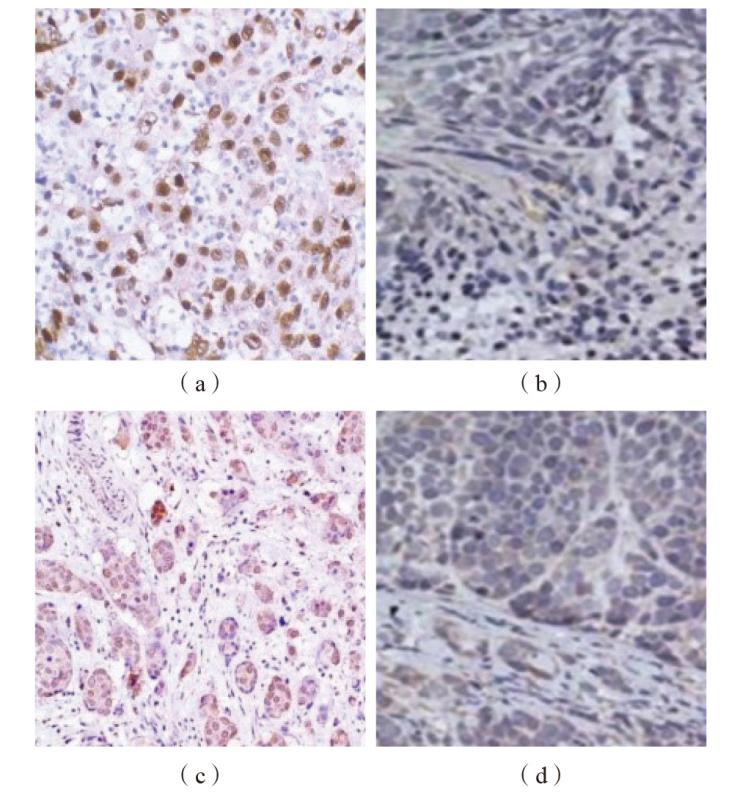
| 临床病理 特征 | 例数 | p53阳性/ [例(%)] | p300阳性/ [例(%)] | miR-944 |
|---|---|---|---|---|
| 年龄 | ||||
| < 60岁 | 13 | 10(76.92) | 12(92.31) | 5.26±0.62 |
| ≥61岁 | 27 | 20(74.07) | 19(70.37) | 5.28±0.67 |
| 统计值 | 0.038 | 2.422 | 0.091 | |
| P值 | 0.845 | 0.120 | 0.928 | |
| 性别 | ||||
| 男性 | 19(76.00) | 21(84.00) | 5.30±0.55 | |
| 女性 | 11(73.33) | 10(66.67) | 5.24±0.53 | |
| 统计值 | 0.035 | 1.615 | 0.339 | |
| P值 | 0.982 | 0.446 | 0.737 | |
| TNM分期 | ||||
| Ⅱ期 | 19 | 11(57.89) | 18(94.74) | 4.12±0.94 |
| Ⅲ期 | 13 | 11(84.62) | 6(46.15) | 4.82±0.84 |
| Ⅳ期 | 8 | 8(100.00) | 7(87.50) | 5.39±0.77 |
| 统计值 | 6.273 | 11.021 | 6.486 | |
| P值 | 0.043 | 0.004 | 0.004 | |
| 病理类型 | ||||
| 鳞癌 | 18 | 15(83.33) | 16(88.89) | 5.24±0.99 |
| 腺癌 | 22 | 15(68.18) | 15(68.18) | 5.26±0.84 |
| 统计值 | 1.212 | 2.434 | 0.069 | |
| P值 | 0.271 | 0.119 | 0.945 | |
| 分化程度 | ||||
| 低分化 | 6 | 6(100.00) | 6(100.00) | 5.44±0.52 |
| 中分化 | 15 | 13(86.67) | 8(53.33) | 5.01±0.69 |
| 高分化 | 19 | 11(57.89) | 17(89.47) | 4.31±0.58 |
| 统计值 | 6.054 | 8.328 | 9.921 | |
| P值 | 0.048 | 0.016 | 0.000 | |
| 淋巴转移 | ||||
| 有 | 14 | 14(100.00) | 14(100.00) | 5.56±0.92 |
| 无 | 26 | 16(61.54) | 17(65.38) | 4.26±0.28 |
| 统计值 | 7.180 | 6.253 | 6.714 | |
| P值 | 0.007 | 0.012 | 0.000 |
| 临床病理 特征 | 例数 | p53阳性/ [例(%)] | p300阳性/ [例(%)] | miR-944 |
|---|---|---|---|---|
| 年龄 | ||||
| < 60岁 | 13 | 10(76.92) | 12(92.31) | 5.26±0.62 |
| ≥61岁 | 27 | 20(74.07) | 19(70.37) | 5.28±0.67 |
| 统计值 | 0.038 | 2.422 | 0.091 | |
| P值 | 0.845 | 0.120 | 0.928 | |
| 性别 | ||||
| 男性 | 19(76.00) | 21(84.00) | 5.30±0.55 | |
| 女性 | 11(73.33) | 10(66.67) | 5.24±0.53 | |
| 统计值 | 0.035 | 1.615 | 0.339 | |
| P值 | 0.982 | 0.446 | 0.737 | |
| TNM分期 | ||||
| Ⅱ期 | 19 | 11(57.89) | 18(94.74) | 4.12±0.94 |
| Ⅲ期 | 13 | 11(84.62) | 6(46.15) | 4.82±0.84 |
| Ⅳ期 | 8 | 8(100.00) | 7(87.50) | 5.39±0.77 |
| 统计值 | 6.273 | 11.021 | 6.486 | |
| P值 | 0.043 | 0.004 | 0.004 | |
| 病理类型 | ||||
| 鳞癌 | 18 | 15(83.33) | 16(88.89) | 5.24±0.99 |
| 腺癌 | 22 | 15(68.18) | 15(68.18) | 5.26±0.84 |
| 统计值 | 1.212 | 2.434 | 0.069 | |
| P值 | 0.271 | 0.119 | 0.945 | |
| 分化程度 | ||||
| 低分化 | 6 | 6(100.00) | 6(100.00) | 5.44±0.52 |
| 中分化 | 15 | 13(86.67) | 8(53.33) | 5.01±0.69 |
| 高分化 | 19 | 11(57.89) | 17(89.47) | 4.31±0.58 |
| 统计值 | 6.054 | 8.328 | 9.921 | |
| P值 | 0.048 | 0.016 | 0.000 | |
| 淋巴转移 | ||||
| 有 | 14 | 14(100.00) | 14(100.00) | 5.56±0.92 |
| 无 | 26 | 16(61.54) | 17(65.38) | 4.26±0.28 |
| 统计值 | 7.180 | 6.253 | 6.714 | |
| P值 | 0.007 | 0.012 | 0.000 |
| 组别 | 例数 | 年龄/岁 | 性别 | TNM分期 | 吸烟史/ [例(%)] | ||||||||||||||||
|---|---|---|---|---|---|---|---|---|---|---|---|---|---|---|---|---|---|---|---|---|---|
| 男/[例(%)] | 女/[例(%)] | Ⅱ期/[例(%)] | Ⅲ期/[例(%)] | Ⅳ期/[例(%)] | |||||||||||||||||
| 死亡组 | 10 | 55.92±5.66 | 7(70.00) | 3(30.00) | 1(10.00) | 2(20.00) | 7(70.00) | 9(90.00) | |||||||||||||
| 存活组 | 30 | 56.44±6.82 | 18(60.00) | 12(40.00) | 18(60.00) | 11(36.67) | 1(3.33) | 10(33.33) | |||||||||||||
| 统计值 | 0.217 | 0.320 | 21.255 | 9.658 | |||||||||||||||||
| P值 | 0.829 | 0.572 | <0.001 | 0.002 | |||||||||||||||||
| 组别 | 肺癌家族史/ [例(%)] | 病理类型 | 淋巴转移/ [例(%)] | Alb | LYMPH#异常/[例(%)] | ||||||||||||||||
| 鳞癌/[例(%)] | 腺癌/[例(%)] | <35 g·L-1/ [例(%)] | ≥35 g·L-1/ [例(%)] | ||||||||||||||||||
| 死亡组 | 5(50.00) | 6(60.00) | 4(40.00) | 8(80.00) | 9(90.00) | 1(10.00) | 3(30.00) | ||||||||||||||
| 存活组 | 7(23.33) | 12(40.00) | 18(60.00) | 7(23.33) | 12(40.00) | 18(60.00) | 12(40.00) | ||||||||||||||
| 统计值 | 2.540 | 1.212 | 10.276 | 7.519 | 0.320 | ||||||||||||||||
| P值 | 0.111 | 0.271 | 0.001 | 0.006 | 0.572 | ||||||||||||||||
| 组别 | NEUT#异常/ [例(%)] | PLT计数异常/ [例(%)] | 分化程度 | p53阳性/ [例(%)] | p300阳性/ [例(%)] | miR-944 | |||||||||||||||
| 低分化/ [例(%)] | 中分化/ [例(%)] | 高分化/ [例(%)] | |||||||||||||||||||
| 死亡组 | 2(20.00) | 1(10.00) | 8(80.00) | 2(20.00) | 0(0.00) | 10(100.00) | 10(100.00) | 5.72±0.66 | |||||||||||||
| 存活组 | 15(50.00) | 10(33.33) | 1(3.33) | 12(40.00) | 17(56.67) | 20(66.67) | 21(70.00) | 5.17±0.44 | |||||||||||||
| 统计值 | 2.762 | 2.048 | 26.116 | 4.444 | 3.871 | 3.007 | |||||||||||||||
| P值 | 0.097 | 0.152 | <0.001 | 0.035 | 0.049 | 0.005 | |||||||||||||||
| 组别 | 例数 | 年龄/岁 | 性别 | TNM分期 | 吸烟史/ [例(%)] | ||||||||||||||||
|---|---|---|---|---|---|---|---|---|---|---|---|---|---|---|---|---|---|---|---|---|---|
| 男/[例(%)] | 女/[例(%)] | Ⅱ期/[例(%)] | Ⅲ期/[例(%)] | Ⅳ期/[例(%)] | |||||||||||||||||
| 死亡组 | 10 | 55.92±5.66 | 7(70.00) | 3(30.00) | 1(10.00) | 2(20.00) | 7(70.00) | 9(90.00) | |||||||||||||
| 存活组 | 30 | 56.44±6.82 | 18(60.00) | 12(40.00) | 18(60.00) | 11(36.67) | 1(3.33) | 10(33.33) | |||||||||||||
| 统计值 | 0.217 | 0.320 | 21.255 | 9.658 | |||||||||||||||||
| P值 | 0.829 | 0.572 | <0.001 | 0.002 | |||||||||||||||||
| 组别 | 肺癌家族史/ [例(%)] | 病理类型 | 淋巴转移/ [例(%)] | Alb | LYMPH#异常/[例(%)] | ||||||||||||||||
| 鳞癌/[例(%)] | 腺癌/[例(%)] | <35 g·L-1/ [例(%)] | ≥35 g·L-1/ [例(%)] | ||||||||||||||||||
| 死亡组 | 5(50.00) | 6(60.00) | 4(40.00) | 8(80.00) | 9(90.00) | 1(10.00) | 3(30.00) | ||||||||||||||
| 存活组 | 7(23.33) | 12(40.00) | 18(60.00) | 7(23.33) | 12(40.00) | 18(60.00) | 12(40.00) | ||||||||||||||
| 统计值 | 2.540 | 1.212 | 10.276 | 7.519 | 0.320 | ||||||||||||||||
| P值 | 0.111 | 0.271 | 0.001 | 0.006 | 0.572 | ||||||||||||||||
| 组别 | NEUT#异常/ [例(%)] | PLT计数异常/ [例(%)] | 分化程度 | p53阳性/ [例(%)] | p300阳性/ [例(%)] | miR-944 | |||||||||||||||
| 低分化/ [例(%)] | 中分化/ [例(%)] | 高分化/ [例(%)] | |||||||||||||||||||
| 死亡组 | 2(20.00) | 1(10.00) | 8(80.00) | 2(20.00) | 0(0.00) | 10(100.00) | 10(100.00) | 5.72±0.66 | |||||||||||||
| 存活组 | 15(50.00) | 10(33.33) | 1(3.33) | 12(40.00) | 17(56.67) | 20(66.67) | 21(70.00) | 5.17±0.44 | |||||||||||||
| 统计值 | 2.762 | 2.048 | 26.116 | 4.444 | 3.871 | 3.007 | |||||||||||||||
| P值 | 0.097 | 0.152 | <0.001 | 0.035 | 0.049 | 0.005 | |||||||||||||||
| 因素 | β值 | 标准误 | Wald值 | P值 | OR值(95%CI) |
|---|---|---|---|---|---|
| TNM分期 | 0.768 | 0.352 | 4.318 | 0.003 | 1.324(1.034~1.401) |
| 吸烟史 | 0.673 | 0.286 | 4.982 | 0.007 | 1.375(1.063~1.437) |
| 淋巴转移 | 0.946 | 0.252 | 4.024 | <0.001 | 1.296(1.012~1.396) |
| Alb | 0.816 | 0.301 | 4.324 | <0.001 | 1.304(1.124~1.412) |
| 分化程度 | 0.646 | 0.312 | 4.415 | <0.001 | 1.218(1.013~2.382) |
| p53 | 0.732 | 0.316 | 4.024 | <0.001 | 1.122(1.034~1.375) |
| p300 | 0.692 | 0.328 | 4.133 | <0.001 | 1.142(1.096~1.396) |
| miR-944 | 0.713 | 0.282 | 4.537 | <0.001 | 1.142(1.086~1.414) |
| 因素 | β值 | 标准误 | Wald值 | P值 | OR值(95%CI) |
|---|---|---|---|---|---|
| TNM分期 | 0.768 | 0.352 | 4.318 | 0.003 | 1.324(1.034~1.401) |
| 吸烟史 | 0.673 | 0.286 | 4.982 | 0.007 | 1.375(1.063~1.437) |
| 淋巴转移 | 0.946 | 0.252 | 4.024 | <0.001 | 1.296(1.012~1.396) |
| Alb | 0.816 | 0.301 | 4.324 | <0.001 | 1.304(1.124~1.412) |
| 分化程度 | 0.646 | 0.312 | 4.415 | <0.001 | 1.218(1.013~2.382) |
| p53 | 0.732 | 0.316 | 4.024 | <0.001 | 1.122(1.034~1.375) |
| p300 | 0.692 | 0.328 | 4.133 | <0.001 | 1.142(1.096~1.396) |
| miR-944 | 0.713 | 0.282 | 4.537 | <0.001 | 1.142(1.086~1.414) |
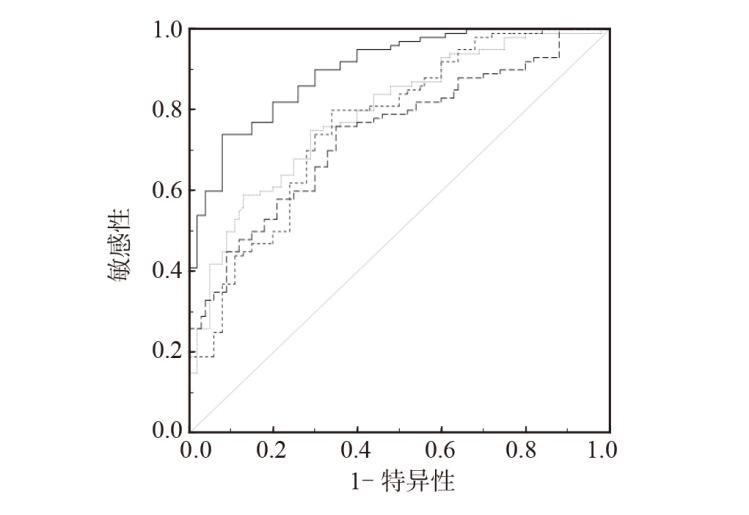
| 项目 | AUC(95%CI) | 最佳临界值 | 敏感性/% | 特异性/% | Youden指数 |
|---|---|---|---|---|---|
| p53 | 0.641(0.562~0.753) | 70.92 | 81.37 | 0.682 | |
| p300 | 0.686(0.619~0.792) | 73.57 | 80.43 | 0.706 | |
| miR-944 | 0.677(0.602~0.768) | 5.47 | 72.92 | 80.37 | 0.699 |
| 联合检测 | 0.878(0.816~0.933) | 92.96 | 82.06 | 0.814 |
| 项目 | AUC(95%CI) | 最佳临界值 | 敏感性/% | 特异性/% | Youden指数 |
|---|---|---|---|---|---|
| p53 | 0.641(0.562~0.753) | 70.92 | 81.37 | 0.682 | |
| p300 | 0.686(0.619~0.792) | 73.57 | 80.43 | 0.706 | |
| miR-944 | 0.677(0.602~0.768) | 5.47 | 72.92 | 80.37 | 0.699 |
| 联合检测 | 0.878(0.816~0.933) | 92.96 | 82.06 | 0.814 |
| [1] |
XIANG C, HUO M, MA S, et al. Molecular profiling for supernatants and matched cell pellets of pleural effusions in non-small-cell lung cancer[J]. J Mol Diagn, 2020, 22(4):513-522.
DOI PMID |
| [2] | 徐谊, 徐祥, 王守峰, 等. 非小细胞肺癌miRNA-191启动子区甲基化状态及其临床病理特征的相关分析[J]. 重庆医学, 2021, 50(10):1667-1671. |
| [3] | 魏东, 辛运超, 刘博, 等. pN0期非小细胞肺癌VEGF、Ki-67、P53表达与淋巴结微转移相关性分析[J]. 临床和实验医学杂志, 2021, 20(20):2174-2177. |
| [4] | 李挺云, 周治彦, 周邦奋, 等. P300/CBP相关因子在BCa细胞DNA损伤修复与肿瘤干细胞干性维持中的作用[J]. 西部医学, 2023, 35(9):1264-1269. |
| [5] | 邓森灵, 苏红娥, 兰代群, 等. 宫颈癌患者血清miR-224及miR-944的表达及其临床意义[J]. 中国性科学, 2021, 30(3):30-32. |
| [6] |
GONG S, WANG X, ZHOU P, et al. AND logic-gate-based CRISPR/Cas12a biosensing platform for the sensitive colorimetric detection of dual miRNAs[J]. Anal Chem, 2022, 94(45):15839-15846.
DOI PMID |
| [7] | 中华医学会病理学分会, 国家病理质控中心, 中华医学会肿瘤学分会肺癌学组, 等. 非小细胞肺癌分子病理检测临床实践指南(2021版)[J]. 中华病理学杂志, 2021, 50(4):323-332. |
| [8] | 孙菲, 王刚, 张金仿. miRNA、CEA及Monototal在非小细胞肺癌诊断中的价值[J]. 医学综述, 2020, 26(7):1429-1433. |
| [9] | 李晓敏, 于哲, 槐梅, 等. miR-758-3p通过靶向核仁纺锤体相关蛋白1抑制非小细胞肺癌细胞增殖和侵袭[J]. 中华肿瘤杂志, 2021, 43(1):113-117. |
| [10] | 安志杰, 方天露, 张捷, 等. 血浆miRNA-155和miRNA-625测定诊断非小细胞肺癌的临床评价[J]. 临床和实验医学杂志, 2021, 20(7):718-721. |
| [11] | 何荣琦, 许荣誉. 非小细胞肺癌患者肺组织中miRNA-155和miRNA-221的表达情况及其与预后的相关性[J]. 中国慢性病预防与控制, 2020, 28(1):57-60. |
| [12] |
SU W, TIAN X D, LIU P, et al. Accuracy of endoscopic ultrasound-guided needle aspiration specimens for molecular diagnosis of non-small-cell lung carcinoma[J]. World J Clin Cases, 2020, 8(21):5139-5148.
DOI PMID |
| [13] | 王莉, 龚光远, 姚伟. p53和自噬相关基因表达与非小细胞肺癌发生及进展的相关性[J]. 中国实验诊断学, 2021, 25(11):1581-1585. |
| [14] | 王丽红, 窦亚平, 韩双双, 等. 非小细胞肺癌中Pokemon与P14ARF-MDM2-p53通路蛋白的相关性研究[J]. 国际呼吸杂志, 2020, 40(4):279-284. |
| [15] | 张玉洁, 孙怡琳, 朱苹, 等. 非小细胞肺癌中IGFBP-3、P53、Ki-67的表达及临床意义[J]. 贵州医药, 2020, 44(1):6-9. |
| [16] | 凌智君, 邢龙, 于艳芳. 血清MMP-2、P53抗体检测在非小细胞肺癌患者病情判断中的临床价值及意义[J]. 实用癌症杂志, 2021, 36(2):228-230. |
| [17] | 李威, 史小芳, 崔晶刚, 等. miRNA-155与TP53INP1 mRNA在非小细胞肺癌患者胸水脱落细胞中的表达及其临床意义[J]. 临床肺科杂志, 2020, 25(12):1881-1884. |
| [18] |
PENG H Y, HSIAO J R, CHOU S T, et al. MiR-944/CISH mediated inflammation via STAT3 is involved in oral cancer malignance by cigarette smoking[J]. Neoplasia, 2020, 22(11):554-565.
DOI URL |
| [19] |
BARARTABAR Z, MOINI N, ABBASALIPOURKABIR R, et al. Investigation of miR-133a,miR-637 and miR-944 genes expression and their relationship with PI3K/AKT signaling in women with breast cancer[J]. J Cancer Res Clin Oncol, 2023, 149(9):6115-6129.
DOI |
| [20] | 邢士超, 吴刚, 侯树峰, 等. 卵巢上皮癌患者血清微RNA-622、微RNA-944水平及临床意义[J]. 中国医师进修杂志, 2023, 46(10):953-956. |
| [21] | 张俊杰, 郝李刚, 邸永辉, 等. MDM4和P53表达在非小细胞肺癌中的临床意义[J]. 重庆医学, 2020, 49(8):1259-1264. |
| [22] | 闫明, 程纪伟, 孙海波, 等. 非小细胞肺癌中IGF1、IGFBP2表达与预后的相关性分析[J]. 临床肺科杂志, 2022, 27(1):78-82. |
| [23] | 蔡静, 张君娜, 宋慧琴, 等. 非吸烟慢性阻塞性肺疾病患者非小细胞肺癌患病风险及生存情况分析[J]. 临床肺科杂志, 2021, 26(4):570-574. |
| [24] | 马春柳, 李小升, 周伟, 等. 50岁及以上非小细胞肺癌患者预后影响因素调查研究[J]. 实用肿瘤杂志, 2021, 36(6):525-530. |
| [25] | 马丽娟, 王蕴, 李殿明. 血清CEA、D-D、ALB、NLR与非小细胞肺癌的相关性及联合诊断价值分析[J]. 标记免疫分析与临床, 2021, 28(9):1537-1541. |
| [26] |
TAO Y, TANG Y, YANG Z, et al. Exploration of serum exosomal lncRNA TBILA and AGAP2-AS1 as promising biomarkers for diagnosis of non-small cell lung cancer[J]. Int J Biol Sci, 2020, 16(3):471-482.
DOI PMID |
| [27] | 李建港, 郇雪洁, 焦倩, 等. p53基因突变对胶质母细胞瘤细胞Connexin 43表达影响[J]. 青岛大学学报(医学版), 2023, 59(3):361-363. |
| [28] | 王仪凡, 李思然, 胡旭华, 等. p300介导RAS相关结构域蛋白2A基因甲基化影响结肠癌细胞恶性行为的机制研究[J]. 中华肿瘤防治杂志, 2025, 32(10):608-619. |
| [29] | 张田, 任丹, 李杰. circBIRC6通过miR-944/CD44轴促进PD-L1介导的非小细胞肺癌免疫逃逸[J]. 河北医学, 2022, 28(12):1969-1977. |
| [30] |
严晓春, 李玥, 何飞燕, 等. miR-205和miR-944在宫颈癌患者血清中的表达及其临床意义[J]. 临床输血与检验, 2021, 23(1):95-99.
DOI |
| Viewed | ||||||
|
Full text |
|
|||||
|
Abstract |
|
|||||
