
Laboratory Medicine ›› 2026, Vol. 41 ›› Issue (9): 860-866.DOI: 10.3969/j.issn.1673-8640.2026.09.006
Previous Articles Next Articles
ZHAO Fang1, JIANG Guorong2, SHI Shuyue3, XIAO Jian1, MA Shaolin4, LI Runpu1( )
)
Received:2025-07-21
Revised:2026-02-13
Online:2026-09-30
Published:2026-09-29
CLC Number:
ZHAO Fang, JIANG Guorong, SHI Shuyue, XIAO Jian, MA Shaolin, LI Runpu. Roles of serum PDK1 and SFRP4 in prognosis assessment of non-small cell lung cancer patients[J]. Laboratory Medicine, 2026, 41(9): 860-866.
Add to citation manager EndNote|Ris|BibTeX
URL: https://www.shjyyx.com/EN/10.3969/j.issn.1673-8640.2026.09.006
| 组别 | 例数 | PDK1/ (ng·mL-1) | SFRP4/ (ng·mL-1) |
|---|---|---|---|
| 良性疾病组 | 100 | 3.73±1.53 | 65.41±20.70 |
| NSCLC组 | 104 | 5.89±1.70 | 39.65±12.43 |
| t值 | 9.526 | 10.823 | |
| P值 | <0.001 | <0.001 |
| 组别 | 例数 | PDK1/ (ng·mL-1) | SFRP4/ (ng·mL-1) |
|---|---|---|---|
| 良性疾病组 | 100 | 3.73±1.53 | 65.41±20.70 |
| NSCLC组 | 104 | 5.89±1.70 | 39.65±12.43 |
| t值 | 9.526 | 10.823 | |
| P值 | <0.001 | <0.001 |
| 临床病理特征 | 例数 | PDK1/(ng·mL-1) | SFRP4/(ng·mL-1) | 临床病理特征 | 例数 | PDK1/(ng·mL-1) | SFRP4/(ng·mL-1) |
|---|---|---|---|---|---|---|---|
| 年龄 | TNM分期 | ||||||
| <60岁 | 48 | 5.63±1.78 | 40.56±12.42 | Ⅰ~Ⅱ期 | 58 | 5.48±1.44 | 43.17±13.57 |
| ≥60岁 | 56 | 6.11±1.63 | 38.87±12.44 | Ⅲ期 | 46 | 6.41±2.03 | 35.21±10.99 |
| t值 | 1.435 | 0.691 | t值 | 2.730 | 3.225 | ||
| P值 | 0.154 | 0.491 | P值 | 0.007 | 0.002 | ||
| 性别 | 分化程度 | ||||||
| 男 | 62 | 5.98±1.73 | 38.26±12.24 | 中/高分化 | 63 | 5.52±1.50 | 42.83±13.59 |
| 女 | 42 | 5.76±1.66 | 41.70±12.71 | 低分化 | 41 | 6.46±2.01 | 34.76±10.65 |
| t值 | 0.647 | 1.385 | t值 | 2.727 | 3.212 | ||
| P值 | 0.519 | 0.169 | P值 | 0.008 | 0.002 | ||
| 组织学类型 | 淋巴转移 | ||||||
| 腺癌 | 88 | 5.86±1.74 | 39.75±12.39 | 无 | 51 | 5.42±1.42 | 43.11±13.24 |
| 鳞癌 | 16 | 6.05±1.48 | 39.10±12.65 | 有 | 53 | 6.34±1.97 | 36.32±11.65 |
| t值 | 0.410 | 0.192 | t值 | 2.723 | 2.779 | ||
| P值 | 0.683 | 0.848 | P值 | 0.008 | 0.006 |
| 临床病理特征 | 例数 | PDK1/(ng·mL-1) | SFRP4/(ng·mL-1) | 临床病理特征 | 例数 | PDK1/(ng·mL-1) | SFRP4/(ng·mL-1) |
|---|---|---|---|---|---|---|---|
| 年龄 | TNM分期 | ||||||
| <60岁 | 48 | 5.63±1.78 | 40.56±12.42 | Ⅰ~Ⅱ期 | 58 | 5.48±1.44 | 43.17±13.57 |
| ≥60岁 | 56 | 6.11±1.63 | 38.87±12.44 | Ⅲ期 | 46 | 6.41±2.03 | 35.21±10.99 |
| t值 | 1.435 | 0.691 | t值 | 2.730 | 3.225 | ||
| P值 | 0.154 | 0.491 | P值 | 0.007 | 0.002 | ||
| 性别 | 分化程度 | ||||||
| 男 | 62 | 5.98±1.73 | 38.26±12.24 | 中/高分化 | 63 | 5.52±1.50 | 42.83±13.59 |
| 女 | 42 | 5.76±1.66 | 41.70±12.71 | 低分化 | 41 | 6.46±2.01 | 34.76±10.65 |
| t值 | 0.647 | 1.385 | t值 | 2.727 | 3.212 | ||
| P值 | 0.519 | 0.169 | P值 | 0.008 | 0.002 | ||
| 组织学类型 | 淋巴转移 | ||||||
| 腺癌 | 88 | 5.86±1.74 | 39.75±12.39 | 无 | 51 | 5.42±1.42 | 43.11±13.24 |
| 鳞癌 | 16 | 6.05±1.48 | 39.10±12.65 | 有 | 53 | 6.34±1.97 | 36.32±11.65 |
| t值 | 0.410 | 0.192 | t值 | 2.723 | 2.779 | ||
| P值 | 0.683 | 0.848 | P值 | 0.008 | 0.006 |
| 组别 | 例数 | PDK1/(ng·mL-1) | SFRP4/(ng·mL-1) |
|---|---|---|---|
| 生存组 | 58 | 4.82±1.35 | 47.94±13.23 |
| 死亡组 | 46 | 7.24±2.14 | 29.20±11.42 |
| t值 | 7.031 | 7.615 | |
| P值 | <0.001 | <0.001 |
| 组别 | 例数 | PDK1/(ng·mL-1) | SFRP4/(ng·mL-1) |
|---|---|---|---|
| 生存组 | 58 | 4.82±1.35 | 47.94±13.23 |
| 死亡组 | 46 | 7.24±2.14 | 29.20±11.42 |
| t值 | 7.031 | 7.615 | |
| P值 | <0.001 | <0.001 |
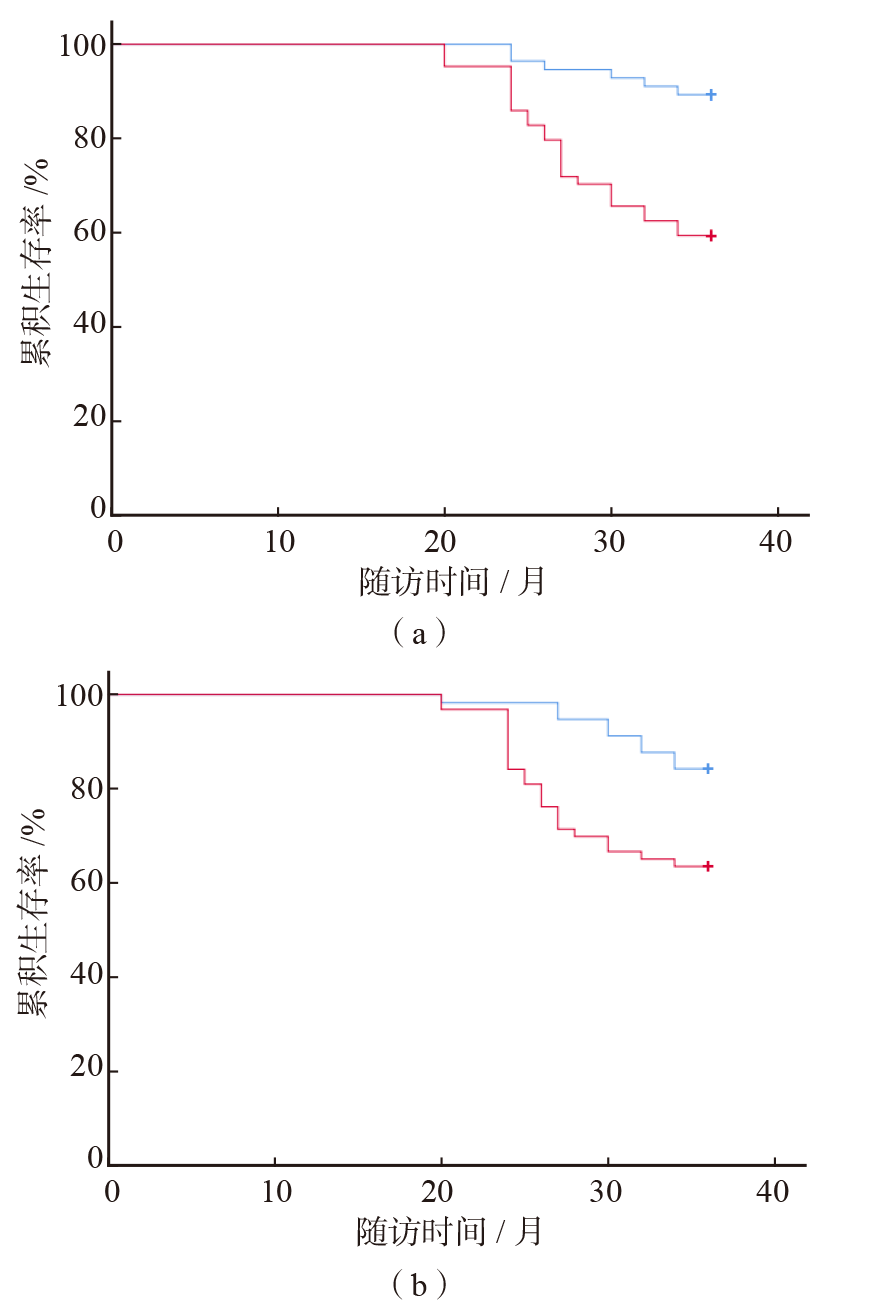
| 项目 | 单因素Cox回归分析 | 多因素Cox回归分析 | |||
|---|---|---|---|---|---|
| HR①值(95%CI②) | P值 | HR①值(95%CI②) | P值 | ||
| TNM分期 | 2.705(1.171~6.247) | 0.020 | 2.125(1.113~4.058) | 0.022 | |
| 分化程度 | 1.924(0.757~4.891) | 0.169 | |||
| 淋巴转移 | 2.271(1.234~4.178) | 0.008 | 1.736(1.150~2.620) | 0.009 | |
| PDK1 | 1.237(1.039~1.473) | 0.017 | 1.802(1.093~2.970) | 0.021 | |
| SFRP4 | 0.625(0.436~0.896) | 0.011 | 0.649(0.450~0.936) | 0.021 | |
| 项目 | 单因素Cox回归分析 | 多因素Cox回归分析 | |||
|---|---|---|---|---|---|
| HR①值(95%CI②) | P值 | HR①值(95%CI②) | P值 | ||
| TNM分期 | 2.705(1.171~6.247) | 0.020 | 2.125(1.113~4.058) | 0.022 | |
| 分化程度 | 1.924(0.757~4.891) | 0.169 | |||
| 淋巴转移 | 2.271(1.234~4.178) | 0.008 | 1.736(1.150~2.620) | 0.009 | |
| PDK1 | 1.237(1.039~1.473) | 0.017 | 1.802(1.093~2.970) | 0.021 | |
| SFRP4 | 0.625(0.436~0.896) | 0.011 | 0.649(0.450~0.936) | 0.021 | |
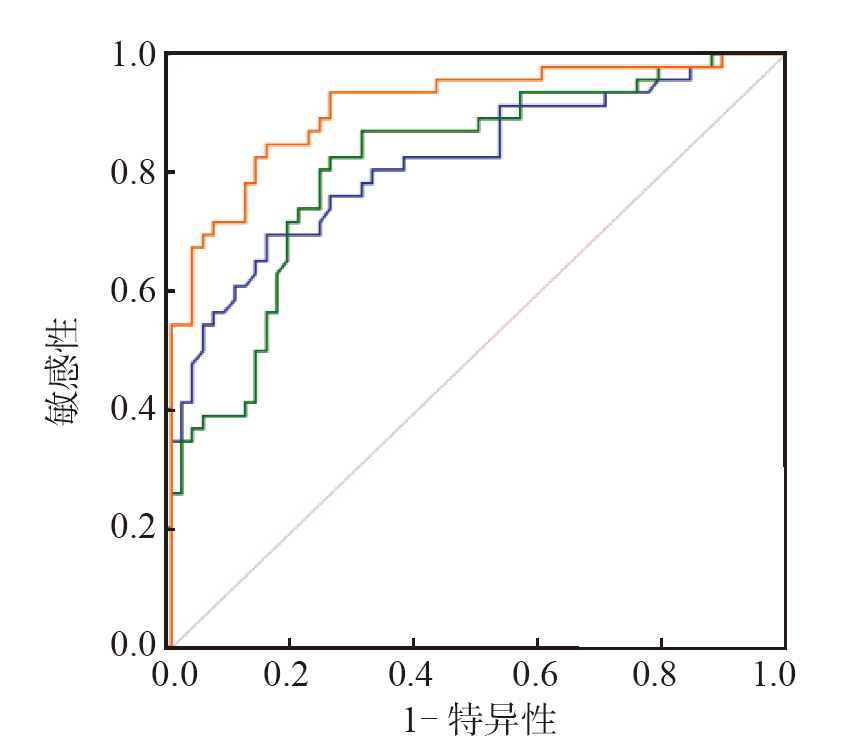
| 项目 | AUC(95%CI) | 最佳临界值 | 敏感性/% | 特异性/% | Youden指数 |
|---|---|---|---|---|---|
| PDK1 | 0.820(0.733~0.889) | 6.18 ng·mL-1 | 69.57 | 84.48 | 0.541 |
| SFRP4 | 0.817(0.729~0.886) | 38.71 ng·mL-1 | 82.61 | 74.14 | 0.568 |
| 联合检测 | 0.912(0.841~0.959) | 0.418 | 84.78 | 84.48 | 0.693 |
| 项目 | AUC(95%CI) | 最佳临界值 | 敏感性/% | 特异性/% | Youden指数 |
|---|---|---|---|---|---|
| PDK1 | 0.820(0.733~0.889) | 6.18 ng·mL-1 | 69.57 | 84.48 | 0.541 |
| SFRP4 | 0.817(0.729~0.886) | 38.71 ng·mL-1 | 82.61 | 74.14 | 0.568 |
| 联合检测 | 0.912(0.841~0.959) | 0.418 | 84.78 | 84.48 | 0.693 |
| [1] | Hunis M, Hunis A. Current status of molecular markers in diagnosis,treatment,and prognosis of non-small cell lung cancer (NSCLC)[J]. J Lung PulmRespir Res, 2025, 12(1):13-16. |
| [2] |
卢秀明, 柴宝英, 曹颖祺, 等. 血清CA125、TRAP1、HO-1对晚期非小细胞肺癌患者靶向治疗联合化疗疗效的评估价值[J]. 检验医学, 2025, 40(10):972-977.
DOI |
| [3] | Anwar S, Shamsi A, Mohammad T, et al. Targeting pyruvate dehydrogenase kinase signaling in the development of effective cancer therapy[J]. BiochimBiophys Acta Rev Cancer, 2021, 1876(1):188568. |
| [4] |
Kagawa T, Mineda A, Nakagawa T, et al. New treatment strategies for uterine sarcoma using secreted frizzled related proteins[J]. Exp Ther Med, 2024, 27(5):231-238.
DOI URL |
| [5] | 董晓平, 刘红岗, 张勇. 血清外泌体miR-454通过下调PDK1调控非小细胞肺癌的发生发展[J]. 局解手术学杂志, 2022, 31(10):849-856. |
| [6] |
Rosenberger A, Muttray N, Hung R J, et al. Gene-gene interaction of AhRwith and within the Wntcascade affects susceptibility to lung cancer[J]. Eur J Med Res, 2022, 27(1):14-26.
DOI PMID |
| [7] | 徐瑜, 李梦侠. 《CSCO非小细胞肺癌诊疗指南2024》更新解读[J]. 现代医药卫生, 2024, 40(11):1801-1808. |
| [8] | 中华医学会呼吸病学分会. 中国成人社区获得性肺炎诊断和治疗指南(2016年版)[J]. 中华结核和呼吸杂志, 2016, 39(4):253-279. |
| [9] | 肺结核诊断标准[J]. 中国全科医学(医生读者版), 2011, 6:14. |
| [10] |
Liu W J, Wang L, SUN F L, et al. Hexavalent chromium induced metabolic reprogramming,carcinogenesis and tumor progression through PDK1 upregulation[J]. Ecotoxicol Environ Saf, 2024, 288(1):117341.
DOI URL |
| [11] |
Chen Y, Wang F, Li J, et al. Long non-coding RNA TCL6 induced by SCRT1 promotes proliferation and metastasis of non-small cell lung cancer through PDK1/AKT signaling[J]. Pathol Res Pract, 2023, 246:154491.
DOI URL |
| [12] | 张颖, 王淳, 于丹, 等. 基于PI3K/Akt信号通路探讨黄芪多糖对肺腺癌A549/DDP细胞移植瘤EMT进程的影响[J]. 中国实验方剂学杂志, 2021, 27(23):51-58. |
| [13] | 江如燕, 胡雪峰, 吕翼. 丙酮酸脱氢酶激酶在肝细胞癌中的研究进展[J]. 中国细胞生物学学报, 2025, 47(1):150-157. |
| [14] |
Zhang W, Zhang K, Ma Y, et al. Secreted frizzled-related proteins:a promising therapeutic target for cancer therapy through Wnt signaling inhibition[J]. Biomed Pharmacother, 2023, 166(1):115344.
DOI URL |
| [15] | 朱文标, 闫春梅, 丘波, 等. 分泌型卷曲相关蛋白4在肝细胞癌中的表达及其与患者临床病理指标和预后的关系[J]. 癌变·畸变·突变, 2024, 36(4):288-293. |
| [16] | 田甜, 杨晓东, 葛树杰. 胃癌患者血清PON-1、NDRG4、SFRP4表达与外周血免疫细胞分布及预后的关系[J]. 昆明医科大学学报, 2026, 47(2):133-142. |
| [17] |
Wu Q, Xu C, Zeng X, et al. Tumor suppressor role of sFRP 4 in hepatocellular carcinoma via the Wnt/β catenin signaling pathway[J]. Mol Med Rep, 2021, 23(5):336-346.
DOI URL |
| [18] |
Kafka A, Pećina-šlaus N, Drmić D, et al. SFRP4 protein expression is reduced in high grade astrocytomas which is not caused by the methylation of its promoter[J]. Front Mol Neurosci, 2024, 17(1):1398872.
DOI URL |
| [19] |
Qin W, Tian Y, Zhang J, et al. The double inhibition of PDK1 and STAT3-Y705 prevents liver metastasis in colorectal cancer[J]. Sci Rep, 2019, 9(1):12973-12984.
DOI PMID |
| [20] | 张曼丽, 刘唯唯, 王丽娟, 等. 分泌型卷曲相关蛋白4、微小RNA-126-5p在三阴乳腺癌组织中表达及与临床病理特征的关系[J]. 安徽医药, 2023, 27(4):720-724. |
| [21] | Li Y, Yu Y, YANG L, et al. Insights into the role of oxidative stress in hepatocellular carcinoma development[J]. Front Biosci(Landmark Ed), 2023, 28(11):286-308. |
| [22] | 贾奥运, 胡雅琼, 白俊, 等. SFRP4表达对胃癌细胞SGC-7901迁移和侵袭的影响及机制[J]. 中华肿瘤防治杂志, 2022, 29(13):976-980. |
| [23] | Sun M X, Zhu H C, Yu Y, et al. Role of the Wnt signaling pathway in the complex microenvironment of breast cancer and prospects for therapeutic potential(review)[J]. Int J Oncol, 2025, 66(5):36-57. |
| Viewed | ||||||
|
Full text |
|
|||||
|
Abstract |
|
|||||
