
Laboratory Medicine ›› 2026, Vol. 41 ›› Issue (5): 413-423.DOI: 10.3969/j.issn.1673-8640.2026.05.001
CHENG Yaling1, YE Jingwen2, LIU Jiahui2, DU Fenglin1, HUANG Xin2, QIAN Wenli2, DONG Mingxing3, LOU Jiatao2( )
)
Received:2025-10-11
Revised:2026-04-07
Online:2026-05-30
Published:2026-05-29
CLC Number:
CHENG Yaling, YE Jingwen, LIU Jiahui, DU Fenglin, HUANG Xin, QIAN Wenli, DONG Mingxing, LOU Jiatao. Clinical value of collagen oligopeptides in the tumor microenvironment for the diagnosis of lung adenocarcinoma[J]. Laboratory Medicine, 2026, 41(5): 413-423.
Add to citation manager EndNote|Ris|BibTeX
URL: https://www.shjyyx.com/EN/10.3969/j.issn.1673-8640.2026.05.001
| 名称 | 正向引物(5'~3') | 反向引物(5'~3') |
|---|---|---|
| NC-siRNA | UUCUCCGAACGUGUCACGUTT | ACGUGACACGUUCGGAGAATT |
| CTSL-siRNA1 | GGCGAUGCACAACAGAUUATT | UAAUCUGUUGUGCAUCGCCTT |
| CTSL-siRNA2 | GCAACAGAAGAAUCCUGUATT | UACAGGAUUCUUCUGUUGCTT |
| CTSL-siRNA3 | GCACAGAAUCAGAUAACAATT | UUGUUAUCUGAUUCUGUGCTT |
| 名称 | 正向引物(5'~3') | 反向引物(5'~3') |
|---|---|---|
| NC-siRNA | UUCUCCGAACGUGUCACGUTT | ACGUGACACGUUCGGAGAATT |
| CTSL-siRNA1 | GGCGAUGCACAACAGAUUATT | UAAUCUGUUGUGCAUCGCCTT |
| CTSL-siRNA2 | GCAACAGAAGAAUCCUGUATT | UACAGGAUUCUUCUGUUGCTT |
| CTSL-siRNA3 | GCACAGAAUCAGAUAACAATT | UUGUUAUCUGAUUCUGUGCTT |
| 基因名称 | 正向引物(5'~3') | 反向引物(5'~3') |
|---|---|---|
| CTSL | AATGGTGGCCTAATGGATT ATG | CTGCTTAGGGATGTCCACAAAG |
| CTSK | ATGCAAGCCTGACCTCCTTC | TTGTTCTTATTTCGAGCCATGAG |
| MMP-1 | TGAAGAATGATGGGAGGCAAG | ACTGAGCCACATCAGGCACTC |
| MMP-8 | GCCTGACAGTGGTGGTTTTATG | TGTGAGATCCTGGTGAAGATGAG |
| MMP-13 | AGACCCCAACCCTAAACATCC | AAAACAGCTCCGCATCAACC |
| ACTB | ACCGCGAGAAGATGACCCAG | GGATAGCACAGCCTGGATAGCAA |
| 基因名称 | 正向引物(5'~3') | 反向引物(5'~3') |
|---|---|---|
| CTSL | AATGGTGGCCTAATGGATT ATG | CTGCTTAGGGATGTCCACAAAG |
| CTSK | ATGCAAGCCTGACCTCCTTC | TTGTTCTTATTTCGAGCCATGAG |
| MMP-1 | TGAAGAATGATGGGAGGCAAG | ACTGAGCCACATCAGGCACTC |
| MMP-8 | GCCTGACAGTGGTGGTTTTATG | TGTGAGATCCTGGTGAAGATGAG |
| MMP-13 | AGACCCCAACCCTAAACATCC | AAAACAGCTCCGCATCAACC |
| ACTB | ACCGCGAGAAGATGACCCAG | GGATAGCACAGCCTGGATAGCAA |
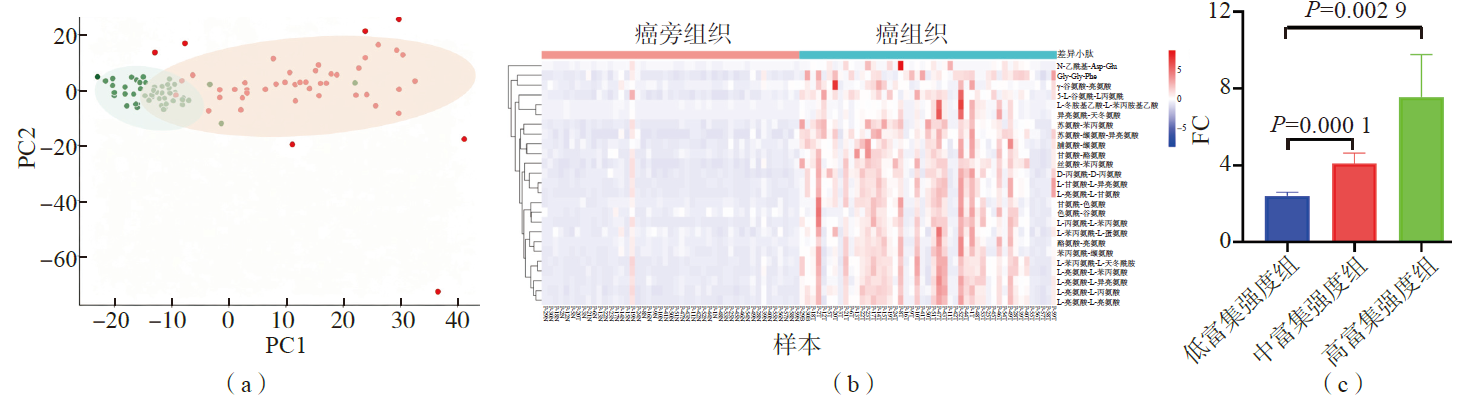
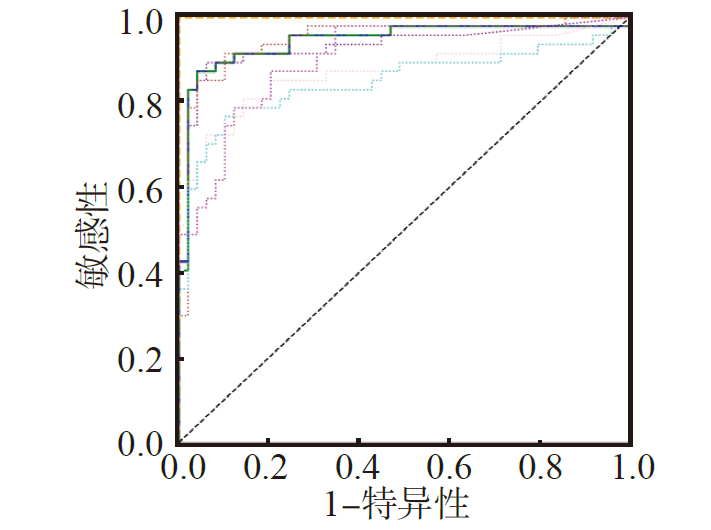
| 项目 | AUC(95%CI) | Log2FC | 敏感性/% | 特异性/% | Youden指数 |
|---|---|---|---|---|---|
| Gly-Ile | 0.932(0.876~0.989) | 3.536 | 89.36 | 93.88 | 0.832 |
| Leu-Gly | 0.947(0.899~0.996) | 3.093 | 91.49 | 89.8 | 0.813 |
| Gly-Trp | 0.873(0.798~0.949) | 2.811 | 80.85 | 85.71 | 0.666 |
| Gly-Tyr | 0.849(0.764~0.934) | 1.862 | 78.72 | 87.76 | 0.665 |
| Gly-Gly-Phe | 0.901(0.839~0.964) | 1.393 | 87.23 | 79.59 | 0.668 |
| RF联合检测 | 1.000(0.923~1.000) | 98.96 | 97.87 | 0.968 | |
| SVM联合检测 | 0.952(0.903~0.979) | 90.63 | 89.36 | 0.800 | |
| LR联合检测 | 0.945(0.891~0.973) | 85.11 | 95.92 | 0.757 |
| 项目 | AUC(95%CI) | Log2FC | 敏感性/% | 特异性/% | Youden指数 |
|---|---|---|---|---|---|
| Gly-Ile | 0.932(0.876~0.989) | 3.536 | 89.36 | 93.88 | 0.832 |
| Leu-Gly | 0.947(0.899~0.996) | 3.093 | 91.49 | 89.8 | 0.813 |
| Gly-Trp | 0.873(0.798~0.949) | 2.811 | 80.85 | 85.71 | 0.666 |
| Gly-Tyr | 0.849(0.764~0.934) | 1.862 | 78.72 | 87.76 | 0.665 |
| Gly-Gly-Phe | 0.901(0.839~0.964) | 1.393 | 87.23 | 79.59 | 0.668 |
| RF联合检测 | 1.000(0.923~1.000) | 98.96 | 97.87 | 0.968 | |
| SVM联合检测 | 0.952(0.903~0.979) | 90.63 | 89.36 | 0.800 | |
| LR联合检测 | 0.945(0.891~0.973) | 85.11 | 95.92 | 0.757 |
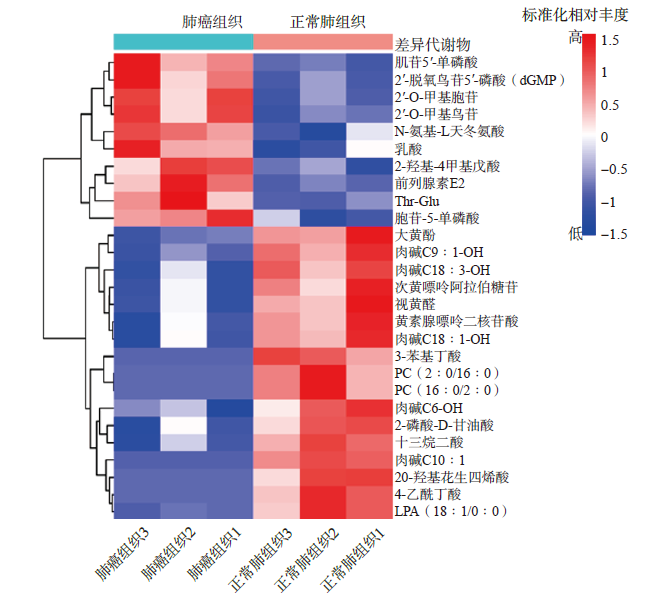
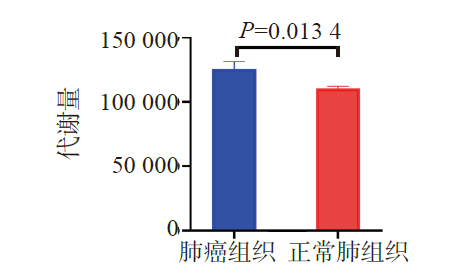
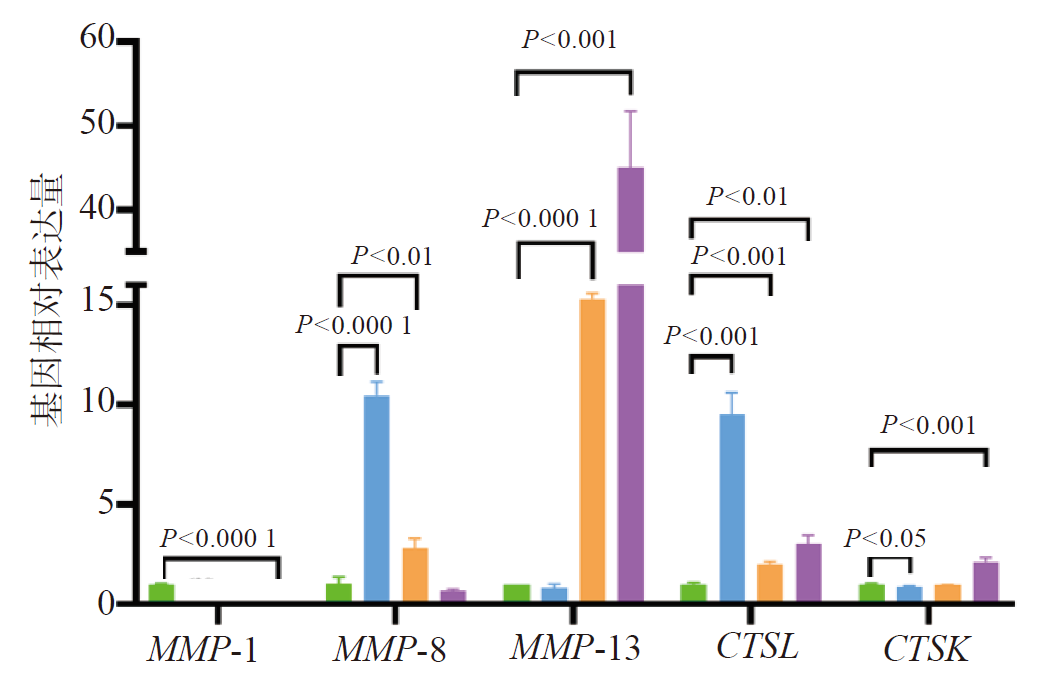
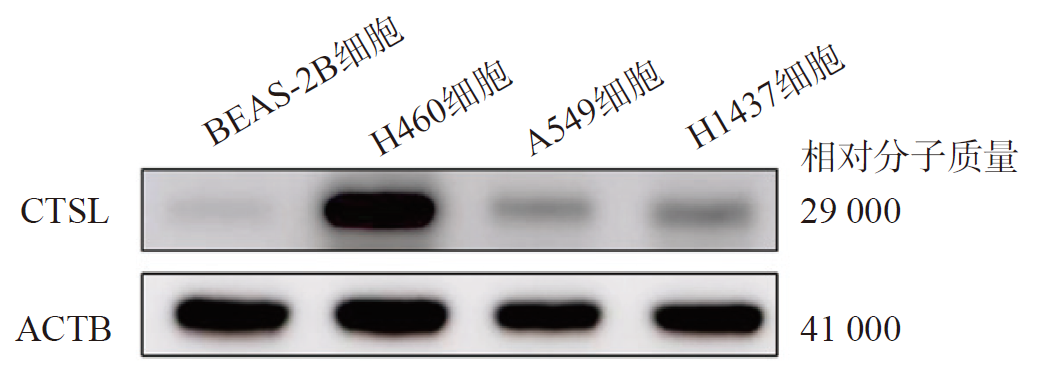
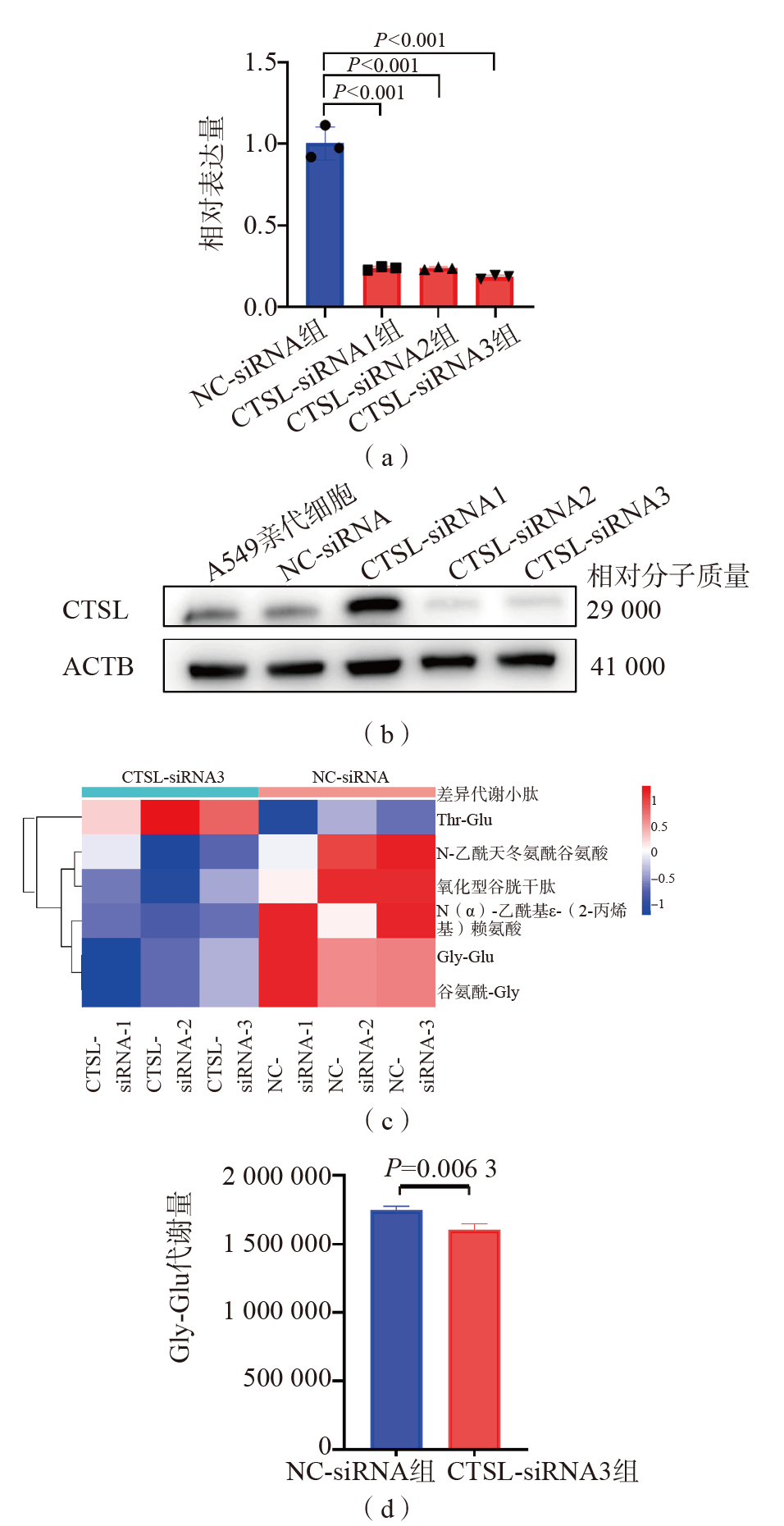
| [1] | BRAY F, LAVERSANNE M, SUNG H, et al. Global cancer statistics 2022:GLOBOCAN estimates of incidence and mortality worldwide for 36 cancers in 185 countries[J]. CA Cancer J Clin, 2024, 74(3):229-263. |
| [2] | MIAO D, ZHAO J, HAN Y, et al. Management of locally advanced non-small cell lung cancer:state of the art and future directions[J]. Cancer Commun (Lond), 2024, 44(1):23-46. |
| [3] |
QIU Z B, LI J, DOU S, et al. Quantifying early-stage lung adenocarcinoma progression with a radiomic trajectory[J]. NPJ Digit Med, 2025, 8(1):664.
DOI |
| [4] | 王少明, 郑荣寿, 韩冰峰, 等. 2022年中国人群恶性肿瘤发病与死亡年龄特征分析[J]. 中国肿瘤, 2024, 33(3):165-174. |
| [5] |
KAO K C, VILBOIS S, TSAI C H, et al. Metabolic communication in the tumour-immune microenvironment[J]. Nat Cell Biol, 2022, 24(11):1574-1583.
DOI |
| [6] |
MARTÍNEZ-REYES I, CHANDEL N S. Cancer metabolism:looking forward[J]. Nat Rev Cancer, 2021, 21(10):669-680.
DOI |
| [7] |
DE VISSER K E, JOYCE J A. The evolving tumor microenvironment:from cancer initiation to metastatic outgrowth[J]. Cancer Cell, 2023, 41(3):374-403.
DOI URL |
| [8] |
BEJARANO L, JORDĀO M J C, JOYCE J A. Therapeutic targeting of the tumor microenvironment[J]. Cancer Discov, 2021, 11(4):933-959.
DOI PMID |
| [9] | SLEEBOOM J J F, VAN TIENDEREN G S, SCHENKE-LAYLAND K, et al. The extracellular matrix as hallmark of cancer and metastasis:from biomechanics to therapeutic targets[J]. Sci Transl Med, 2024, 16(728):eadg3840. |
| [10] | EMAM A N. Collagen and collagen-derived materials:synthesis,structure,classification,fundamental properties and biomedical applications[J]. Discov Appl Sci, 2025,7:1114. |
| [11] |
CHEN D, LIU Z, LIU W, et al. Predicting postoperative peritoneal metastasis in gastric cancer with serosal invasion using a collagen nomogram[J]. Nat Commun, 2021, 12(1):179.
DOI PMID |
| [12] | DE MARTINO D, BRAVO-CORDERO J J. Collagens in cancer:structural regulators and guardians of cancer progression[J]. Cancer Res, 2023, 83(9):1386-1392. |
| [13] |
ZACHARIADOU C, HART T, HOOPER D, et al. Molecular characteristics of periodontal health:collagens[J]. J Periodontology, 2023, 94(5):606-615.
DOI URL |
| [14] |
MALCOR J D, FERRUZ N, ROMERO-ROMERO S, et al. Deciphering the folding code of collagens[J]. Nat Commun, 2025, 16(1):2702.
DOI |
| [15] | PANWAR P, BUTLER G S, JAMROZ A, et al. Aging-associated modifications of collagen affect its degradation by matrix metalloproteinases[J]. Matrix Biol, 2018,65:30-44. |
| [16] |
KORENČ M, LENARČIČ B, NOVINEC M. Human cathepsin L,a papain-like collagenase without proline specificity[J]. FEBS J, 2015, 282(22):4328-4340.
DOI URL |
| [17] | 中华医学会肿瘤学分会. 中华医学会肺癌临床诊疗指南(2025版)[J]. 中华医学杂志, 2025, 105(34):2918-2959. |
| [18] |
MAZZONE P J, WANG X F, BEUKEMANN M, et al. Metabolite profiles of the serum of patients with non-small cell carcinoma[J]. J Thorac Oncol, 2016, 11(1):72-78.
DOI PMID |
| [19] |
ANTONARAKIS E S, FENG Z, TROCK B J, et al. The natural history of metastatic progression in men with prostate-specific antigen recurrence after radical prostatectomy:long-term follow-up[J]. BJU Int, 2012, 109(1):32-39.
DOI URL |
| [20] |
OSTROWITZKI S, LASSER R A, DORFLINGER E, et al. A phaseⅢrandomized trial of gantenerumab in prodromal Alzheimer's disease[J]. Alzheimers Res Ther, 2017, 9(1):95.
DOI URL |
| [21] | 彭译漫, 罗香梦, 陈婧瑶. 肿瘤微环境代谢的研究进展及免疫治疗新策略[J]. 四川大学学报(医学版), 2023, 54(3):505-509. |
| [22] | 牛涛, 周逢海. 炎症与肿瘤微环境[J]. 中南大学学报(医学版), 2023, 48(12):1899-1913. |
| [23] | 叶滔, 项琪, 杨艳, 等. 胶原蛋白的开发与应用研究进展[J]. 生物工程学报, 2023, 39(3):942-960. |
| [24] |
MASUDA H. Cancer-associated fibroblasts in cancer drug resistance and cancer progression:a review[J]. Cell Death Discov, 2025, 11(1):341.
DOI |
| [25] |
HAMADA M, ESKELINEN A S A, KOSONEN J P, et al. MMP release following cartilage injury leads to collagen loss in intact tissue:a computational study[J]. PLoS Comput Biol, 2026, 22(1):e1013209.
DOI URL |
| [26] |
PARKS A N, NAHATA J, EDOUARD N E, et al. Sequential,but not concurrent,incubation of cathepsin K and L with type I collagen results in extended proteolysis[J]. Sci Rep, 2019, 9(1):5399.
DOI |
| [27] |
刘永炜, 吴向民. 血清AFP、CA199和CEA水平在肝癌诊断和预后中的作用[J]. 检验医学, 2017, 32(5):406-409.
DOI |
| [1] | WANG Yangshuyi, YE WEI, LIN Zhihao, HUANG Yuenuo, FANG Tao, DONG Xiaoting. Construction and validation of a model for pyroptosis-related features in lung adenocarcinoma [J]. Laboratory Medicine, 2023, 38(9): 833-841. |
| [2] | LI Ying, CAI Qin, ZHANG Weiwei, WANG Baoli, LI Chenhui. Clinical role of serum ICTP and MMP-2 in acute myocardial infarction [J]. Laboratory Medicine, 2020, 35(12): 1272-1276. |
| [3] | WANG Lei, HUANG He, XU Minyi, ZHOU Fangfang, LU Pei, HUANG Qiufang, XIONG Zhongbo, WEI Xiaoqing, DAI Yue. Roles of urinary type Ⅳ collagen and serum phospholipase A2 receptor antibody in membranous nephropathy [J]. Laboratory Medicine, 2019, 34(8): 726-729. |
| [4] | YU Xiaochun, HU Xujiao, ZHANG Jiaqing, GUO Leilei. Roles of HA,Ⅳ-C,APRI and Fib-4 in the diagnosis of hepatitis B-related liver fibrosis [J]. Laboratory Medicine, 2019, 34(6): 539-542. |
| [5] | WANG Lei, CHEN Weiqin, XU Minyi, CHEN Xudong. Establishment of magnetic particle chemiluminescence for the determination of urinary type Ⅳ collagen and its clinical application in membranous nephropathy [J]. Laboratory Medicine, 2018, 33(5): 442-446. |
| [6] | SONG Hui, LIU Xinghui, SHEN Zhenhua, CHEN Qing, XU Fengxia, XU Limin. Research on the clinical significance of CTHRC1 for HBV [J]. Laboratory Medicine, 2015, 30(11): 1104-1106. |
| [7] | DONG Yiyu 1,ZHANG Xingen 2,LU Jianliang 3,YU Guofang 4,LU Xinli 1. Detection and significance of serum cross-linked carboxyterminal telopeptide region of type Ⅰ collagen and matrix metalloproteinase enzyme-3 in patients with early rheumatoid arthritis [J]. , 2013, 28(5): 400-403. |
| Viewed | ||||||
|
Full text |
|
|||||
|
Abstract |
|
|||||
