
Laboratory Medicine ›› 2026, Vol. 41 ›› Issue (3): 245-250.DOI: 10.3969/j.issn.1673-8640.2026.03.006
Previous Articles Next Articles
MA Xiaomiao1, LIU Feng1, CHEN Fenting2( )
)
Received:2024-08-07
Revised:2025-08-29
Online:2026-03-30
Published:2026-04-14
Contact:
CHEN Fenting
CLC Number:
MA Xiaomiao, LIU Feng, CHEN Fenting. Correlation between endothelial cell-specific molecule-1,sphingosine 1-phosphate receptor 3 and the severity and prognosis of Mycoplasma pneumonia pneumonia[J]. Laboratory Medicine, 2026, 41(3): 245-250.
Add to citation manager EndNote|Ris|BibTeX
URL: https://www.shjyyx.com/EN/10.3969/j.issn.1673-8640.2026.03.006
| 组别 | 例数 | ESM-1/(ng·mL-1) | S1PR3/(ng·mL-1) |
|---|---|---|---|
| 正常对照组 | 106 | 4.15±1.63 | 3.75±0.89 |
| MPP组 | 106 | 14.92±4.45 | 23.54±7.12 |
| t值 | 23.398 | 28.396 | |
| P值 | <0.001 | <0.001 |
| 组别 | 例数 | ESM-1/(ng·mL-1) | S1PR3/(ng·mL-1) |
|---|---|---|---|
| 正常对照组 | 106 | 4.15±1.63 | 3.75±0.89 |
| MPP组 | 106 | 14.92±4.45 | 23.54±7.12 |
| t值 | 23.398 | 28.396 | |
| P值 | <0.001 | <0.001 |
| 组别 | 例数 | ESM-1/(ng·mL-1) | S1PR3/(ng·mL-1) | TPTEF/Te%/% | RR/(次·分-1) | VT/(mL·kg-1) | VPTEF/VT%/% |
|---|---|---|---|---|---|---|---|
| 轻症组 | 37 | 9.04±3.02 | 13.19±4.75 | 27.14±4.36 | 27.15±2.76 | 7.65±1.21 | 28.94±3.76 |
| 重症组 | 69 | 18.07±5.12 | 29.09±8.94 | 18.35±2.69 | 29.13±2.85 | 7.24±0.82 | 22.35±3.91 |
| t值 | 9.837 | 10.068 | 12.826 | 3.447 | 2.068 | 8.381 | |
| P值 | <0.001 | <0.001 | <0.001 | <0.001 | 0.041 | <0.001 |
| 组别 | 例数 | ESM-1/(ng·mL-1) | S1PR3/(ng·mL-1) | TPTEF/Te%/% | RR/(次·分-1) | VT/(mL·kg-1) | VPTEF/VT%/% |
|---|---|---|---|---|---|---|---|
| 轻症组 | 37 | 9.04±3.02 | 13.19±4.75 | 27.14±4.36 | 27.15±2.76 | 7.65±1.21 | 28.94±3.76 |
| 重症组 | 69 | 18.07±5.12 | 29.09±8.94 | 18.35±2.69 | 29.13±2.85 | 7.24±0.82 | 22.35±3.91 |
| t值 | 9.837 | 10.068 | 12.826 | 3.447 | 2.068 | 8.381 | |
| P值 | <0.001 | <0.001 | <0.001 | <0.001 | 0.041 | <0.001 |
| 项目 | ESM-1 | S1PR3 | |||
|---|---|---|---|---|---|
| r值 | P值 | r值 | P值 | ||
| TPTEF/Te% | -0.546 | <0.001 | -0.508 | <0.001 | |
| RR | 0.503 | <0.001 | 0.519 | <0.001 | |
| VT | -0.517 | <0.001 | -0.527 | <0.001 | |
| VPTEF/VT% | -0.522 | <0.001 | -0.530 | <0.001 | |
| 病情严重程度 | 0.524 | <0.001 | 0.531 | <0.001 | |
| 项目 | ESM-1 | S1PR3 | |||
|---|---|---|---|---|---|
| r值 | P值 | r值 | P值 | ||
| TPTEF/Te% | -0.546 | <0.001 | -0.508 | <0.001 | |
| RR | 0.503 | <0.001 | 0.519 | <0.001 | |
| VT | -0.517 | <0.001 | -0.527 | <0.001 | |
| VPTEF/VT% | -0.522 | <0.001 | -0.530 | <0.001 | |
| 病情严重程度 | 0.524 | <0.001 | 0.531 | <0.001 | |
| 组别 | 例数 | 性别 | 年龄/岁 | 胸腔积液/[例(%)] | 肺实变影/[例(%)] | 支气管充气征/[例(%)] | 发热时间/d | |
|---|---|---|---|---|---|---|---|---|
| 男/[例(%)] | 女/[例(%)] | |||||||
| 预后良好组 | 64 | 30(46.88) | 34(53.12) | 5.50±2.02 | 13(20.31) | 57(89.06) | 28(43.75) | 5.45±1.25 |
| 预后不良组 | 42 | 21(50.00) | 21(50.00) | 5.62±2.10 | 14(33.33) | 40(95.24) | 35(83.33) | 5.60±1.38 |
| 统计值 | 0.099 | 0.294 | 2.265 | 0.577 | 16.480 | 0.580 | ||
| P值 | 0.753 | 0.769 | 0.132 | 0.448 | <0.001 | 0.563 | ||
| 组别 | CRP/(mg·L-1) | IL-6/(ng·L-1) | TNF-α/(ng·L-1) | PLT计数/(×109L-1) | WBC计数/(×109L-1) | 组别 | CRP/(mg·L-1) | |
| 预后良好组 | 21.75±6.10 | 34.81±8.60 | 19.38±5.06 | 248.72±49.36 | 10.95±2.72 | 预后良好组 | 21.75±6.10 | |
| 预后不良组 | 22.89±6.42 | 36.98±8.56 | 20.75±4.92 | 257.93±51.60 | 10.81±2.69 | 预后不良组 | 22.89±6.42 | |
| 统计值 | 0.922 | 1.273 | 1.378 | 0.923 | 0.260 | 统计值 | 0.922 | |
| P值 | 0.359 | 0.206 | 0.171 | 0.358 | 0.795 | P值 | 0.359 | |
| 组别 | 例数 | 性别 | 年龄/岁 | 胸腔积液/[例(%)] | 肺实变影/[例(%)] | 支气管充气征/[例(%)] | 发热时间/d | |
|---|---|---|---|---|---|---|---|---|
| 男/[例(%)] | 女/[例(%)] | |||||||
| 预后良好组 | 64 | 30(46.88) | 34(53.12) | 5.50±2.02 | 13(20.31) | 57(89.06) | 28(43.75) | 5.45±1.25 |
| 预后不良组 | 42 | 21(50.00) | 21(50.00) | 5.62±2.10 | 14(33.33) | 40(95.24) | 35(83.33) | 5.60±1.38 |
| 统计值 | 0.099 | 0.294 | 2.265 | 0.577 | 16.480 | 0.580 | ||
| P值 | 0.753 | 0.769 | 0.132 | 0.448 | <0.001 | 0.563 | ||
| 组别 | CRP/(mg·L-1) | IL-6/(ng·L-1) | TNF-α/(ng·L-1) | PLT计数/(×109L-1) | WBC计数/(×109L-1) | 组别 | CRP/(mg·L-1) | |
| 预后良好组 | 21.75±6.10 | 34.81±8.60 | 19.38±5.06 | 248.72±49.36 | 10.95±2.72 | 预后良好组 | 21.75±6.10 | |
| 预后不良组 | 22.89±6.42 | 36.98±8.56 | 20.75±4.92 | 257.93±51.60 | 10.81±2.69 | 预后不良组 | 22.89±6.42 | |
| 统计值 | 0.922 | 1.273 | 1.378 | 0.923 | 0.260 | 统计值 | 0.922 | |
| P值 | 0.359 | 0.206 | 0.171 | 0.358 | 0.795 | P值 | 0.359 | |
| 组别 | 例数 | ESM-1/(ng·mL-1) | S1PR3/(ng·mL-1) |
|---|---|---|---|
| 预后良好组 | 64 | 11.45±3.25 | 18.48±4.92 |
| 预后不良组 | 42 | 20.21±6.67 | 31.25±9.85 |
| t值 | 9.016 | 8.840 | |
| P值 | <0.001 | <0.001 |
| 组别 | 例数 | ESM-1/(ng·mL-1) | S1PR3/(ng·mL-1) |
|---|---|---|---|
| 预后良好组 | 64 | 11.45±3.25 | 18.48±4.92 |
| 预后不良组 | 42 | 20.21±6.67 | 31.25±9.85 |
| t值 | 9.016 | 8.840 | |
| P值 | <0.001 | <0.001 |
| 项目 | β值 | 标准误 | Wald值 | OR值(95%CI) | P值 |
|---|---|---|---|---|---|
| ESM-1 | 1.094 | 0.330 | 10.982 | 2.985(1.563~5.700) | 0.001 |
| S1PR3 | 1.041 | 0.341 | 9.319 | 2.832(1.452~5.525) | 0.002 |
| 支气管充气征 | 0.103 | 0.134 | 0.596 | 1.109(0.853~1.442) | 0.440 |
| 项目 | β值 | 标准误 | Wald值 | OR值(95%CI) | P值 |
|---|---|---|---|---|---|
| ESM-1 | 1.094 | 0.330 | 10.982 | 2.985(1.563~5.700) | 0.001 |
| S1PR3 | 1.041 | 0.341 | 9.319 | 2.832(1.452~5.525) | 0.002 |
| 支气管充气征 | 0.103 | 0.134 | 0.596 | 1.109(0.853~1.442) | 0.440 |
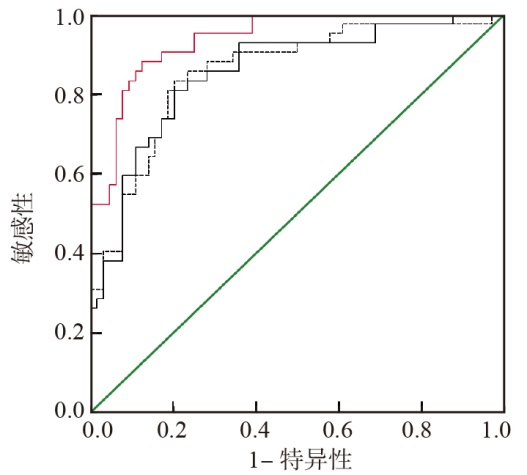
| 指标 | AUC(95%CI) | 最佳临界值 | 敏感性/% | 特异性/% | Youden指数 |
|---|---|---|---|---|---|
| ESM-1 | 0.856(0.782~0.931) | 15.29 ng·mL-1 | 83.34 | 79.73 | 0.631 |
| S1PR3 | 0.855(0.780~0.930) | 23.73 ng·mL-1 | 81.34 | 79.77 | 0.611 |
| 联合检测 | 0.939(0.898~0.981) | 0.92 | 88.11 | 87.56 | 0.757 |
| 指标 | AUC(95%CI) | 最佳临界值 | 敏感性/% | 特异性/% | Youden指数 |
|---|---|---|---|---|---|
| ESM-1 | 0.856(0.782~0.931) | 15.29 ng·mL-1 | 83.34 | 79.73 | 0.631 |
| S1PR3 | 0.855(0.780~0.930) | 23.73 ng·mL-1 | 81.34 | 79.77 | 0.611 |
| 联合检测 | 0.939(0.898~0.981) | 0.92 | 88.11 | 87.56 | 0.757 |
| [1] |
翟斌, 韩梅. 肺炎支原体肺炎患儿血清miR-21、miR-146a表达变化及其与炎症因子的相关性[J]. 检验医学, 2024, 39(8):787-792.
DOI |
| [2] | 周丽娟, 吴艳凌, 周林, 等. 检测肺炎支原体新方法的建立及应用[J]. 实用临床医药杂志, 2022, 26(19):100-104. |
| [3] | SONG Z, JIA G, LUO G, et al. Global research trends of Mycoplasma pneumoniae pneumonia in children:a bibliometric analysis[J]. Front Pediatr, 2023, 11:1306234. |
| [4] | LI D, GU H, CHEN L, et al. Neutrophil-to-lymphocyte ratio as a predictor of poor outcomes of Mycoplasma pneumoniae pneumonia[J]. Front Immunol, 2023, 14:1302702. |
| [5] | 邱崇荣, 彭金亮, 肖小六, 等. 血清endocan水平在老年社区获得性肺炎病情及预后评估的价值[J]. 江西医药, 2022, 57(8):853-855. |
| [6] |
GUZEL D, KALKAN E A, EREN F, et al. Can serum endocan levels be used as an early prognostic marker for endothelial dysfunction in COVID-19?[J]. Angiology, 2022, 73(5):438-444.
DOI URL |
| [7] |
WU J, LIANG Y, FU P, et al. Sphingosine-1-phosphate receptor 3 induces endothelial barrier loss via ADAM10-mediated vascular endothelial-cadherin cleavage[J]. Int J Mol Sci, 2023, 24(22):16083.
DOI URL |
| [8] | 吴晓娜, 刘娜. 小儿肺炎临床诊疗[M]. 北京: 人民军医出版社, 2014. |
| [9] | 蒋欢欢, 葛金林, 曾余丰. 肺炎支原体合并链球菌感染肺炎IL-10和IL-17及淋巴细胞亚群与预后的关系[J]. 中华医院感染学杂志, 2025, 35(3):331-335. |
| [10] |
中华人民共和国国家卫生健康委员会. 儿童肺炎支原体肺炎诊疗指南(2023年版)[J]. 新发传染病电子杂志, 2024, 9(1):73-79.
DOI |
| [11] |
FAN F, LV J, YANG Q, et al. Clinical characteristics and serum inflammatory markers of community-acquired mycoplasma pneumonia in children[J]. Clin Respir J, 2023, 17(7):607-617.
DOI PMID |
| [12] |
LUO X Q, LUO J, WANG C J, et al. Clinical features of severe Mycoplasma pneumoniae pneumonia with pulmonary complications in childhood:a retrospective study[J]. Pediatr Pulmonol, 2023, 58(10):2815-2822.
DOI URL |
| [13] | 翁翠琦, 陈玉梅, 蒋蕾, 等. 小儿肺炎支原体肺炎血清CRP、PCT、ESR水平与病情严重程度的关系[J]. 中华医院感染学杂志, 2022, 32(8):1220-1223. |
| [14] |
HUREAU M, PORTIER L, PRIN M, et al. Evaluation of endocan as a treatment for acute inflammatory respiratory failure[J]. Cells, 2023, 12(2):257.
DOI URL |
| [15] |
KHALAJI A, AMIRKHANI N, SHARIFKASHANI S, et al. Systematic review of endocan as a potential biomarker of COVID-19[J]. Angiology, 2024, 75(2):107-115.
DOI URL |
| [16] | 栾海丽, 秦可佳, 段然. 血清 Endocan、补体C3a与重症肺炎患儿病情和预后转归的关系分析[J]. 中国妇幼健康研究, 2024, 35(6):89-95. |
| [17] |
TAŞAR S, FIDANCI İ, BULUT İ, et al. Role of serum endocan levels in children with bacterial and viral pneumonia:a prospective,case-control study[J]. Pediatr Allergy Immunol Pulmonol, 2022, 35(4):145-152.
DOI URL |
| [18] |
TERLIZZI M, COLARUSSO C, SOMMA P, et al. S1P-induced TNF-α and IL-6 release from PBMCs exacerbates lung cancer-associated inflammation[J]. Cells, 2022, 11(16):2524.
DOI URL |
| [19] |
PENG J, TANG R, HE J, et al. S1PR3 inhibition protects against LPS-induced ARDS by inhibiting NF-κB and improving mitochondrial oxidative phosphorylation[J]. J Transl Med, 2024, 22(1):535.
DOI PMID |
| [20] | WU J, LIANG Y, FENG A, et al. S1PR3 plays a key role in ventilator-induced lung injury:promoter activation,barrier disruption,and therapeutic evaluation[J]. Free Radic Biol Med, 2022, 192(1):75-76. |
| [21] | 李荣, 丘向燕, 刘玉娜, 等. 重症社区获得性肺炎患者血清1磷酸鞘氨醇受体3水平的变化及临床意义[J]. 医药前沿, 2023, 13(12):7-9. |
| [22] | PIAO J, SU Z, HE J, et al. SphK1 deficiency ameliorates the development of atherosclerosis by inhibiting the S1P/S1PR3/Rhoa/ROCK pathway[J]. Cell Signal, 2024, 121:111252. |
| [1] | XIAN Jingrong, ZHU Jing, SHAO Wenqi, XIONG Ying, PAN Baishen, WANG Beili, GUO Wei. Neddylation UBC12 promotes esophageal cancer cell proliferation by regulating polycomb protein RING1 [J]. Laboratory Medicine, 2026, 41(3): 223-232. |
| [2] | WANG Yanbin, LIU Jiahao, LIN Changfu. Relationship between serum Tau protein and neuron-specific enolase levels after craniocerebral trauma surgery and the cognitive function of patients [J]. Laboratory Medicine, 2026, 41(3): 233-238. |
| [3] | . [J]. Laboratory Medicine, 2026, 41(3): 272-277. |
| [4] | XU Hongqiang, PENG Haibo, XU Huan, LUO Zhonglan, XIONG Guanghai, LI Zhen, LUO Jie. Research progress on neutrophil-to-lymphocyte ratio in the diagnosis and treatment of coronary heart disease [J]. Laboratory Medicine, 2026, 41(3): 291-298. |
| [5] | . [J]. Laboratory Medicine, 2026, 41(3): 307-308. |
| [6] | MA Shanshan, ZHANG Rong, YIN Ting, ZHENG Anshun, WANG Zhiwei, WANG Yongan, WANG Leilei. Genetic analysis and pregnancy outcomes of 19 fetuses with abnormal copy number in 22q11.2 region of chromosome [J]. Laboratory Medicine, 2026, 41(2): 106-111. |
| [7] | FU Wanyu, XIAO Shanshan, JIANG Yuying, LI Yanqing. Genetic analysis of fetal chromosome 12 copy number variation and follow-up of pregnancy outcomes [J]. Laboratory Medicine, 2026, 41(2): 118-125. |
| [8] | WANG Yaqiong, YING Lingwen, CHEN Yao, YAO Ruen, LOU Dan, LU Yaya, LI Juan, WANG Xiumin. Analysis of 3 families with X-linked spondyloepiphyseal dysplasia tarda caused by TRAPPC2 gene variation [J]. Laboratory Medicine, 2026, 41(2): 133-143. |
| [9] | JI Xiongjuan, LIU Xiaoduo, JIANG Haifei, CHEN Juan, YIN Zhaohua, CHEN Yong, SONG Rongrong, LI Qian, MA Xu, SUN Xibin, ZHOU Weiping. Screening of deafness genes in 11 256 newborns in Tongzhou District,Jiangsu Province and its clinical significance [J]. Laboratory Medicine, 2026, 41(2): 144-149. |
| [10] | GAO Shuo, WANG Peichang, HOU Yuli. Research progress of CCCTC-binding factor in central nervous system diseases [J]. Laboratory Medicine, 2026, 41(1): 95-100. |
| [11] | ZHOU Jie, XU Jin, WU Ziwen, WU Yizhou, HUANG Zhiheng. Application value of fecal calprotectin in disease status assessment and treatment efficiency monitoring of inflammatory bowel disease in children [J]. Laboratory Medicine, 2026, 41(1): 69-72. |
| [12] | HU Mingxi, GONG Qian, LI Mu, PENG Rong. Role of PCT,DD,Lac and Alb combined with clinical scores in progression assessment of sepsis [J]. Laboratory Medicine, 2026, 41(1): 63-68. |
| [13] | ZHOU Chaoqiong, CHEN Ting, KONG Lirui, MA Chunyu. Clinical role of gene mutation types and MCV,MCH levels in patients with thalassemia in Pidu District of Chengdu City [J]. Laboratory Medicine, 2026, 41(1): 52-57. |
| [14] | WANG Bing, YANG Yuwei, LIU Junmei, LI Yanqiu, PENG Bi. Application of reticulocyte hemoglobin content in diagnosing thalassemia in children [J]. Laboratory Medicine, 2026, 41(1): 47-51. |
| [15] | YANG Li, WANG Jingwen, WANG Xin, ZHANG Yuexin, DUAN Dongkui. Relationship between serum VCAM1,miR-181b-5p and the severity and prognosis of ARDS patients [J]. Laboratory Medicine, 2026, 41(1): 41-46. |
| Viewed | ||||||
|
Full text |
|
|||||
|
Abstract |
|
|||||
