Laboratory Medicine ›› 2026, Vol. 41 ›› Issue (5): 463-469.DOI: 10.3969/j.issn.1673-8640.2026.05.008

Previous Articles     Next Articles

Application of an artificial intelligence system based on convolutional neural networks in the determination of IgM antibodies for respiratory tract infection pathogens by IIF

SHI Xinming1, XIAO Kaiti2, HAN Jianying3, CHEN Jinrong3, SHI Ce1()   

  1. 1. Department of Clinical Laboratory,Ruijin Hospital,Shanghai Jiao Tong University School of Medicine,Shanghai 200025,China
    2. Department of Clinical Laboratory,Jimsar County People's Hospital,Changji 831700,Xinjiang,China
    3. Shanghai Tushu Technology Co. Ltd.,Shanghai 200233,China
  • Received:2024-10-29 Revised:2025-12-30 Online:2026-05-30 Published:2026-05-29

Abstract:

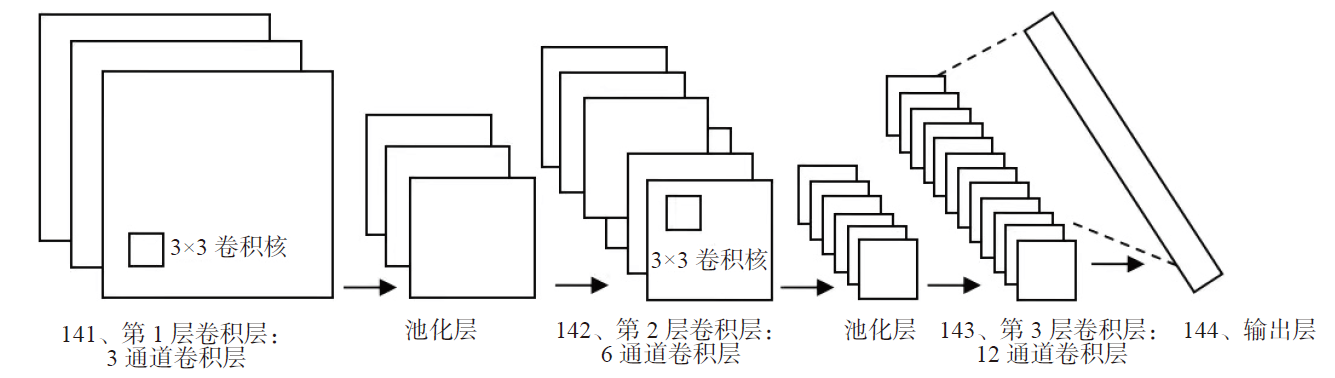
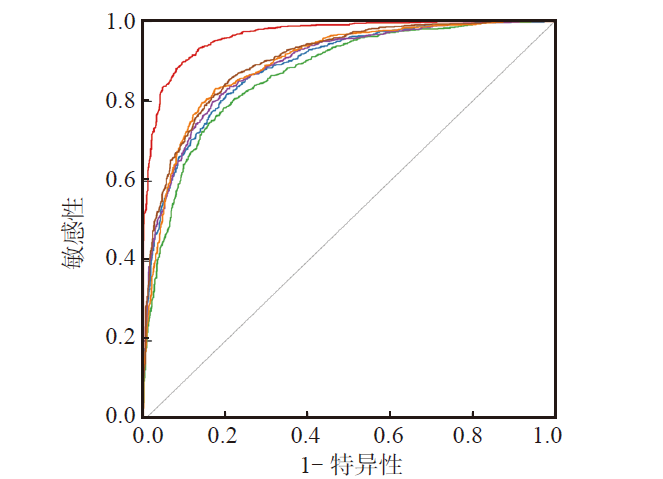
Objective To investigate the application value of an artificial intelligence(AI)system based on convolutional neural network(CNN)technology in the interpretation of fluorescence images of IgM antibodies for respiratory tract infection pathogens. Methods A total of 3 714 patients with respiratory tract infections in Ruijin Hospital of Shanghai Jiao Tong University School of Medicine from December 17,2019 to April 2,2020 were enrolled. Indirect immunofluorescence(IIF)was used to determine IgM antibodies against 9 respiratory tract infection pathogens [Mycoplasma pneumoniae(MP),adenovirus(ADV),respiratory syncytial virus(RSV),influenza A virus(IFA),influenza B virus(IFB)and parainfluenza virus(PIV)type 1,2,and 3],and the results were interpreted manually. Samples collected before March 1,2020 were selected to establish a standard fluorescence image library,and the AI system based on CNN technology was trained using supervised machine learning. The fluorescence images of 797 samples from March 4 to April 2,2020 were used to verify the reliability of the AI system,with manual interpretation as the gold standard. Kappa test and McNemar test were used to evaluate the consistency between the results of manual interpretation and those of the AI system. Receiver operating characteristic(ROC)curve was used to evaluate the accuracy of the AI system's interpretation and the rationality of the cut-off value setting. Results The consistency between the AI system's interpretation and manual interpretation for MP,ADV,RSV,IFA,IFB and PIV were 97.1%,97.1%,96.1%,97.4%,95.1% and 97.1%. The consistency between the AI system's interpretation and manual interpretation for MP and IFA was good(Kappa values were 0.898 and 0.755,respectively),and the consistency for the other 4 pathogens was moderate(Kappa values were 0.679,0.660,0.701 and 0.748,respectively). The sensitivities of the AI system's interpretation for the 6 pathogens were 60.0%-88.7%,the specificities were 98.6%-99.2%,the positive predictive values were 78.6%-94.7%,and the negative predictive values were 96.1%-98.4%. The areas under curves for the AI system's interpretation of IgM antibody determination results for MP,ADV,RSV,IFA,IFB and PIV were 0.987,0.952,0.954,0.959,0.936 and 0.957,respectively. Conclusions The AI system based on CNN technology has the advantages of accuracy,efficiency and rapidity in interpreting fluorescence images of IgM antibodies for respiratory tract infection pathogens by IIF,and it can assist in the interpretation of IIF determination results.

Key words: Convolutional neural network, Artificial intelligence, Indirect immunofluorescence, Respiratory tract infection pathogen

CLC Number: